Claude Code vs Replit: Which AI coding tool is best for you?
Claude Code vs Replit: Which AI coding tool should you use?
Choosing between Claude Code and Replit isn't about which AI writes better code, but who controls the development environment, deployment, and maintenance. Choose Replit when you want to build a new application with a managed workspace, previews, and integrated hosting. Choose Claude Code when you want an AI coding tool working within your existing repository, tools, and engineering process. Neither tool is a clear winner: Repository state, infrastructure requirements, and code review processes matter far more than feature counts.
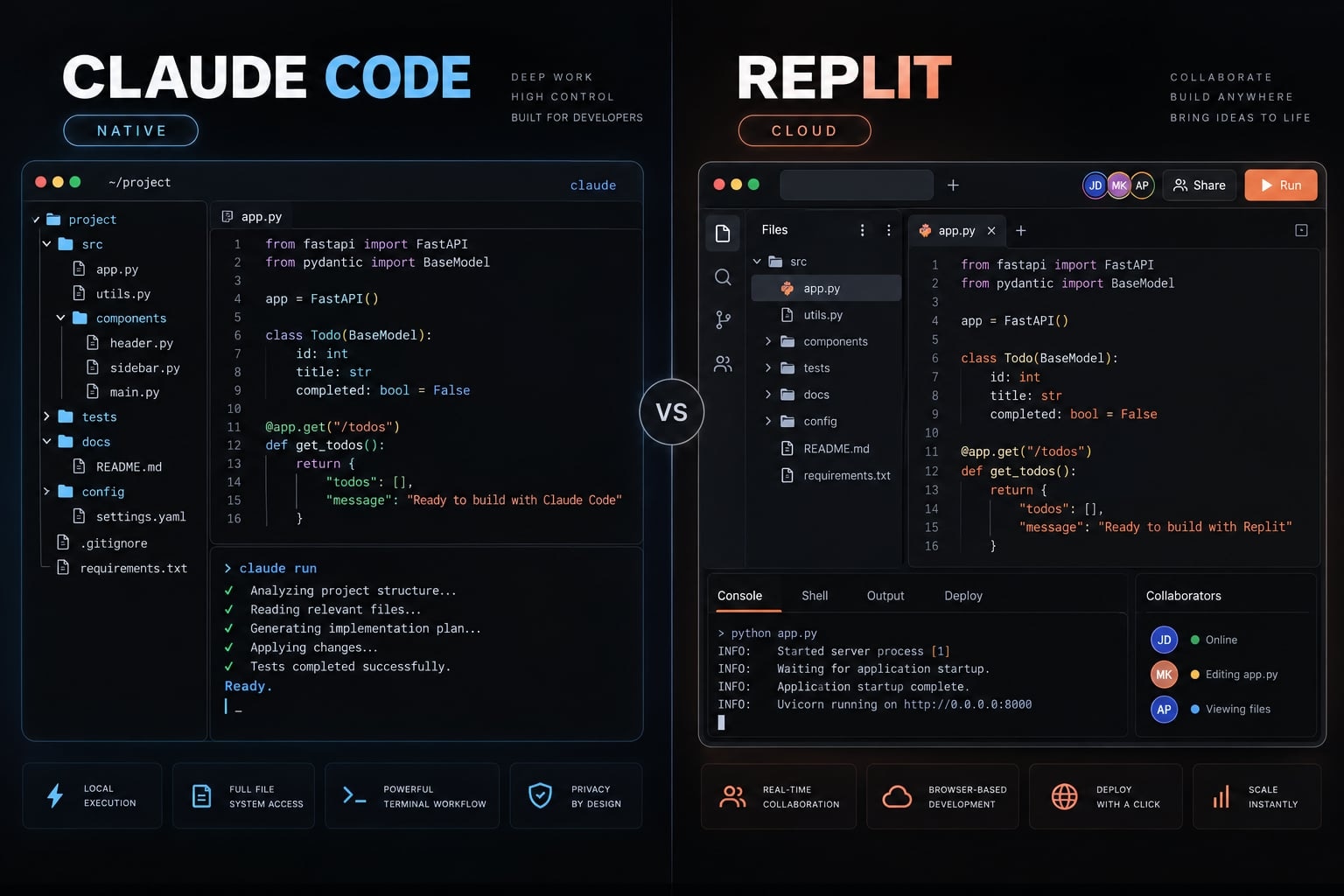
Claude Code vs Replit at a glance
For Claude Code vs Replit Agent, the strongest decision signals concern workflow ownership—not a universal capability score.
Criterion | Claude Code | Replit | Decision signal |
|---|---|---|---|
Product category | Coding agent | Development and hosting platform | Agent or integrated platform? |
Typical starting point | New or existing repository | New app or imported project | Preserve an established environment? |
Primary workflow | Developer-controlled tools | Managed workspace | Control versus convenience |
Setup | Depends on your environment | Less local configuration | Available engineering capacity |
User interface | Terminal-oriented; other interfaces available | Browser-centered platform | Interface preference |
New applications | Team chooses supporting services | Integrated app-building workflow | Scope and service requirements |
Repository control | Works in chosen environment | Import and Git workflows | Environment compatibility |
Testing | Uses configured project checks | Agent and workspace checks | Quality gates remain necessary |
Deployment speed | Depends on release setup | Integrated deployment path | Infrastructure already available? |
Hosting | Separate provider required | Supported hosting services | Who operates the application? |
Custom infrastructure | Team-controlled | Platform compatibility matters | Mandatory deployment requirements |
Security | Configuration-dependent | Shared responsibilities | No categorical winner |
Cost | Access, usage, infrastructure, labor | Plan, usage, services, labor | Compare complete delivery costs |
The short verdict by use case:
- Rapid prototype: Replit when supported services match the brief.
- Non-technical founder: Replit, with engineering review before sensitive use.
- Hosted demo: Replit when integrated publishing meets requirements.
- Existing repository: Claude Code when preserving the current environment matters.
- Established Git/CI workflow: Claude Code within existing checks and approvals.
- Custom infrastructure: Claude Code alongside your deployment tooling.
- Validation followed by hardening: Either; combine them only when handoff costs are justified.
The main difference: Managed app building vs repository-native engineering
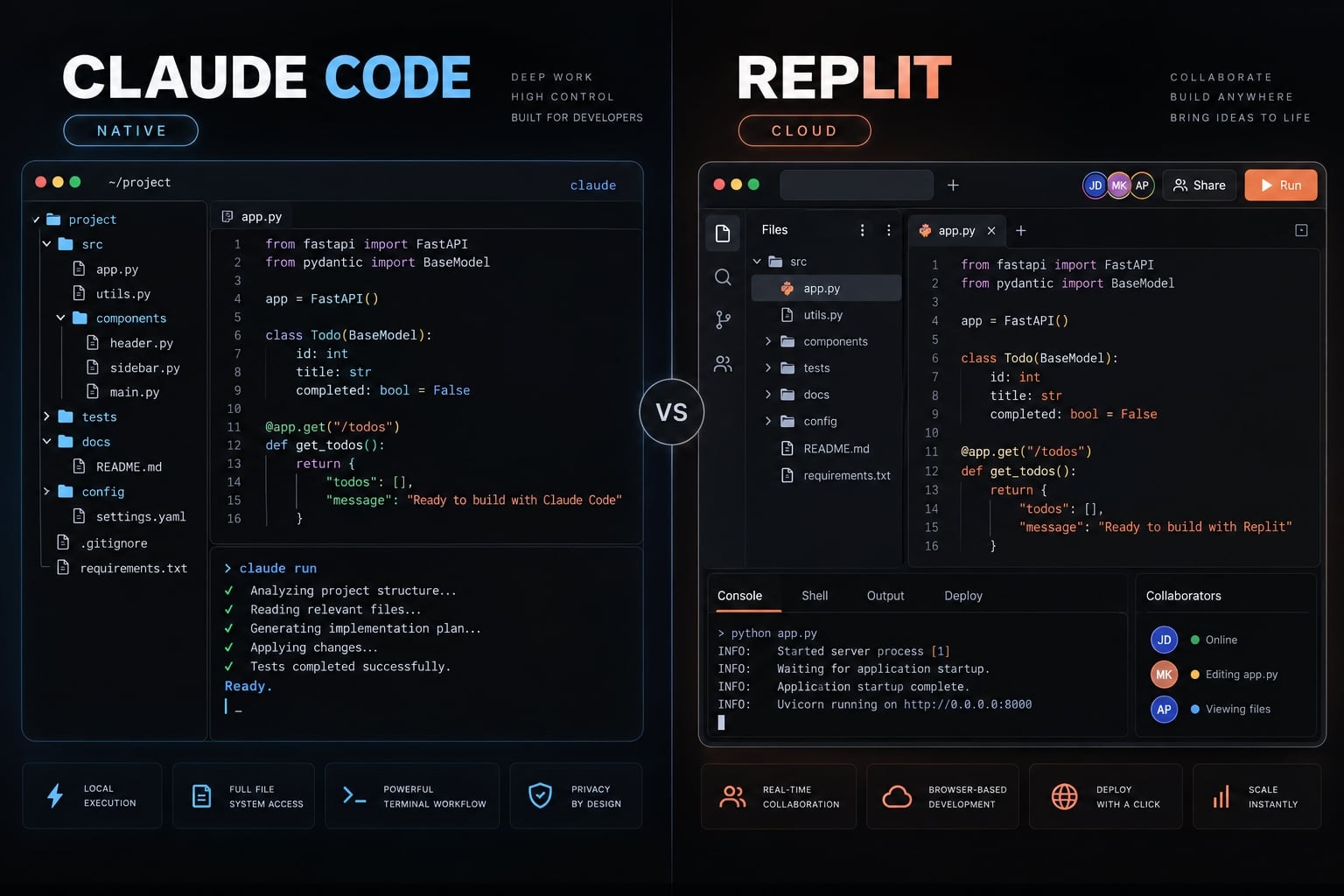
Replit combines application development with a managed workspace and supported hosting services. Claude Code is a coding agent that works with project files and developer-controlled tools. The practical difference is responsibility: Replit consolidates more of the environment, while a Claude Code workflow leaves more infrastructure and release decisions with your team.
How Claude Code approaches development
Repository-native engineering means working within the project’s files, commands, and conventions rather than replacing the surrounding engineering process. Claude Code can help create projects, modify code, run available tests, and work with Git. Your team still configures the runtime, credentials, infrastructure, and CI/CD-automated checks and release steps.
Best fit: Teams that want agent assistance without reorganizing an established toolchain.
How Replit approaches development
Replit brings code editing, agent assistance, previews, and supported deployment services into a managed workspace. This reduces local configuration and can simplify collaboration around a working application.
Development and runtime environments are separate. Choices for databases, authentication, storage, and hosting can create strong Replit platform dependencies.
Best fit: Projects where integrated services match the application’s operating requirements.
Illustrative scenario: A new client-onboarding portal may suit Replit’s integrated development path. Adding an approval workflow to an established portal may suit Claude Code within its existing repository.
Replit is not beginner-only, and Claude Code is not existing-project-only. These recommendations describe workflow fit, not application ceilings.
Claude Code vs Replit: Head-to-head comparison
This analysis compares product workflows rather than performance or speed. It uses two scenarios: building a new client-onboarding portal and adding a feature to an existing one. To evaluate fit, trials should keep the stack and requirements constant while tracking usage and corrections.
Setup and ease of use
- Claude Code: A terminal-based workflow can reuse an established development environment. Starting from nothing still requires appropriate dependencies, access, and project configuration.
- Replit: Browser-based AI coding reduces local setup, but accounts, integrations, secrets, and compatible dependencies still need attention.
A beginner’s onboarding effort differs from an engineering team’s marginal setup effort. Moving a configured project can create more work than adding an agent.
Verdict: Favor Replit for reduced local setup; favor Claude Code when a working toolchain already exists.
Building a new application
Replit combines full-stack scaffolding (creating initial interface, backend, and data-layer code) with previews and supported deployment services. This can simplify a rapid MVP, or minimum viable product.
Claude Code can also create the portal from scratch. Your team chooses and connects the supporting services.
Demo velocity is not production velocity. An approval screen demonstrates an interface; it does not prove authorization, data isolation, or reliable notifications.
For either tool, define working acceptance checks before generation.
Verdict: Replit often fits a shareable first version; Claude Code fits new applications with prescribed architecture or infrastructure.
Working with an existing repository
Claude Code can operate alongside existing commands, conventions, and review practices. Replit supports repository import and Git workflows, but importing files does not necessarily reproduce services, networking, or build conditions.
For existing GitHub repositories, check:
- Established portal: Can the original tests and CI checks run?
- Monorepo: Can this repository containing multiple related applications or packages reproduce its build relationships?
- Legacy or multi-service system: Are required runtimes and connected services available?
Repository access does not guarantee architectural understanding.
Verdict: Prefer Claude Code when preserving the environment is important; evaluate Replit when moving into its workspace offers a clear benefit.
Debugging, testing and code quality
- Claude Code: Can help reproduce errors, inspect accessible logs, execute configured test suites, and revise changes.
- Replit: Can support debugging and correction inside its workspace, with previews useful for checking application behavior.
Visual feedback is insufficient for release approval. For the portal, test whether an unauthorized user can approve another client’s request-not merely whether the button works.
Neither tool guarantees correct, secure, production-ready code without human review, testing, and security validation.
Verdict: Prefer the workflow that reliably executes your acceptance checks and preserves review evidence.
Deployment and hosting
Claude Code is not a managed hosting provider. It can assist with deployment work, but infrastructure must exist elsewhere. Replit offers integrated deployment, subject to application requirements, configuration, service limits, and billing.
Criterion | Claude Code workflow | Replit workflow | Decision signal |
|---|---|---|---|
Initial deployment | Configure chosen provider | Supported publishing path | Setup responsibility |
Custom infrastructure | Team-selected stack | Check service compatibility | Mandatory infrastructure |
CI/CD and approvals | Existing or custom pipelines | Configure supported release process | Required approval gates |
Portability | Depends on chosen services | Assess platform dependencies | Switching effort |
Rollback and observability | Configure external systems | Verify available capabilities | Recovery requirements |
Deployment convenience and deployment autonomy are different benefits. Neither automatically supplies backups, monitoring, or tested recovery.
Verdict: Choose Replit for suitable managed hosting; choose a Claude Code workflow when infrastructure control outweighs integration convenience.
Customization, MCP and workflow automation
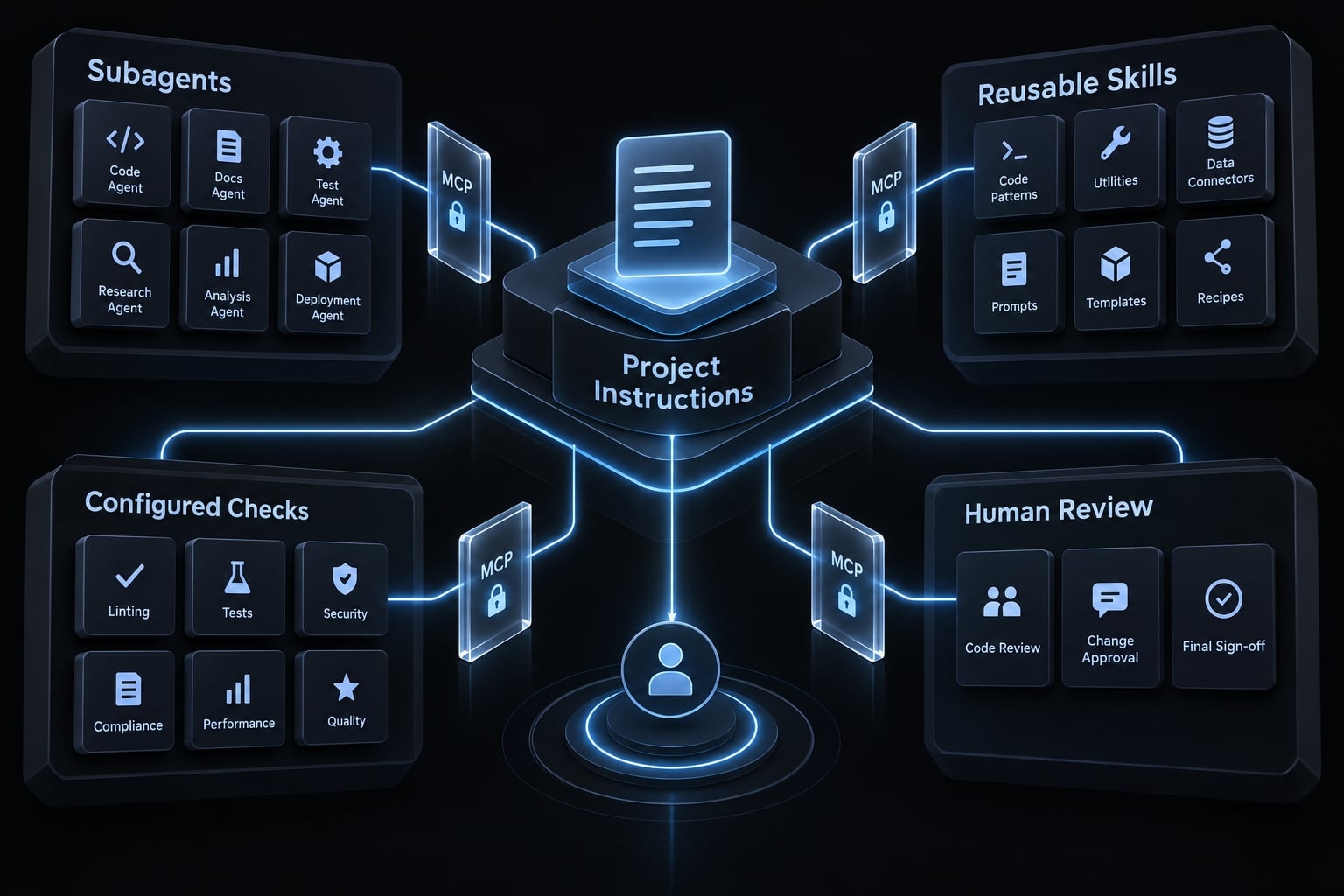
MCP (Model Context Protocol) is a standard for connecting AI applications to external tools and data. It does not automatically enforce appropriate permissions.
Claude Code documentation describes project instructions, hooks, subagents, and MCP connections. Evaluate Replit’s available instructions and integrations separately; do not assume feature parity or equivalent permissions.
Capability to evaluate | Intended outcome | Required check |
|---|---|---|
Reusable instructions and task components | Less repeated instruction writing | Supported scope and persistence |
Automated checks and task triggers | More consistent validation | Execution conditions and failure handling |
External-tool connections | Controlled access to project systems | Credentials, permissions, and logs |
Verdict: Choose the implementation that supports your actual workflow automation requirements, not the longest integration list.
Security, governance and control
User-controlled environments offer configuration flexibility but add responsibility. Managed workspaces reduce some infrastructure work without removing application security obligations. Local execution does not mean all processing stays local. Review what code and context reach model providers.
Minimum-control checklist:
- Repository and source-code access restrictions.
- Provider data handling and retention terms.
- Secrets management and environment-variable exposure.
- Command and external-tool permissions.
- Dependency and generated-code checks.
- Deployment credentials and privilege boundaries.
- Available action logs and human approvals.
For the portal, verify customer-data isolation before connecting real records. Enterprise controls must be checked against the actual contract and plan.
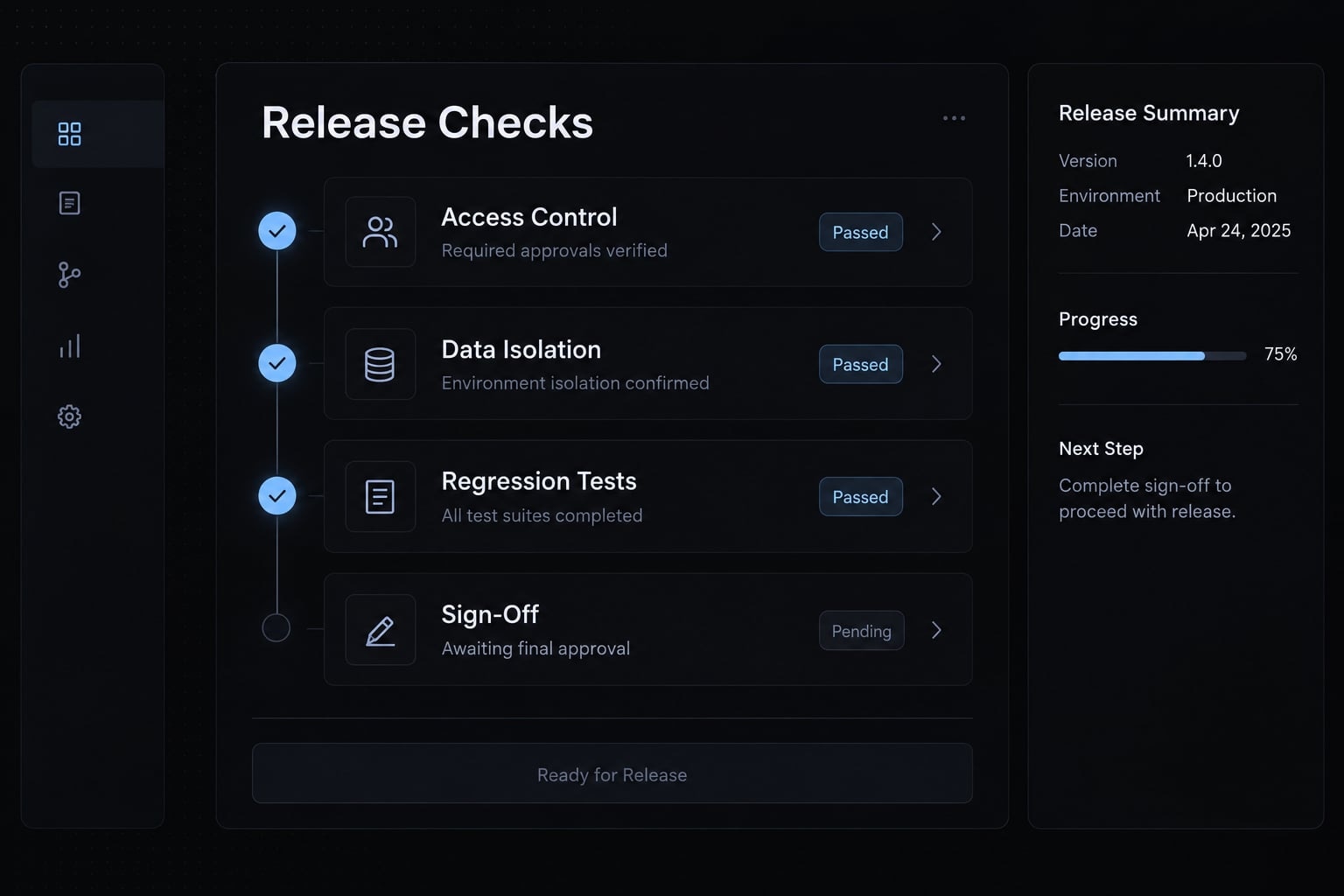
Verdict: Security requirements can override the default recommendation. Neither tool is categorically safer.
Pricing and total cost of ownership
Pricing verification status: Current rates have not been independently verified. Confirm official prices, included allowances, overages, and spending controls before purchasing.
Claude Code offers eligible subscription access and usage-based access routes, including API billing. API costs depend on model usage; subscription access has plan-specific limits.
Replit combines subscription entitlements with usage-based charges for agent work and applicable platform services. Verify how included credits apply across agent activity, deployment, and databases.
TCO (total cost of ownership) includes all relevant costs over a defined period.
Cost category | Claude Code workflow | Replit workflow | What to verify |
|---|---|---|---|
Plan/access fees | Eligible plan or API route | Platform subscription | Seats and entitlements |
Agent/model usage | Limits or metered consumption | Agent usage charges | Credits and overages |
Hosting and databases | Separate services | Applicable platform services | Runtime and storage billing |
Developer setup and review | Environment and code review | Integration and code review | Labor required |
Debugging and rework | Corrections and regression work | Corrections and regression work | Repeat attempts |
CI/CD and observability | Chosen external tooling | Platform and external tooling | Monitoring coverage |
Migration effort | Incoming environment changes | Dependency extraction if needed | Named owner |
Platform-dependent switching costs | Selected service dependencies | Platform-service dependencies | Replacement work |
Period TCO = access fees + incremental usage + infrastructure + labor + migration/operations costs.
Avoid double-counting included usage or overlapping labor. Platform lock-in means specific replacement work, not that code is necessarily unexportable.
Verdict: Replit may reduce initial setup costs; Claude Code may preserve existing investments. Review time and rework can reverse either advantage.
Which tool should you choose?
Choose an AI development workflow around existing assets and operating constraints-not job title. Security, data handling, or infrastructure requirements can outweigh convenience.
Choose Replit when
- You are starting from a blank project.
- You need a shareable application quickly.
- You want to reduce local setup.
- Your prototype or internal tool fits supported services.
- You prioritize integrated development and hosting.
- You accept the relevant platform dependencies.
Internal tools still need appropriate authentication, permissions, and data protection.
Choose Claude Code when
- You have an existing Git-managed application.
- Testing and review processes are already established.
- Custom infrastructure is required.
- Architectural consistency matters across ongoing changes.
- Verified workflow extensions meet specific requirements.
- Multiple services or non-standard tools already exist.
These conditions favor Claude Code’s operating model; they do not make the agent sufficient for delivery.
Recommendation by user type
User type | Conditional recommendation |
|---|---|
Non-technical founder | Replit for supported applications; obtain engineering review |
Technical founder | Replit for validation; Claude Code for established tooling |
Indie maker | Replit for integration convenience; Claude Code for stack control |
Experienced developer | Claude Code when preserving repository workflows matters |
Engineering lead | Claude Code when existing quality gates are central |
Small product team | Choose based on deployment ownership and maintenance capacity |
Product manager | Replit for reviewed demonstrations and bounded experiments |
Agency or operations team | Replit for suitable tools; Claude Code for client-environment constraints |
Enterprise team | Verify procurement, data handling, access controls, auditability, and compatibility first |
The same technical founder might choose Replit to validate a portal and Claude Code to extend an established SaaS repository.
Before committing, complete this decision checklist:
- Project stage and repository status.
- Hosting requirements and team development skills.
- Quality gates and security/procurement constraints.
- Estimated total delivery cost.
- Migration owner and expected effort.
Use these fields to define a bounded trial. Require a demonstrable feature, passing acceptance checks, and a cost record-not simply a convincing preview.
Can you use Claude Code and Replit together?
Yes. A Claude Code and Replit workflow can separate initial application development from repository-based review or later engineering work. Using Claude Code does not inherently require moving hosting away from Replit.
The useful question is whether combining environments removes a constraint or merely adds coordination. Production hardening means making an application reliable, secure, observable, and maintainable; it does not automatically mean changing platforms.
Recommended prototype-to-production workflow
- Define the business brief and acceptance criteria before generating code.
- Build a bounded prototype using services appropriate to the application.
- Validate the workflow with users before expanding scope.
- Establish a controlled Git repository baseline with reviewed changes.
- Inventory platform-specific services, configuration, and runtime assumptions.
- Have a responsible engineer approve architecture and any migration plan.
- Add tests, security checks, and failure-path validation.
- Replace dependencies selectively when requirements justify the work.
- Configure chosen hosting, release approvals, monitoring, and recovery.
- Preserve reusable project instructions for future agent-assisted changes.
Claude Code may assist with the review and planning stages. An accountable engineer approves the plan and release.
Migration risks to check
- Environment variables: Missing values or incorrect environment separation.
- Database/schema migration: Data transfer, compatibility, and rollback.
- Authentication and storage: Provider behavior and access permissions.
- Build/start scripts: Assumptions tied to the original workspace.
- Tests and error handling: Missing checks or unhandled failures.
- Deployment/domain configuration: Routing, certificates, and integrations.
- Exposed secrets: Credentials copied into files or repository history.
- Runtime/dependency differences: Version, package, and operating-system mismatches.
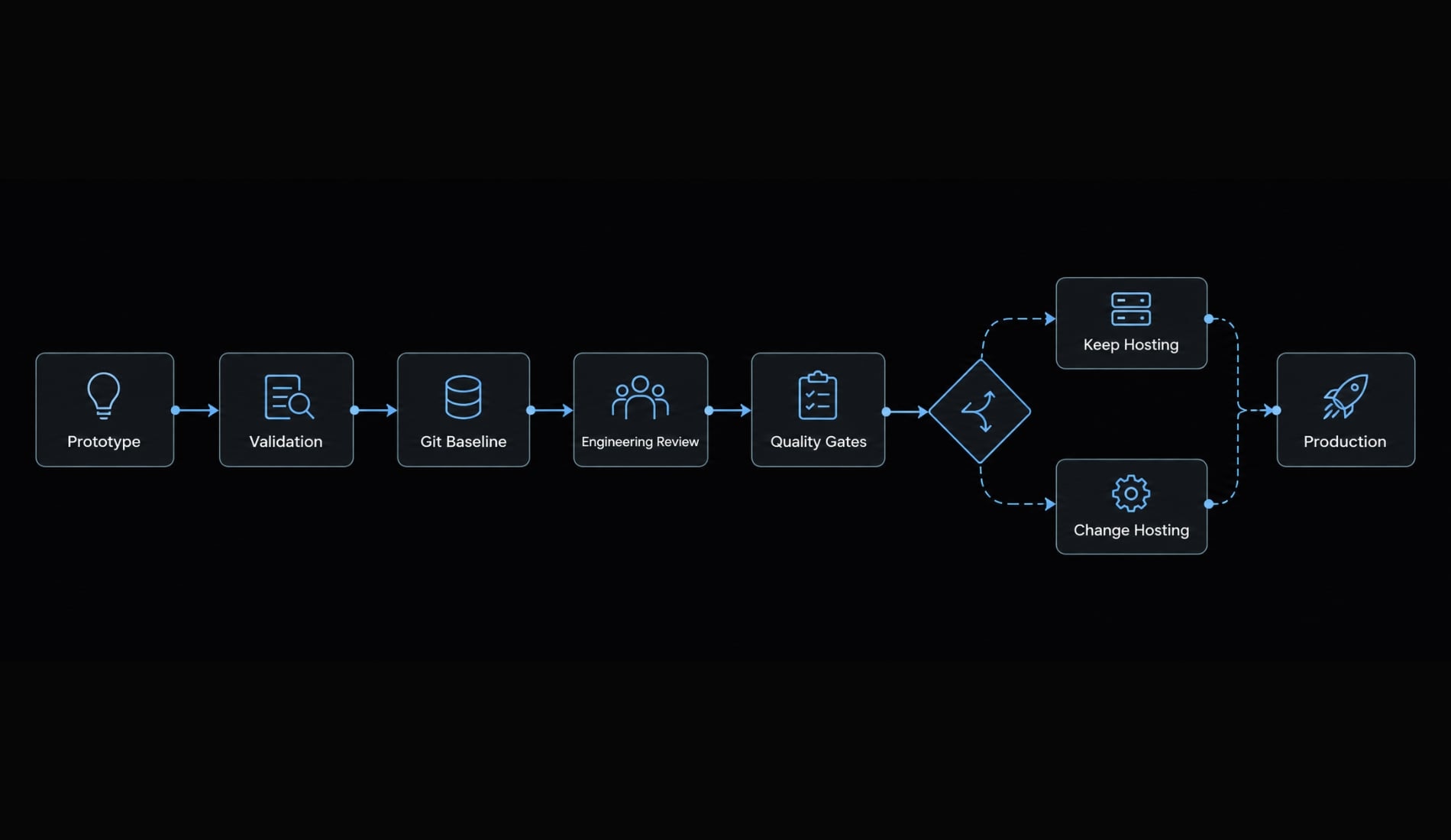
Prototype-to-production migration is unnecessary when Replit already meets long-term requirements. Hybrid use may also be wasteful for a disposable prototype, a project without a migration owner, or a team whose coordination costs exceed expected benefits.
Before adding a second tool, assign ownership of code review, data movement, deployment, and recovery. If those responsibilities remain unclear, stabilize the current workflow first.
Frequently asked questions
What is the fundamental difference between Claude Code and Replit?
Claude Code is a coding agent that works within your repository and configured tools, while your team owns infrastructure and CI/CD. Replit is a managed platform combining a workspace, agent assistance, previews, and supported deployment services. The difference is where responsibility sits, not which one writes more code.
Which tool is better for building a new application from scratch?
Its agent handles full-stack scaffolding, database provisioning, and supported hosting, letting you reach a shareable running application without configuring a local development environment. Setup still involves accounts, integrations, secrets, and compatible dependencies.
Does Claude Code handle deployment to production?
No, Claude Code is not a hosting provider. It operates within your local terminal or repository, helping you write code, run tests, and manage files. You remain responsible for your own deployment infrastructure, such as AWS, Vercel, or custom Docker-based servers.
Can I use Claude Code to modify an existing repository?
Yes, Claude Code is purpose-built for existing repositories. It works within existing commands, conventions, and review practices, and can run your configured test suites. Repository access does not guarantee architectural understanding, so changes still need human review.
Do these AI tools guarantee secure, production-ready code?
No. While both tools can generate functional code, they do not guarantee security or reliability. Human review, rigorous testing, security validation, and adherence to your team's compliance standards remain mandatory steps before deploying any AI-generated changes to a production environment.
Is it possible to use both Claude Code and Replit together?
Yes. One pattern is validating an idea in Replit, then establishing a reviewed Git baseline and using Claude Code for longer-term development. Changing hosting is a separate decision — if Replit already meets your operating requirements, keep it. Combine tools only when the benefit justifies the extra handoffs, configuration, and possible migration work.
How do I choose between Claude Code and Replit for my business?
Choose Replit if your primary goal is speed-to-live for prototypes or internal tools with minimal infrastructure effort. Choose Claude Code if you have a mature, complex codebase, need deep control over your engineering stack, or require seamless integration into your existing Git-based release process.
Read more:
- Aider vs Claude Code: Choosing the right AI Coding Assistant
- Claude Code vs Cline: Which AI coding workflow fits better?
- Windsurf vs Claude Code: Which AI coding assistant fits best?
Conclusion
The practical verdict in Claude Code vs Replit is straightforward: Choose Replit when integrated development and hosting match the application’s needs. Choose Claude Code when an established repository, engineering process, or infrastructure requirement should remain under your team’s control.
Replit can support more than prototypes, and Claude Code can build new applications. Neither removes the responsibility to test, review, secure, and operate the result. A hybrid approach is useful only when the benefits justify its additional handoffs, configuration, and possible migration work.