Vibe Coding a Social App: What AI can build and what to check
Generating convincing profiles, feeds, and comments is easy, but a working UI is not proof of production readiness. For founders building social apps with AI, speed must be balanced with strict permissions, data safety, and long-term maintainability. Serving as a strategic decision framework rather than a simple coding tutorial, this guide outlines the realistic capabilities, security risks, and essential verification checks required before onboarding real users.
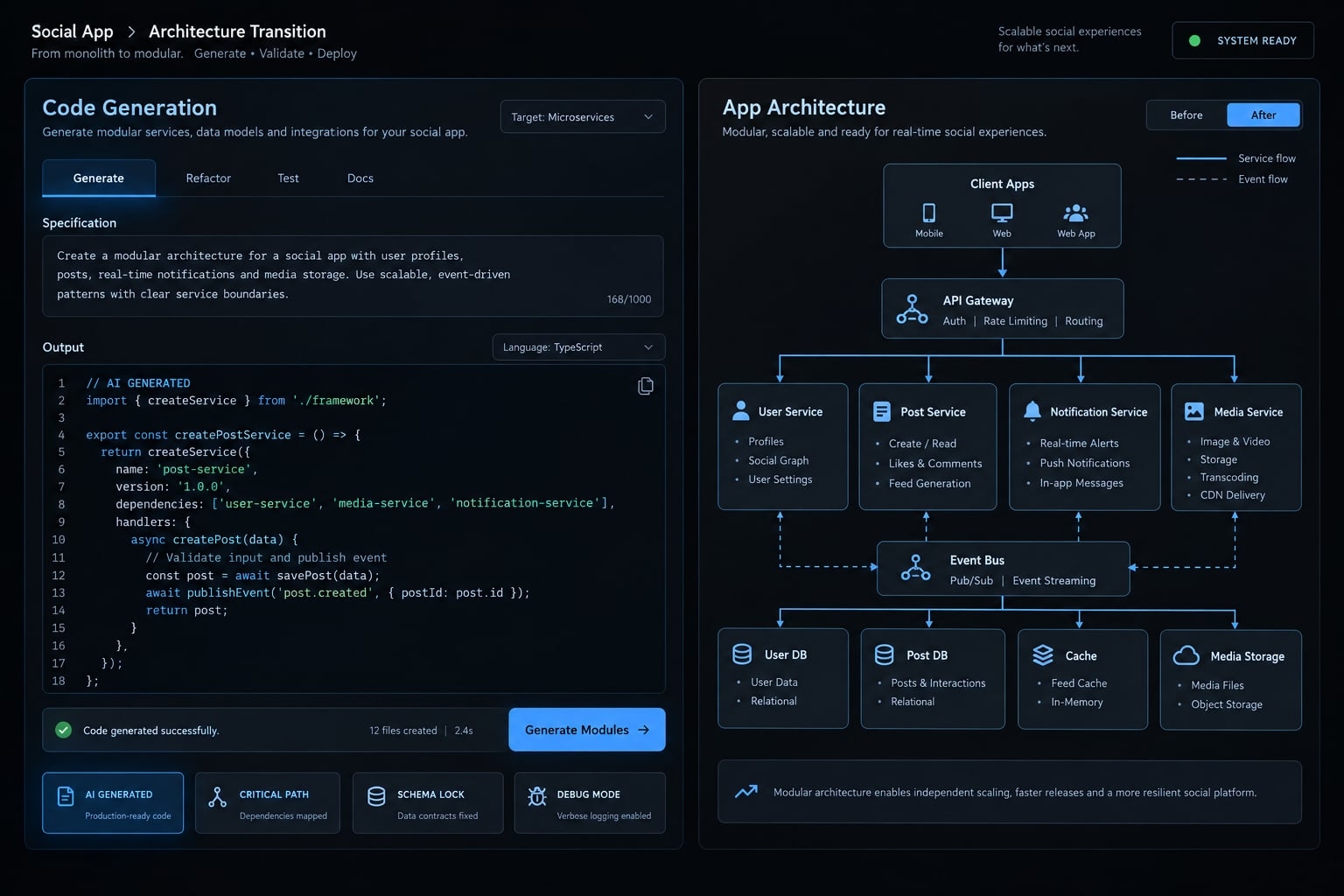
What does it mean to vibe code a Social App?
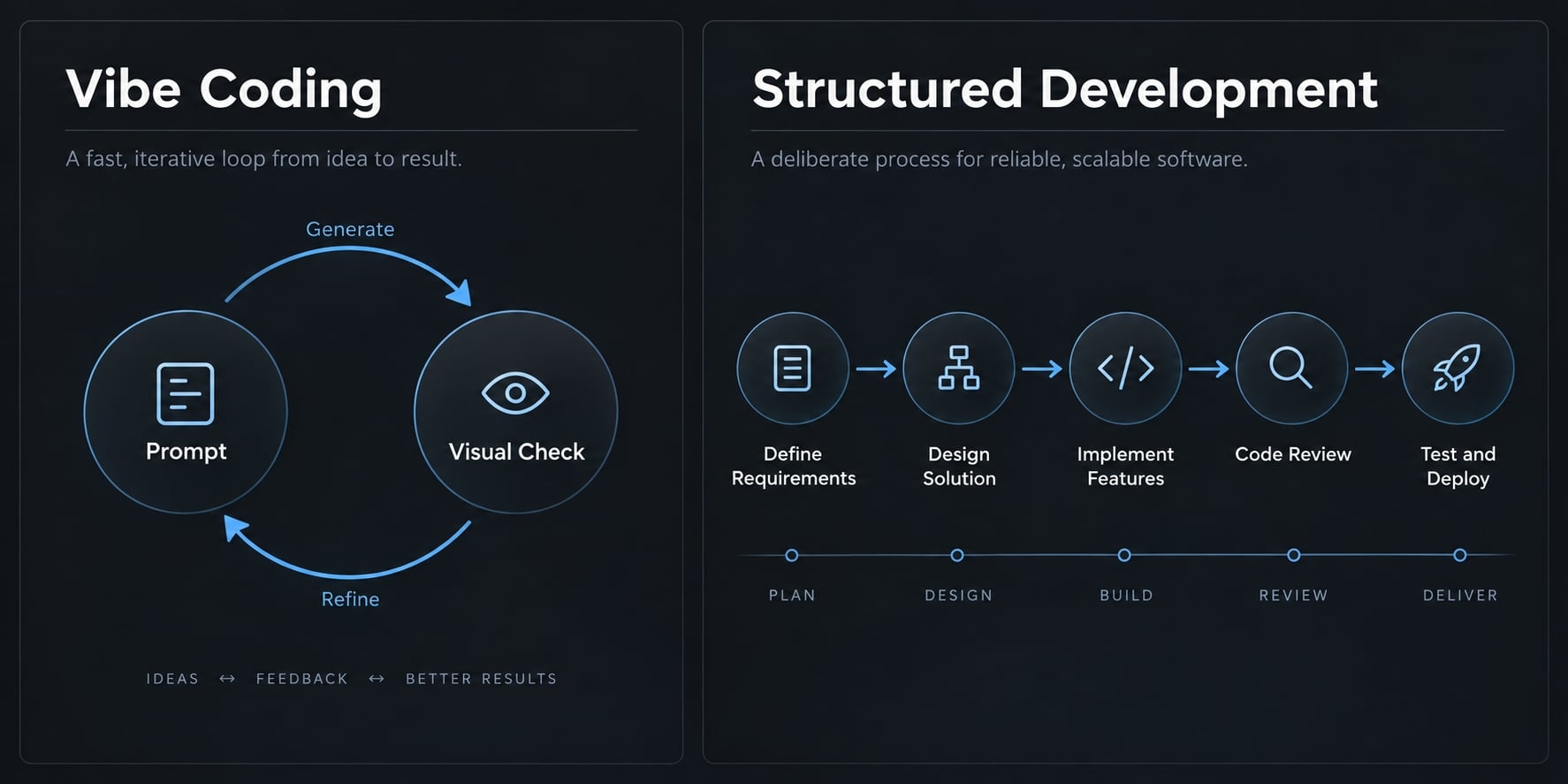
Vibe coding a social app means describing desired features in natural language, letting AI generate or revise the software, and iterating through prompts. In its narrower sense, the builder accepts changes without closely understanding the code. Popular usage is broader, but generated profiles, feeds, or messages still require verification before real-world use.
Andrej Karpathy’s original public description emphasized accepting generated changes without closely examining the code. That differs from using AI while retaining explicit requirements, review, tests and engineering accountability.
Prompt-driven development means directing software changes through written instructions. Prompting itself is not the problem; the distinction is how changes are evaluated.
How the workflows differ
These are typical patterns, not rigid categories or judgments about the person building the application.
Dimension | Vibe-coding pattern | Structured AI-assisted development |
|---|---|---|
Starting point | Describe a desired experience | Define requirements and acceptance criteria |
Review | Inspect visible results | Review behavior and implementation |
Debugging | Prompt until the symptom disappears | Investigate causes and verify corrections |
Testing | Try the main workflow | Test expected and failure conditions |
Understanding | Implementation may remain unclear | Maintainers understand critical components |
Best fit | Exploration with limited exposure | Products requiring accountable operation |
What gets generated?
Consider an illustrative customer community for a business software company. A founder requests profiles, posts, restricted groups, comments, direct messages, and moderator roles.
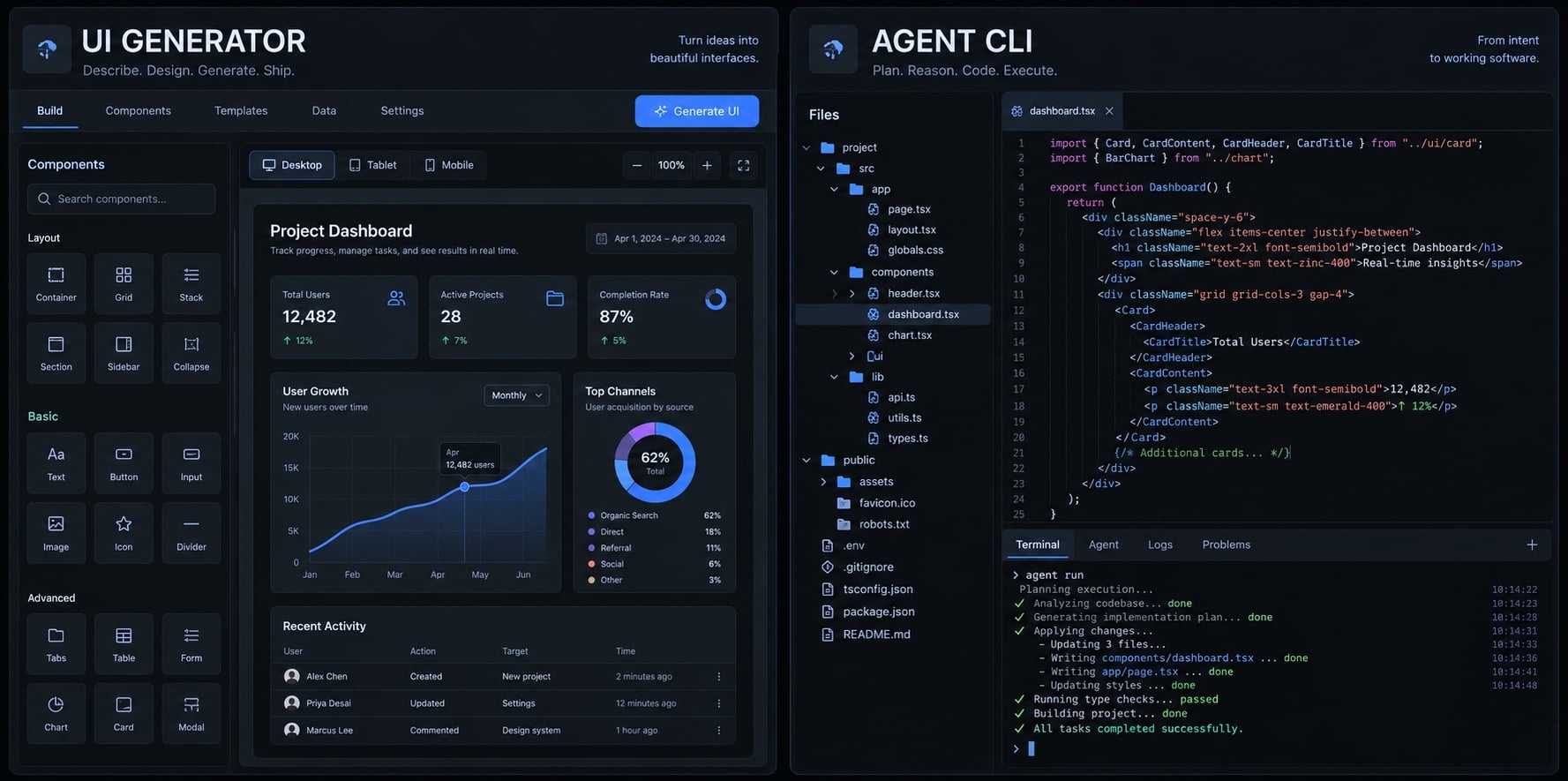
AI-generated software may include:
- Account screens for registration, sign-in and recovery.
- Profiles, feeds, posts, and comments.
- Messaging interfaces and notification behavior.
- Data connections and deployment setup.
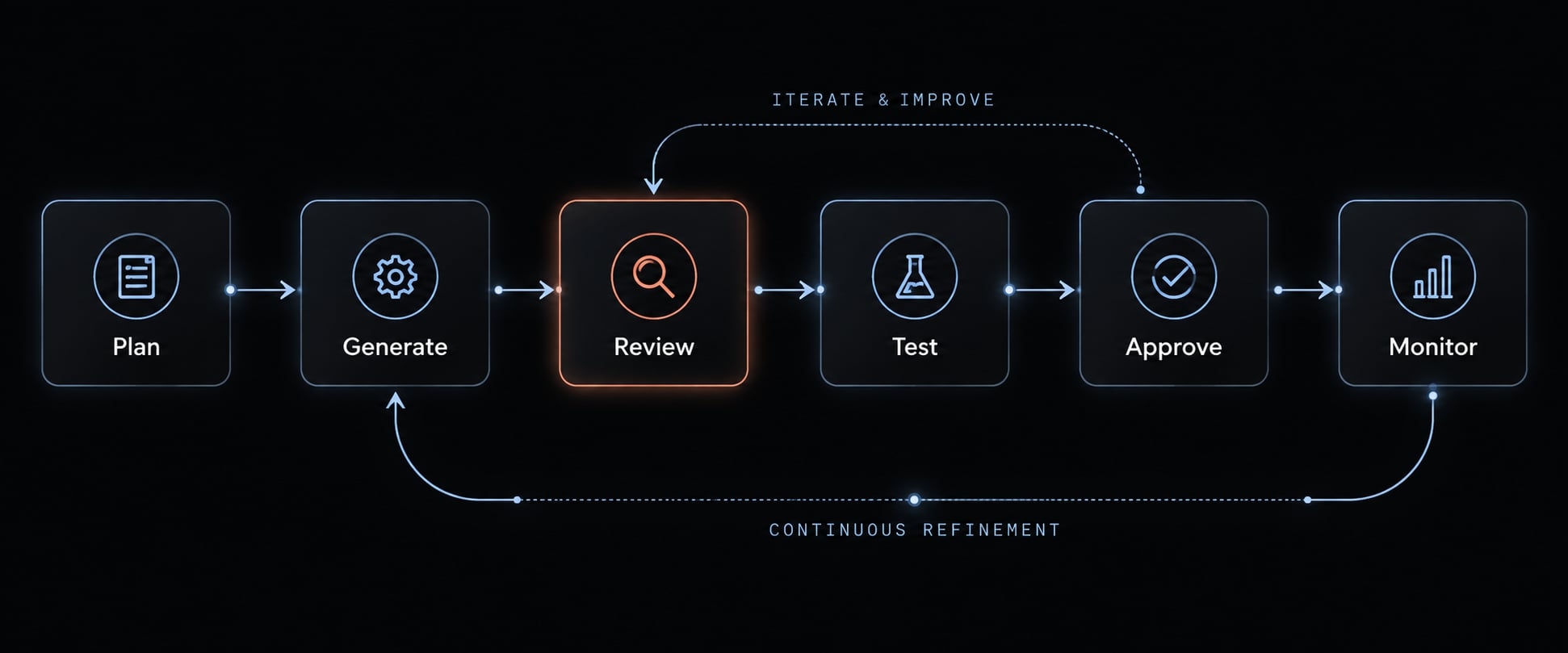
These outputs may be incomplete or inconsistently connected. The responsible loop is prompt -> generate -> inspect -> revise -> test -> approve. Human approval adds accountability, but does not guarantee correctness.
Can AI really build a functional Social App?
Yes - AI can help build a functional social-app prototype. Functionality means selected workflows work under stated conditions, not that every security, reliability or maintenance requirement is satisfied.
A mocked interface only displays sample content. A functioning prototype stores and retrieves data, allowing different accounts to interact with shared records.
What AI can usually do well
With suitable requirements and supported services, AI can help:
- Translate plain-language requirements into interfaces.
- Generate common account and content structures.
- Create actions to add, view, edit, and delete records.
- Connect services when configuration and credentials are supplied.
- Revise layouts and interaction flows.
- Reduce repetitive setup work.
Full-stack scaffolding is the initial structure across the interface, server, and database - not a completed system design.
Tool categories matter. Lovable’s documentation describes an AI app-building environment; Claude Code’s documentation describes a coding agent working with codebases and development tools. An AI app builder and a coding agent offer different starting points, even when their capabilities overlap.
What a working demo does not prove
For rapid prototyping, visible success is useful evidence - but only of the behavior actually tested.
Visible result | What remains unproven |
|---|---|
Accounts can be created | Recovery and session security |
Messages can be exchanged | Prevention of unauthorized access |
A feed displays posts | Moderation and behavior under load |
The app is deployed | Monitoring, backups, and rollback |
The code runs | Understandable, testable maintenance |
In the illustrative customer community, two test accounts might exchange comments successfully while cross-account restrictions remain untested. Profile deletion might remove a screen without removing associated uploads.
Calling the result “production-ready code” skips these unresolved questions. Deployment establishes availability, not readiness for people to entrust their information to the application.
Where vibe coding works well and where it stops being enough
Prompt-first experimentation is useful when exposure and failure costs are low. Actual risk matters more than the product-stage label.
Good use cases
Suitable starting points include:
- Clickable demos and founder prototypes for communicating an idea.
- Design exploration and learning projects.
- Restricted internal experiments without sensitive information.
- Product validation using synthetic data - fabricated records rather than real customer information.
“Internal” does not automatically mean low risk. An internal community containing confidential customer discussions still needs meaningful protections.
Triggers for stronger controls
Increase scrutiny when the application introduces:
- Real personal data or private messages.
- Payments or publicly submitted content.
- Children or vulnerable audiences.
- Business-critical workflows or consequential downtime.
- Multiple maintainers.
- Meaningful harm from data loss, abuse, or unauthorized access.
Human-in-the-loop development means people review consequential decisions and changes instead of accepting automated output without oversight.
Match controls to exposure
This practical stage model is a decision aid, not a certification standard. Change autonomy means how freely AI may modify the application within reviewed boundaries.
Stage | Typical exposure | Required emphasis | Change autonomy |
|---|---|---|---|
Demo | Invented accounts and content | Isolation and clear limitations | Broad experimentation in a sandbox |
Prototype | Selected working interactions | Document assumptions and test core flows | Changes within defined scope |
Closed beta | Invited real users | Verified controls and assigned operational owners | Changes behind review and test gates |
Production | Ongoing user dependence | Monitoring, recovery, maintenance, and incident response | Automation within established release controls |
The customer-community demo may use invented identities. A closed beta introduces real customers, making privacy and access failures consequential immediately.
Automation does not necessarily decrease as a product matures. Review gates, test evidence, and accountability must strengthen as exposure and potential harm increase. A small beta is not permission to leave private-data controls unverified.
Why Social Apps are harder than they look
Social apps let users affect other users’ content, privacy, and experience. Each visible feature therefore depends on rules and operational processes that a screen cannot demonstrate.
Identity and account security
Sign-in is only one part of account protection. Recovery, sign-out, session expiry, and invalid-login behavior also need testing.
Managed authentication can reduce custom implementation work, but configuration still matters. Request evidence that account recovery and expired sessions follow the intended policy.
Permissions and private data
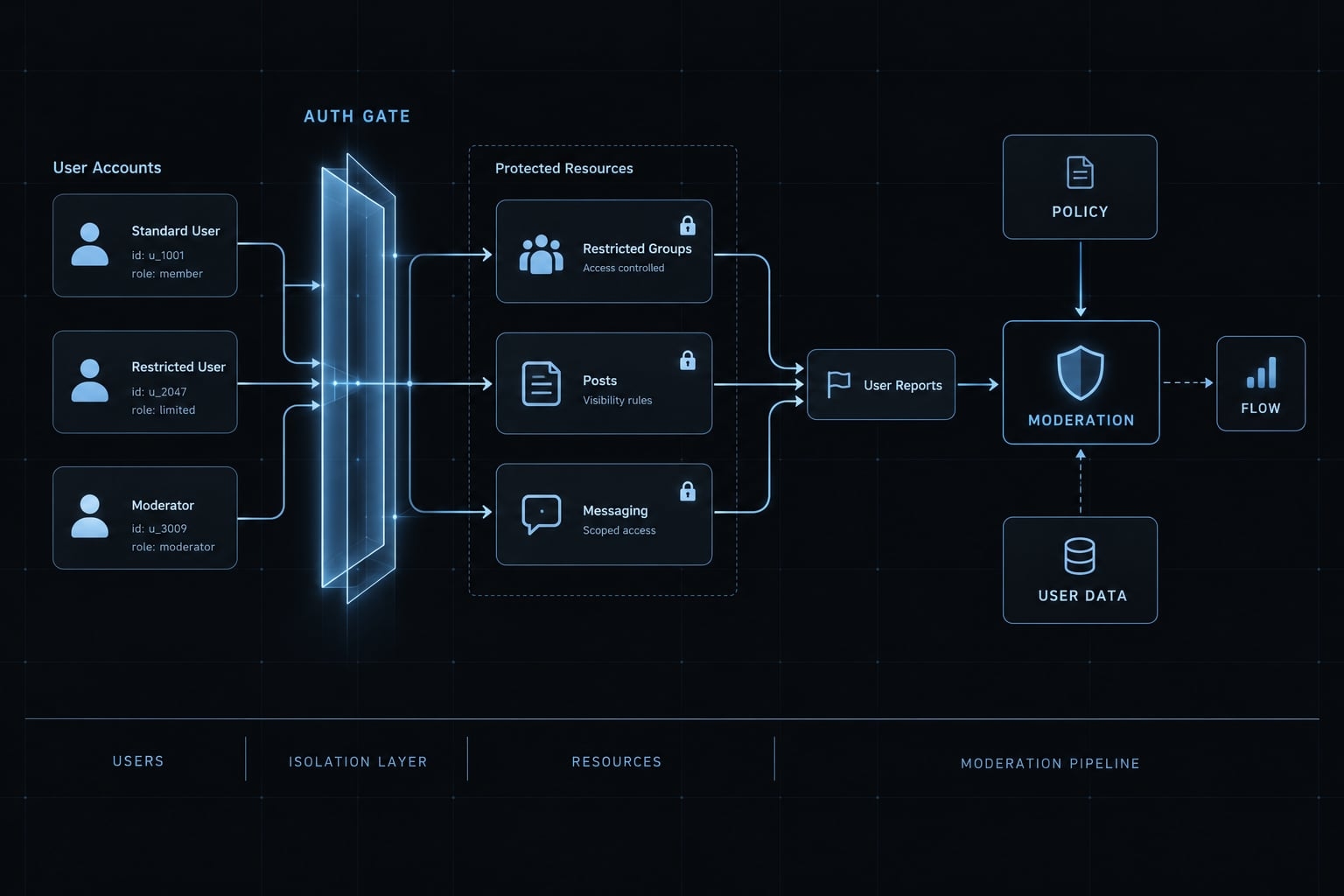
Authentication establishes identity; authorization determines allowed actions. Hiding a moderator button does not prevent someone from requesting the underlying action directly.
OWASP’s Authorization Cheat Sheet recommends checking permissions on every request and denying access by default. Restrictions belong at trusted server or data boundaries, including database policies where applicable.
Illustrative test (not a reported project result): Account A belongs to a restricted group; Account B does not. Attempt access as B and record expected denial, observed behavior, corrections, and retest results. Passing this test proves only that tested path.
User-Generated content and moderation
User-generated content is material submitted by members. Content moderation needs both controls and people responsible for responding.
These are baseline controls, not complete abuse-prevention measures.
Problem | Baseline control |
|---|---|
Spam | Posting limits and review queues |
Harassment | Reporting, blocking, and escalation |
Impersonation | Identity complaints and moderator action |
Harmful links | Link screening and removal procedures |
Repeat abuse | Documented restrictions and enforcement |
A report button without a review owner is incomplete. Automated flags assist judgment; they do not replace it.
Messaging and Real-Time interaction
Private messaging requires access checks, predictable delivery, blocking rules, and retention decisions. Real-time updates add questions about duplicate or missing messages.
Notification previews can expose content even when conversation screens are restricted. Test notification behavior alongside message access.
Data deletion and user consent
Removing a profile does not necessarily remove uploads, messages, or copies held by connected services.
ICO guidance on erasure describes rights and exceptions under UK data-protection law. Applicable duties vary by jurisdiction, audience, and processing. Document deletion, anonymization, backup retention, and exceptions; consent is not the legal basis for every activity.
Growth, reliability and operating costs
Scalability means handling increased demand without unacceptable degradation. A busy customer event can multiply posts, uploads, database work, and notifications.
Estimate these usage costs and test representative demand. Runtime AI token costs apply when the app itself uses AI; development-agent charges are a separate expense.
The main risks of a vibe-coded Social App
The risks include immediate harm and an inability to maintain the product later. None is unique to AI-generated applications, but unchecked generation can leave assumptions undocumented.
This matrix connects common failure patterns to business consequences; it does not assign probability or severity.
Risk area | Failure pattern | Consequence |
|---|---|---|
Security | Exposed credentials or weak restrictions | Account or data compromise |
Privacy | Excessive collection or incomplete deletion | Trust damage and regulatory exposure |
Maintainability | Inconsistent, poorly understood code | Slower and less predictable changes |
Testing | Failure conditions remain untested | Unexpected behavior reaches users |
Architecture | Features assume conflicting rules | Costly redesign and delayed releases |
Dependencies | Unverified packages and integrations | Software supply chain exposure |
Ownership | No accountable maintainer | Unresolved incidents and fragile fixes |
Scalability | Unexamined service and data usage | Outages or rising operating costs |
The software supply chain comprises the external packages, tools, and services the application depends on. Their origin and maintenance status deserve review, not just whether installation succeeds.
Delayed failure can be more dangerous than immediate failure
An obvious error interrupts a demo. A hidden permission defect may persist after customers have entrusted private information to the application.
That delayed discovery can create investigation, notification, support, and recovery work. Its consequences depend on what was exposed and which obligations apply.
The productivity tax of “Almost Correct” code
The productivity tax is a descriptive concept rather than a formal metric. It represents the hidden overhead—debugging, testing, and refactoring—required when AI-generated code looks correct on the surface but misses critical underlying requirements. Ordinary review is necessary work; avoidable rework comes from discovering incorrect assumptions after other features depend on them.
Technical debt becomes a product constraint
Technical debt is future work created by shortcuts or unresolved design weaknesses. Deliberate, documented prototype debt may be reasonable.
Unchecked changes and unmanaged shortcuts are different. Adding a customer-manager role might reveal inconsistent permissions across groups, messages, and moderation. Fixing those differences delays delivery.
Code maintainability depends on understandable behavior, consistent rules, and repeatable tests - not on whether a human or AI originally wrote the implementation.
Ten checks before real users join
Readiness requires observable evidence, not an AI assurance. A qualified maintainer should review application testing and security review findings, recording each check’s owner, evidence, status, and unresolved issues.
This is a baseline checklist, not an exhaustive audit, legal certification, or guarantee from human review.
- Verify that… authentication works beyond successful sign-in. Record recovery, sign-out, invalid-credential, and expired-session tests.
- Verify that… users cannot access unauthorized data. Use multiple accounts to test prohibited actions directly against trusted access boundaries.
- Verify that… secret credentials are not exposed. Review browser assets, repository history, and secret-scan findings; distinguish intentionally public client identifiers.
- Verify that… private features enforce sharing rules. Test messages, restricted groups, file links, and access after membership removal.
- Verify that… reporting, blocking, and moderation work. Route a test report to an owner and document action and escalation procedures.
- Verify that… deletion matches the stated policy. Review the data inventory and test connected systems, including disclosed retention exceptions.
- Verify that… critical workflows have repeatable tests. Record normal and failure-condition results, including unresolved failures.
- Verify that… failures are visible and recovery is workable. Send a test alert to an owner; check rollback and relevant backup restoration.
- Verify that… dependencies and integrations are reviewed. Record inventory, origins, versions, vulnerability findings, and decisions about unresolved issues.
- Verify that… an accountable person owns the system. Confirm code ownership, a system map, operational access, and incident responsibilities.
Item two checks general authorization. Item four applies those rules to private social features, where sharing and membership changes create additional failure paths.
Launch decision guidelines:
- Internal demo: Synthetic or non-sensitive data, restricted access, and no material impact on real users.
- Limited beta: Critical data and access controls verified; monitoring, moderation, support, and recovery responsibilities assigned.
- Delay public launch: Ownership is unclear, sensitive data cannot be traced, or critical controls remain unverified.
Beta readiness is not public-launch approval. An unresolved critical access failure can block even a limited beta. Review scope should expand with the application’s audience, data sensitivity, and consequences of failure.
How to turn a vibe-coded prototype into a maintainable product
Start by understanding what exists, not generating more features. Useful prototype work can often be preserved while sensitive flows and fragile components receive targeted attention.
Freeze nonessential feature generation
Define the core product hypothesis - for example, whether restricted customer discussions solve a genuine collaboration need. Pause unrelated additions, while continuing necessary fixes and learning.
Document the current application
Record the app’s components and how they connect - its system architecture. Include services, databases, deployment setup, data flows, and permission boundaries so another maintainer can follow the system.
Map sensitive data and high-risk actions
Identify personal information, private content, moderator actions, and deletion paths. Include payment integrations if present, and establish who may perform each consequential action.
Review and test critical paths
Prioritize account access, permissions, content handling, deletion, and moderation over visual polish. Translate intended behavior into repeatable checks, including cases that should be rejected.
Refactor the most fragile components
Refactoring AI-written code means improving its internal structure while preserving intended behavior. Target demonstrated weaknesses rather than ordering a complete rewrite solely because AI generated the code.
Establish deployment and monitoring controls
Assign approval, release, rollback, alert handling, and recovery responsibilities. NIST’s Secure Software Development Framework supports integrating security practices throughout development rather than treating release review as the only checkpoint.
Move from prompt-and-accept to Plan-Review-Test
Transition to a structured cycle: Plan -> Generate -> Review -> Test -> Approve -> Monitor, with findings returning to planning. This is AI-augmented engineering: AI supports work while human engineers retain responsibility across the software development lifecycle (SDLC).
Toolkits such as AgentKit can package this cycle as reusable workflows (plan → cook → review → ship) for Claude Code, Codex, and other supported coding agents, with Cursor in beta. They help keep review and testing steps consistent, but verification and release approval remain human responsibilities.
Frequently asked questions
Is vibe coding a reliable way to build social apps?
AI-assisted coding can speed up functional prototypes and concept exploration. However, it is not a "plug-and-play" replacement for software engineering. While tools can generate the foundation of a social app, significant engineering work is needed to handle edge cases, data security, authorization boundaries, and long-term maintenance.
How does vibe coding compare to traditional development?
Traditional development relies on manual code writing and architecture planning, offering high control but slower initial speed. Vibe coding uses AI-driven generation to accelerate UI and logic production, but it introduces a "productivity tax" where developers must spend time inspecting, debugging, and refactoring AI-generated output to reach production-grade quality.
What are the main risks of using vibe coding for social apps?
The primary risks include weak access controls (permitting unauthorized data access), incomplete data deletion paths, and unmanaged technical debt. When generated changes are accepted based on visible results, background requirements such as authorization and deletion can remain unverified. Those gaps can stay hidden until real users and data are involved.
Should I launch a vibe-coded social app to the public?
You should only launch after satisfying a rigorous readiness checklist. A working demo is not proof of security. Before public release, you must verify account security, enforce strict authorization boundaries between users, establish a moderation process, and ensure you have an accountable maintainer capable of addressing production incidents.
How do I transition a prototype to a maintainable product?
Transitioning requires moving from a prompt-first approach to a structured development cycle. Start by documenting your existing components, mapping sensitive data flows, and establishing a workflow that includes rigorous human review, testing of failure conditions, and accountable release management.
Read more:
- 7 practical vibe coding examples: Build apps faster with AI
- Vibe coding documentation: A guide for AI-assisted projects
- How to vibe code: A practical beginner guide to AI development
Conclusion
Vibe coding a social app is ideal for rapid prototyping, but a working demo does not prove data privacy, secure deletion, or long-term maintainability. Speed in generating the first feed matters far less than robust permission controls, system monitoring, and reliable recovery.
Before onboarding real users, shift focus from generation speed to accountability. Use the Social App Production-Readiness checklist as your working audit document - assigning explicit owners, evidence, and status to every critical control to ensure your system is truly launch-ready.