Vibe coding: What it means, how it works, and where the risks begin
Vibe coding is one of the fastest-rising terms in AI-assisted software development, but many people still use it loosely. In simple terms, it describes a more conversational way to build software by telling AI what you want and refining the result instead of writing every line manually. For founders, PMs, and dev teams, this changes everything: The distance between an idea and a working prototype is virtually collapsing. But the concept is easy to over-romanticize. This guide explains what is vibe coding, where the term came from, how the workflow works in practice, and when the speed is useful versus when the risks become too high to ignore.
What is vibe coding?
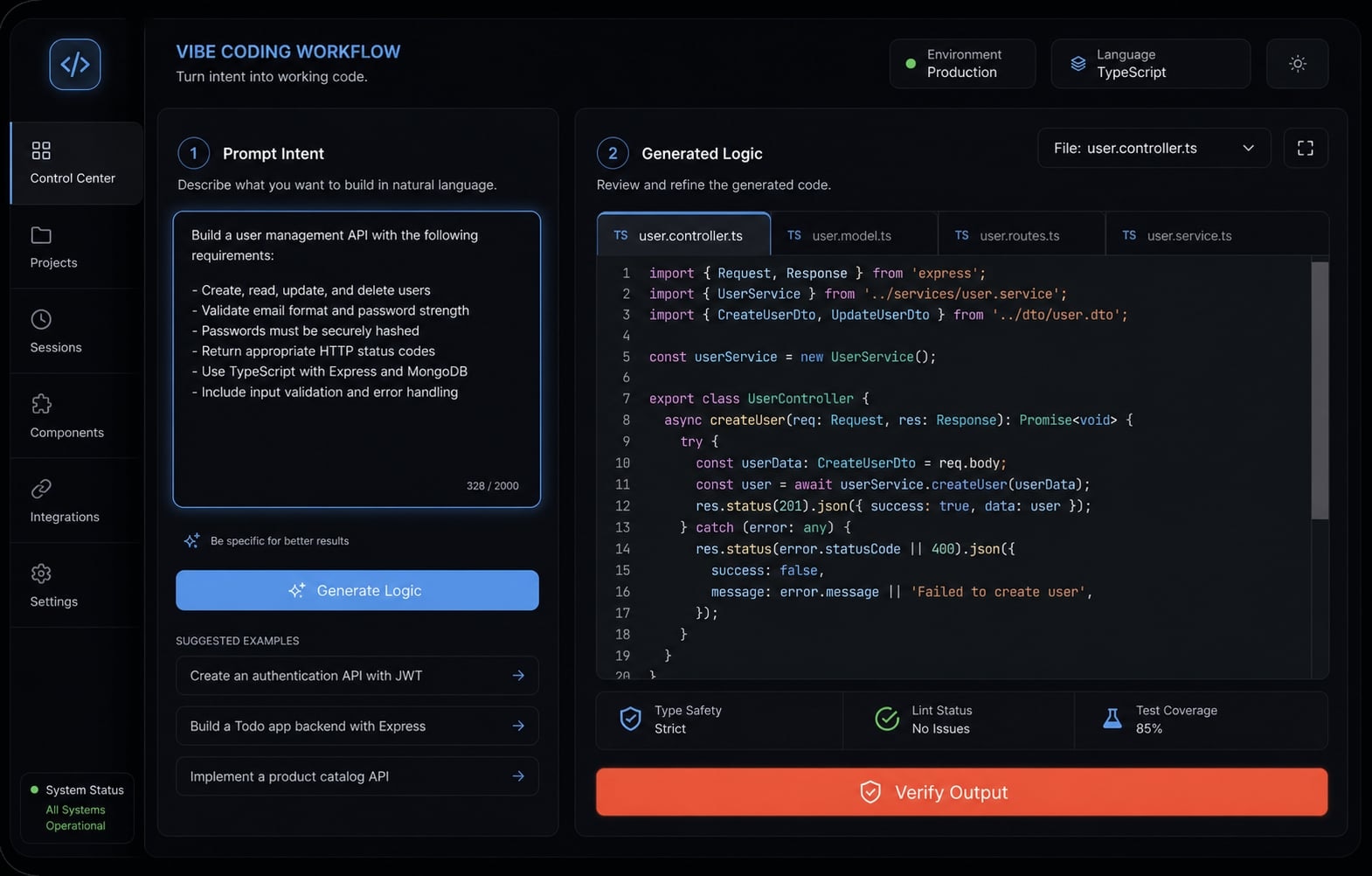
Vibe coding is an AI-assisted software development approach where a person describes what they want in plain language, and an AI tool generates or revises code in response. The human still owns the outcome by reviewing the output, testing behavior, and making decisions about architecture, security, and quality before anything real goes live.
Definition in simple terms
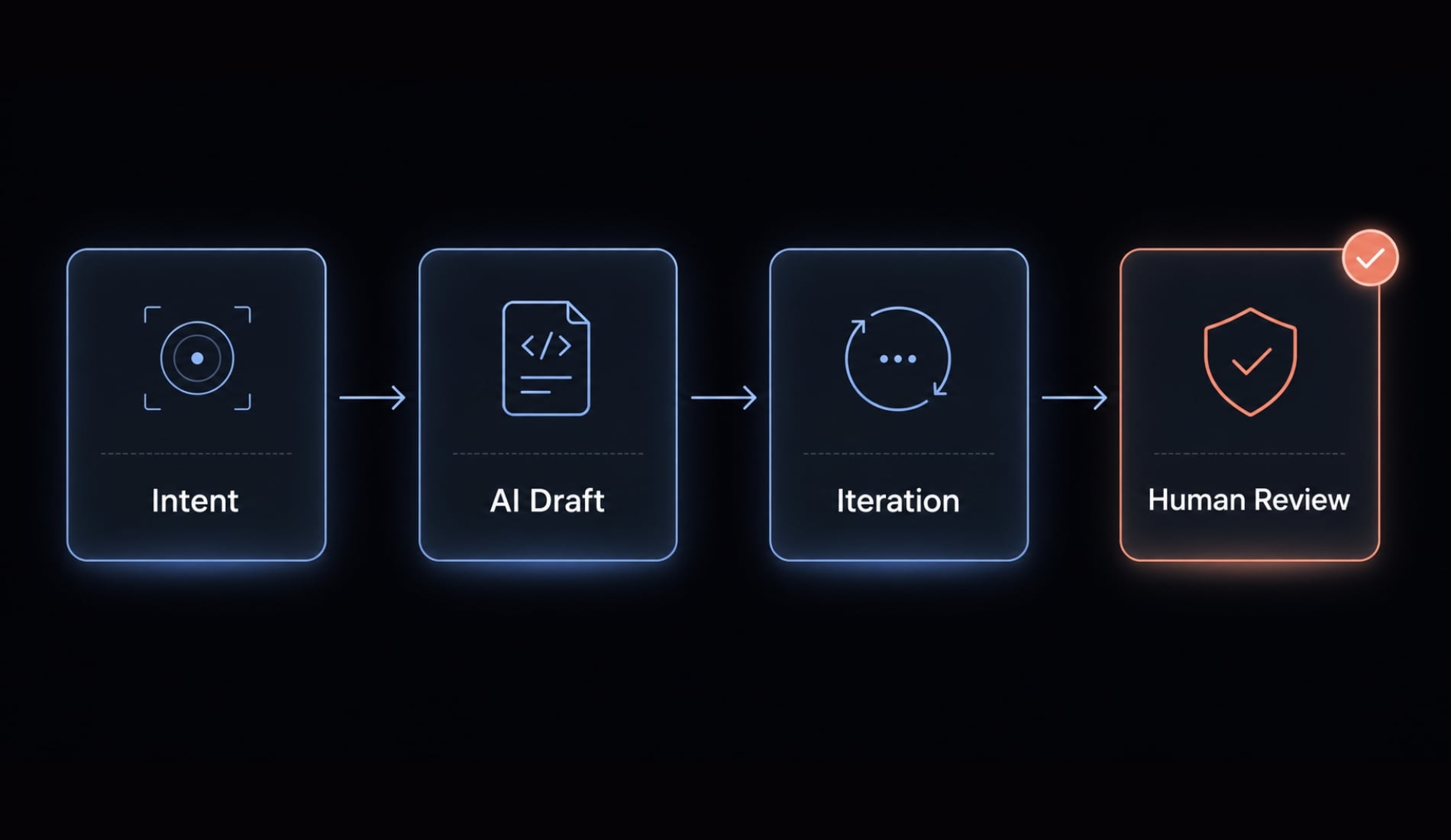
At its core, vibe coding represents a fundamental shift in how we interface with software creation. Instead of manually writing every implementation detail, you describe the goal, the behavior, and the constraints, then the AI helps produce a draft. In practice, most teams use vibe coding as an ask → inspect → revise loop. That makes it a form of natural language programming, but not a hands-off one.
What vibe coding is not
- Not fully autonomous engineering: The AI may generate code, but it does not remove the need for human judgment.
- Not guaranteed production-ready code: A working prototype can still be fragile, messy, or unsafe.
- Not a replacement for review, testing, security, or system design: Those responsibilities still stay with the team.
What changes is the way software gets started. The human spends less time on raw syntax and more time expressing intent, checking outputs, and steering the result. That is why vibe coding is really a question about workflow, not just code generation.
It is also important to separate vibe coding from autonomous software engineering. In vibe coding, the AI assists. It does not independently own delivery, governance, or operational responsibility. Testing still matters. Architecture still matters. And code that “looks done” still needs to be understood before anyone should trust it.
Where did the term come from, and why is it trending?
The phrase is widely associated with Andrej Karpathy, who is often linked to the early public discussion that helped popularize it. The exact boundaries of the term are still loose, but the reason it spread so quickly is clear: It gives a name to a behavior many people had already started recognizing in modern coding workflows.
Stronger models, better interfaces, and more accessible tools have reduced the friction between idea and prototype. Products such as GitHub Copilot, Cursor, Claude Code, Bolt, and Replit made generative AI engineering feel less like a novelty and more like a practical working style.
Why the term resonates: The term resonates because it captures a visible shift from syntax-first coding to intent-driven development. People are no longer only telling computers exactly how to do something line by line. Increasingly, they are telling AI what outcome they want, then guiding the path toward that outcome.
That appeals to different groups for different reasons:
- Non-technical founders see a faster route to idea validation.
- Developers using AI tools see leverage for repetitive work.
- Product teams see a quicker way to explore workflows and prototypes.
This broader AI coding trend is not only about speed. It reflects a change in how software gets expressed, reviewed, and iterated.
How vibe coding works in practice
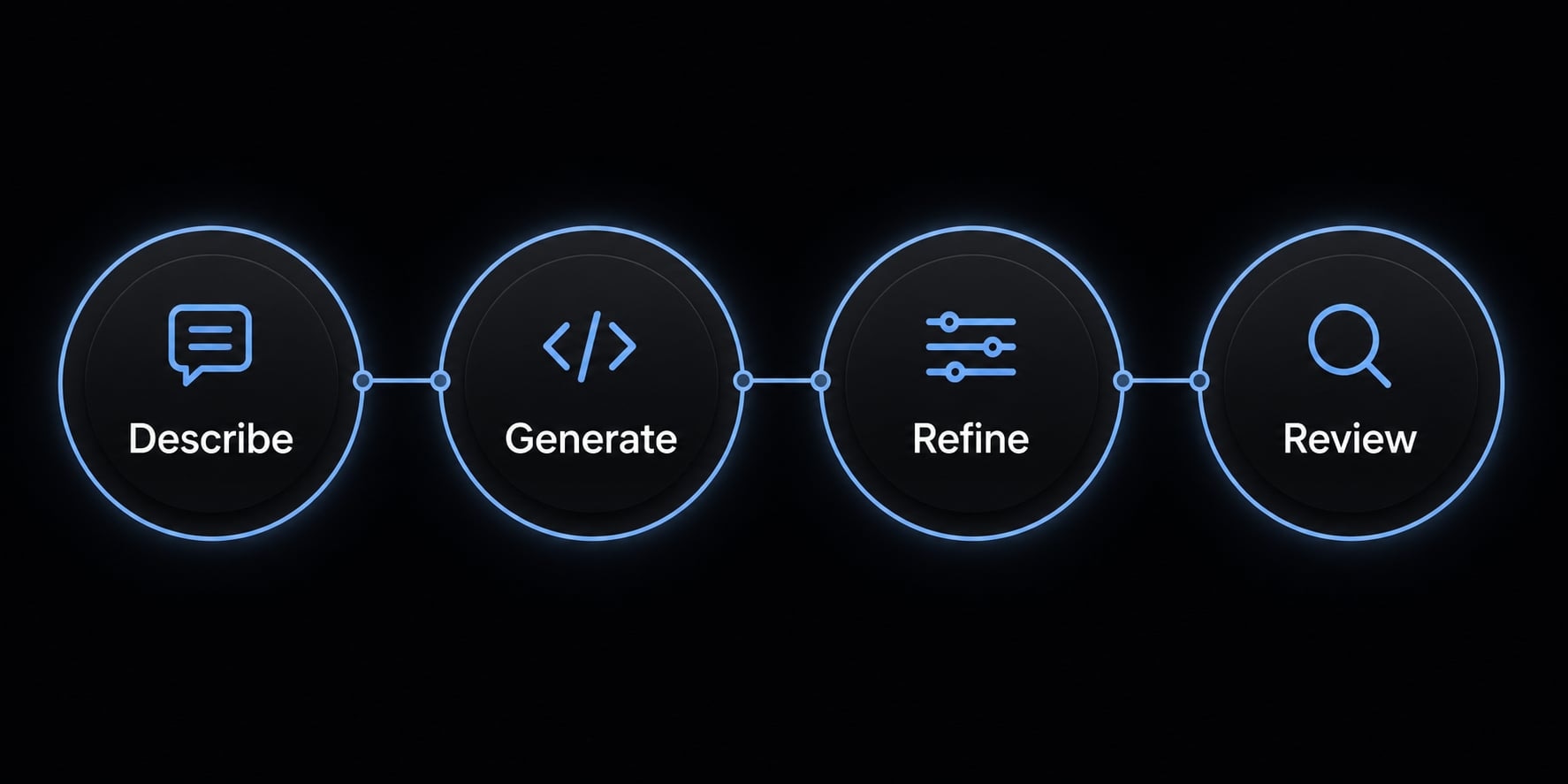
At a high level, vibe coding follows a prompt-to-app workflow. A person describes an outcome, the AI generates a first draft, and the result improves through iterative refinement.
- Describe the outcome in plain language.
- Let the AI generate a first draft.
- Test and refine through feedback loops.
- Review for quality, security, and maintainability.
Step 1: Describe the outcome, not just the feature
Good results usually start with a clear goal. Instead of saying only “build a dashboard,” people get better output when they explain who it is for, what it should do, and what constraints matter.
Useful context often includes:
- The target user.
- The main workflow.
- Preferred tech stack.
- UI style or interaction expectations.
- Acceptance criteria.
- Data or security constraints.
This is where context engineering matters. In simple terms, context engineering means giving the AI enough useful background so it can make better decisions. The model is rarely limited only by the prompt. It is often limited by missing context.
Step 2: Generate and inspect the first draft
The AI may generate interface components, backend logic, file structure, database schema, tests, or integration suggestions. For rapid prototyping, this can remove a large amount of startup friction.
But the first draft should be inspected before it is trusted. AI-generated code often looks complete earlier than it actually is. It may run, but still contain weak assumptions, poor structure, or hidden quality problems.
Step 3: Refine through feedback loops
This is where the real work often happens. Teams run the output, observe what breaks, clarify requirements, correct behavior, and re-prompt with more specific instructions.
A common loop looks like this:
- Generate
- Run
- Inspect
- Fix
- Re-test
- Refine again
The more specific the feedback, the better the results tend to become. That is why iterative refinement is central to vibe coding, not optional.
Step 4: Review before anything real goes live
Before software is used for anything meaningful, a human-in-the-loop review is necessary. That review should cover:
- Correctness.
- Code quality.
- Maintainability.
- Security.
- Dependency risk.
- Fit with the broader system.
The final test is not whether “it runs.” The real question is whether it is understandable, supportable, and safe enough for the context in which it will be used.
Vibe coding vs traditional programming: What actually changes?
The biggest difference in vibe coding vs traditional programming is not that engineering disappears. The real shift is that the human role moves away from writing every line manually and toward guiding, evaluating, and refining AI output. In many teams, the bottleneck shifts from syntax work to judgment and quality control.
Comparison table
Aspect | Traditional Programming | Vibe Coding |
|---|---|---|
Primary input | Manual code | Natural language instructions |
Human role | Builder + implementer | Guide + reviewer + tester |
Speed to prototype | Slower | Faster in many cases |
Barrier to entry | Higher | Lower |
Quality control | Embedded in engineering workflow | Must be added intentionally |
Production readiness | More predictable | More variable |
Ownership | Human | Still human |
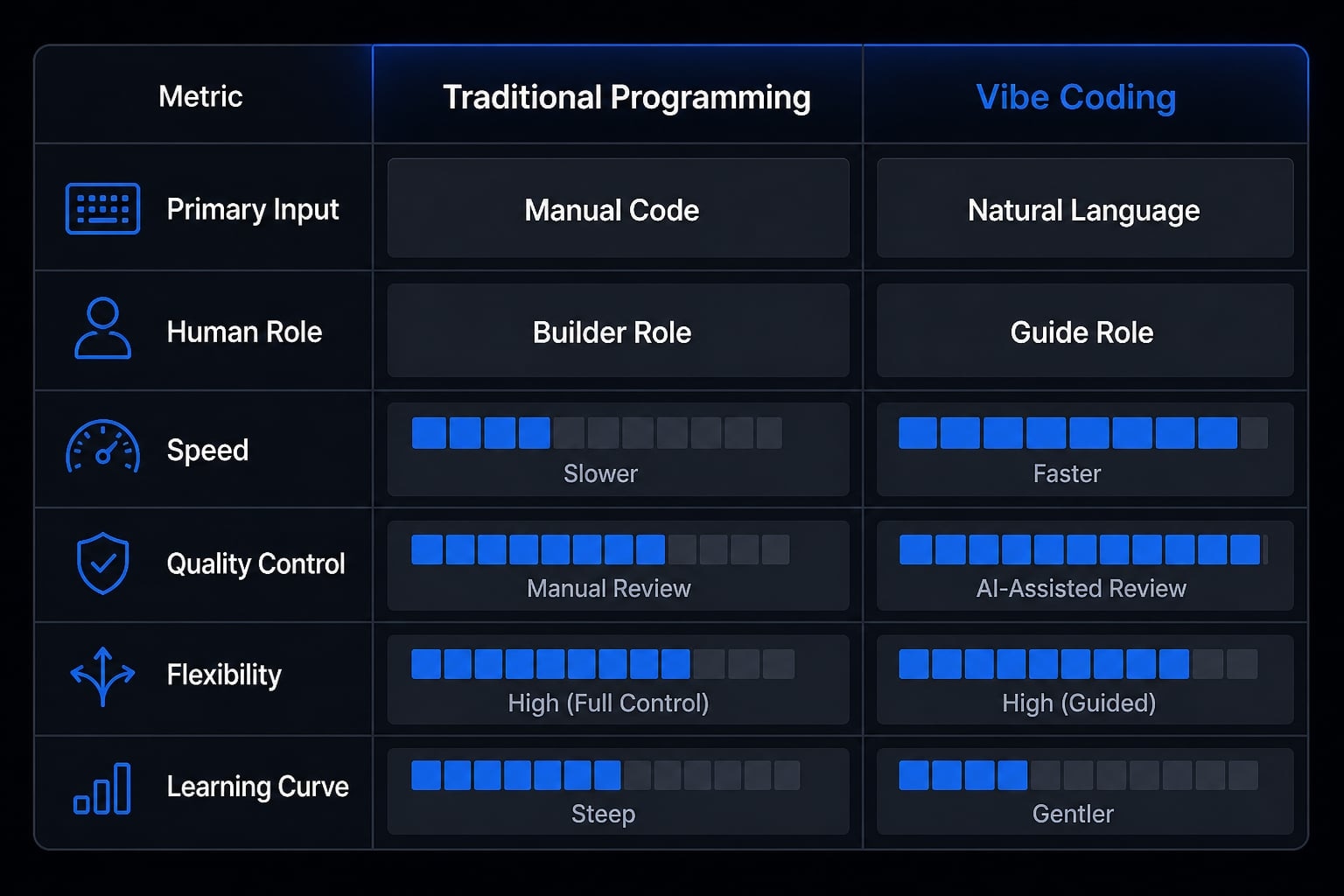
This is why many teams describe the workflow less as replacement and more as AI pair programming at a broader level. The AI helps generate and revise, but the person still decides what is acceptable.
What does not change
- Requirements still matter.
- Bugs still happen.
- Testing still matters.
- Security still matters.
- Maintainability still matters.
The software development lifecycle also does not disappear. Teams still need planning, review, debugging, validation, and release discipline. Coding expertise may be required in different ways, but responsibility does not go away. In other words, the tool changes the interface to software creation, not the need for accountable engineering.
Who vibe coding is actually for
Vibe coding is not equally useful for everyone in every situation. Its value depends on the goal, the complexity of the software, and how much technical judgment is available during review. The best use cases usually involve exploration, speed, or low-stakes workflows.
For founders and non-developers
For non-technical founders and solo builders, vibe coding can be useful for fast idea validation. It can help explore a product concept, mock a workflow, or create a simple internal tool without waiting for a full engineering cycle.
It becomes more sensitive when the software starts handling real customers, payments, identity, or private data. At that point, speed alone is not enough, and lack of technical review becomes a real business risk.
For developers
For developers, the strongest value is usually leverage. AI can help with:
- Scaffolding new components.
- Reducing boilerplate.
- Suggesting tests.
- Assisting with debugging.
- Accelerating refactoring tasks.
This is where developers using AI tools often get the most practical benefit. The output becomes far more useful when someone with engineering judgment can quickly see what should be kept, fixed, or discarded.
For product managers and small teams
For product teams, vibe coding can shorten the path between product intent and something testable. It can help PMs and small teams explore workflows, validate assumptions, and reduce waiting time for simple prototypes.
But even here, standards and ownership still matter. A faster prototype is useful only if someone is responsible for quality, scope, and the decision about whether it should remain experimental or move toward production. That is where AI-powered prototyping helps most: Early learning, not blind deployment.
The real benefits of vibe coding and why people like it
People are drawn to vibe coding for practical reasons. It can shorten the path from idea to working draft, make software creation feel more accessible, and help small teams test assumptions sooner. But faster output should not be confused with guaranteed correctness.
Most common upsides:
- Faster idea-to-prototype: Useful for rapid prototyping when the goal is to see something working quickly.
- Quicker iteration cycles: Teams can test changes through conversation instead of rewriting from scratch.
- Easier experimentation: Trying alternate flows, layouts, or features becomes less costly.
- Better leverage for small teams: Limited teams can increase output without hiring for every exploratory task immediately.
- More focus on outcomes than syntax: The workflow emphasizes user needs and behavior, not only code mechanics.
These benefits are also why people connect vibe coding with improved productivity and shorter time-to-value (the time it takes to reach a useful result). The barrier to software creation feels lower, which improves accessibility for both technical and semi-technical users.
Even so, good results still depend on clarity and review. Better prompt engineering can improve output quality, but it does not replace engineering discipline. In many cases, vibe coding is most valuable when teams use it to accelerate exploration while staying realistic about cleanup and quality control.
The risks, limits, and misconceptions you should not ignore
The biggest risk with vibe coding is not simply that the AI writes imperfect code. The deeper problem is false confidence. Software can appear to work while hiding structural, security, and maintenance issues that only show up later. Working code is not the same as reliable software.
Common risk #1: It works, but you do not really own it
A generated app can function while still being poorly structured and hard to understand. Files may exist, features may run, and the demo may look convincing. But if no one truly understands how the logic works, the team does not really own the system.
Ownership means more than having the files. It means being able to explain the behavior, change it safely, debug it under pressure, and maintain it over time. Without that, the hidden cost becomes maintainability and review burden.
This is where code quality matters most. A prototype can survive messy structure for a while. Production software usually cannot.
Common risk #2: Security gets deferred too easily
Security debt in AI-generated code is the hidden risk that builds up when software works well enough to use, but basic protections are missing or postponed. The code may appear functional, yet the safety work has not actually been done.
Common examples include:
- Hardcoded secrets or exposed credentials.
- Weak auth.
- Missing input validation.
- Unsafe database queries.
- Risky or outdated dependencies.
- Poor handling of user permissions.
These are not only technical defects. They can become direct business risks when software touches customer accounts, payments, or internal systems. Security vulnerabilities often stay invisible until someone actively reviews for them.
Common risk #3: The productivity tax is real
There is also a cleanup problem. Fast generation can create slow correction. This is often called the productivity tax: Output arrives quickly, but much of it is almost right rather than truly right.
That leads to extra time in:
- Debugging.
- Re-prompting.
- Rewriting unclear sections.
- Reviewing hidden side effects.
- Fixing inconsistencies across files.
The speed is real, but so is the downstream cost. If the draft requires heavy cleanup, the headline time savings may shrink quickly. This is one reason experienced teams treat vibe coding as an accelerator for drafting, not as proof that review can be skipped.
When vibe coding works well-and when it becomes risky
The simplest way to think about when to use vibe coding is this: It works best when speed and learning matter more than perfect architecture. It becomes riskier as the software handles sensitive data, critical workflows, or higher operational stakes.
Use case | Fit for vibe coding? | Why |
|---|---|---|
Quick prototype | High | Speed matters more than perfect architecture |
Internal admin tool | Medium-High | Useful if reviewed before wider use |
MVP for user testing | Medium | Good for validation, but needs stronger QA |
Production app with real customer data | Low-Medium | Requires disciplined review, security, and ownership |
Regulated or complex enterprise system | Low | Governance and risk requirements are too high for casual workflows |
Risk rises quickly when software becomes part of core operations or touches sensitive data. That is especially true for MVP development that starts as an experiment and later becomes real production software without stronger review practices.
For internal tools, the fit is often good if someone still checks permissions, data flows, and reliability. For customer-facing apps, the stakes rise. For regulated environments, AI governance and accountability requirements are usually too high for casual vibe-first workflows.
From ad hoc prompts to structured AI workflows
Once teams move beyond one-off experiments, the next challenge is repeatability. Casual prompting can be enough for exploration, but sustained delivery usually needs structured AI workflows with clearer review steps, reusable context, and named ownership.
In practice, that means teams start adding:
- Context management for project rules and standards.
- Reusable instructions and reusable skills.
- Review checkpoints for quality and security.
- Clearer handoff and accountability across agent workflows.
Think of this as the bridge between simple chat experiments and building production-ready AI. For teams that want more repeatable AI execution, developer-first systems such as AgentKit represent the next step beyond ad hoc prompting. The point is not to add ceremony for its own sake. It is to make AI output more consistent, inspectable, and easier to trust across real work.
Frequently asked questions
What is vibe coding?
Vibe coding is an AI-assisted software development practice where developers use natural language to describe intent, allowing AI tools to generate, debug, and refine code. It shifts the primary focus from manual syntax writing to high-level system design, iterative feedback, and rigorous human review.
How does vibe coding differ from traditional programming?
Traditional programming requires manual line-by-line coding and deep syntax knowledge. In contrast, vibe coding uses natural language prompts to guide AI assistants. While vibe coding accelerates prototyping, it places a higher responsibility on the human to review, test, and ensure the generated code is secure.
Is vibe coding suitable for production-ready applications?
It can be, provided the developer treats AI output as a draft that requires expert validation. Vibe coding is excellent for prototyping, but deploying to production requires manual security checks, unit testing, and architectural review to mitigate "security debt" and potential system vulnerabilities.
What are the main risks of using vibe coding?
The primary risks include "productivity tax," where debugging AI-generated code takes longer than writing it, and "security debt." Without proper human oversight, AI may introduce hardcoded credentials, weak authentication, or insecure dependencies that could compromise the application's integrity in a live environment.
Who should use vibe coding?
Vibe coding is ideal for non-technical founders needing rapid validation, product managers building simple prototypes, and experienced developers looking to automate boilerplate or scaffold new projects. However, it requires significant engineering judgment to ensure the final output meets enterprise-grade quality standards.
Does vibe coding replace the need for software engineers?
No. Vibe coding changes the engineer's role from a manual implementer to an architect and reviewer. AI handles the generation, but human engineers remain essential for critical tasks like debugging complex logic, performing security audits, and managing long-term system maintainability and scalability.
How can I make vibe coding workflows more repeatable?
To move beyond ad-hoc prompting, adopt structured AI workflows. This involves creating reusable context files, defining clear review checkpoints, and integrating AI into a consistent development lifecycle. Platforms that manage repository context and security policies help ensure that "vibe-coded" projects remain consistent and reliable.
Read more:
- Vibe coder meaning: How AI is changing software development
- How to vibe code: A practical beginner guide to AI development
- Vibe code mobile app: Build ideas faster with AI development
Conclusion
Vibe coding is best understood as a conversational, intent-first way to create software with AI. It can accelerate exploration, lower the barrier to prototyping, and help teams move from idea to draft faster. But it does not remove the need for review, testing, ownership, or engineering judgment.
The most useful mental model is simple: AI can help generate software, but humans still decide whether that software is correct, secure, maintainable, and fit for real use. If you are exploring how to make AI-generated development more repeatable, the next step is understanding structured AI workflows, review discipline, and quality checks for AI-generated code.