Andrej Karpathy vibe coding: Meaning, origin, workflow, and real limits
The term Andrej Karpathy vibe coding became so popular that it is now often used as a catch-all label for any AI-assisted programming. That creates confusion, because the original idea was more specific. If you are searching for the true meaning of vibe coding, it is important to note that not all AI-assisted development qualifies as vibe coding. In this guide, we break down the term in plain English - what it means, who coined it, how the workflow looks in practice, why it feels so powerful, and where the risks begin. Our goal is simple: To help you understand the term clearly, free from hype, unnecessary complexity, or vague definitions.
What does “Andrej Karpathy vibe coding” mean?
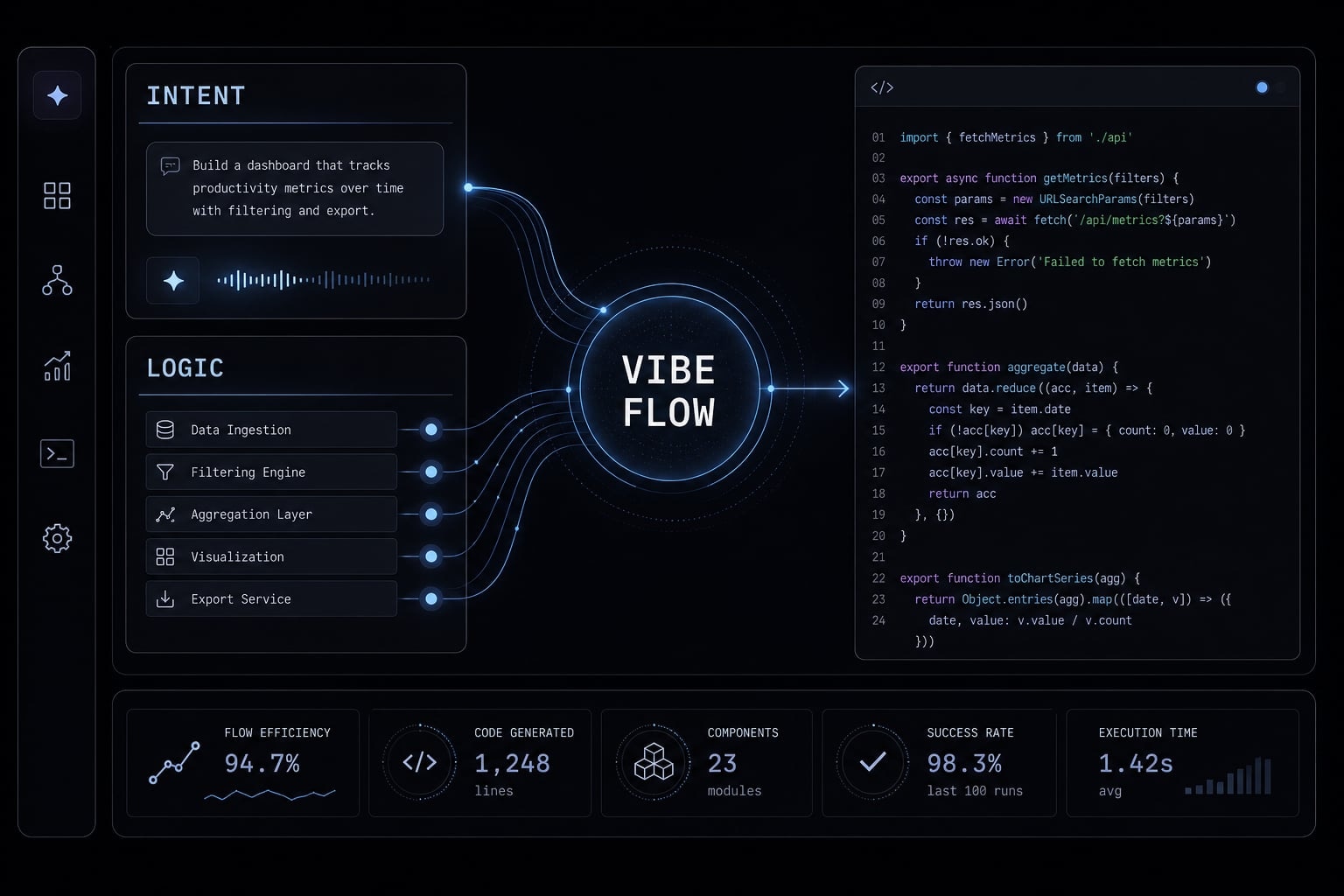
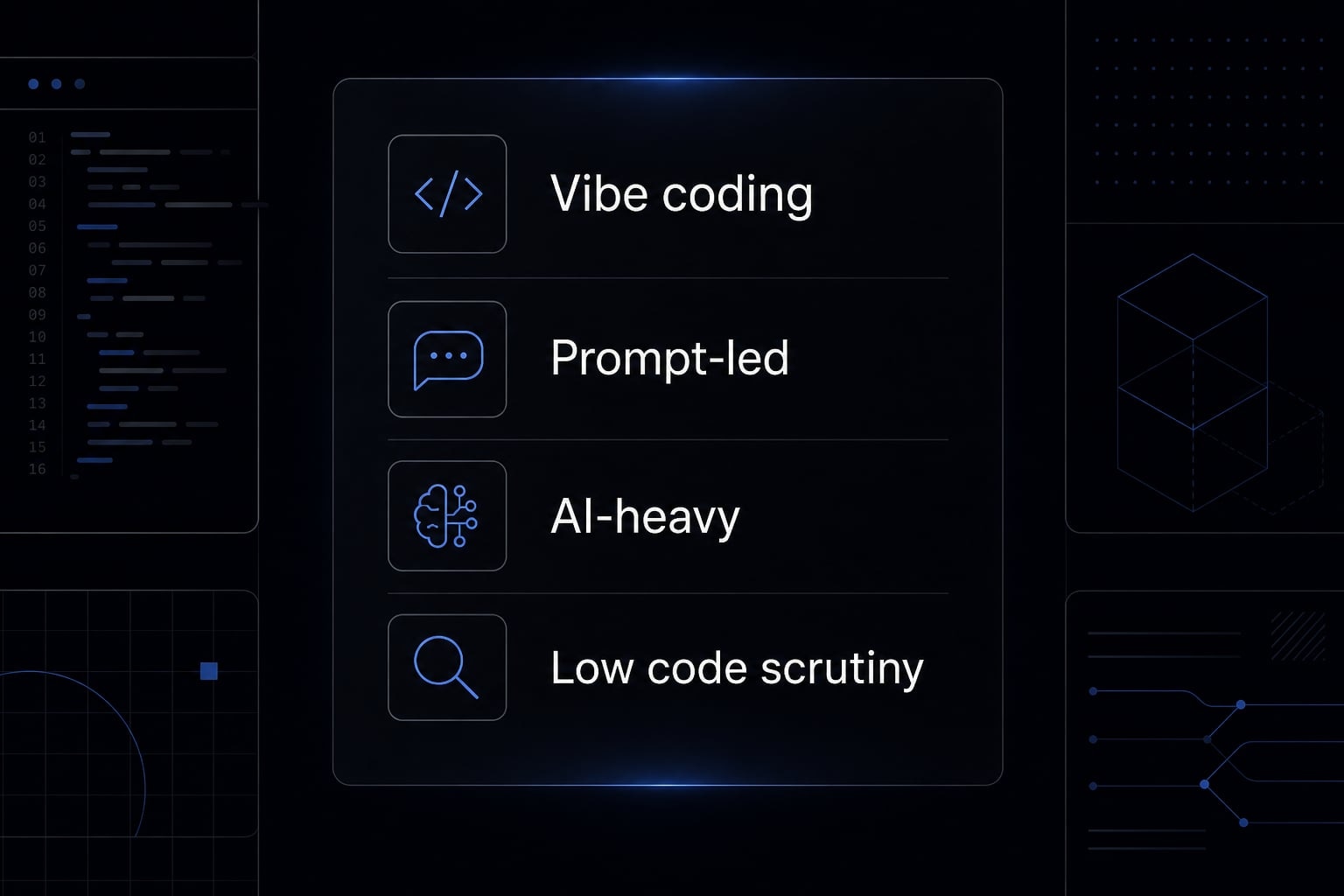
Andrej Karpathy vibe coding refers to a fast, prompt-led style of building software where a person describes what they want in natural language, relies heavily on AI-generated output, and often gives limited scrutiny to the underlying code in exchange for speed, convenience, and experimentation.
In practical terms, Andrej Karpathy vibe coding is a delegation-heavy form of AI-assisted programming. Instead of writing and reviewing every part of the implementation closely, the user mainly guides the process through prompts. The AI produces large chunks of LLM-generated code, the user runs it, sees what happens, and keeps refining through more prompts.
That is why the vibe coding definition is narrower than “coding with AI.” Many developers use AI to generate code but still review diffs, test carefully, and maintain full ownership of the result. That is not the same thing.
A one-sentence definition of vibe coding
Andrej Karpathy vibe coding refers to a prompt-first, AI-heavy way of building software where natural language instructions drive the process, the model produces much of the code, and speed usually matters more than deep review of the implementation.
The key trait is not just AI usage. It is the limited code scrutiny. The person building may accept changes quickly, reprompt when something breaks, and focus more on visible progress than on understanding each layer of the system.
Why the phrase spread so quickly
- It is a catchy phrase that is easy to remember and repeat.
- It feels relatable because AI coding tools are now mainstream.
- It gets misused easily as a blanket label for all AI coding.
Key takeaways
- What it is: A prompt-led, AI-heavy workflow with light review.
- What it is not: A synonym for all coding done with AI.
- Why the definition matters: This term describes a workflow style, not engineering quality.
Who coined vibe coding, and what did Andrej Karpathy actually say?
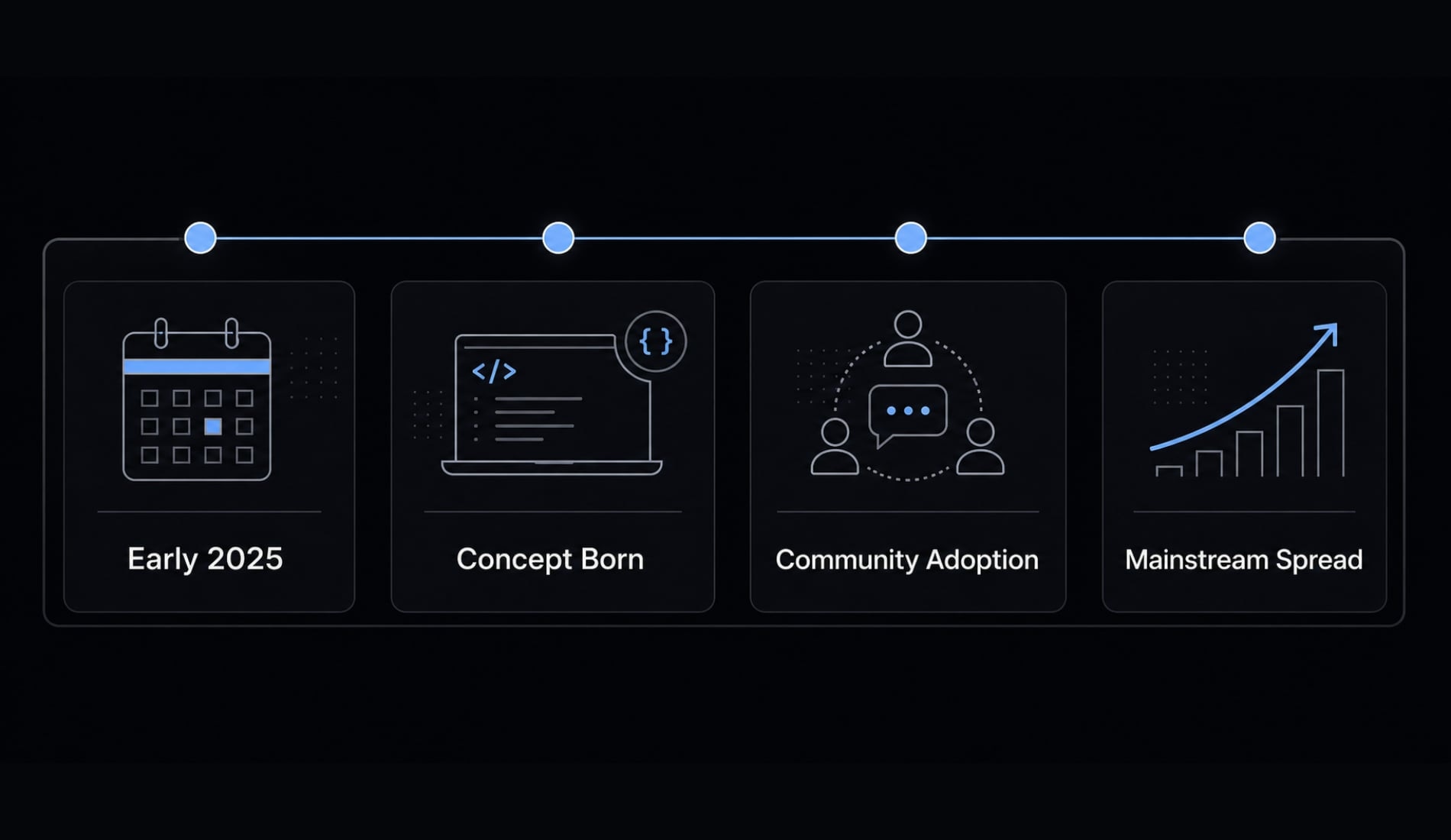
Who coined vibe coding? Andrej Karpathy coined the term in early 2025, using it to describe a playful, exploratory style of software creation where the builder leans heavily on AI, moves quickly, and does not treat deep code review as the center of the workflow.
That origin matters because a lot of current discussion strips away the original context. Andrej Karpathy was not presenting a formal software engineering doctrine. He was naming a recognizable behavior pattern: describe what you want, let the model do a lot of the work, accept changes quickly, and keep going.
When the term appeared
The term appeared in early 2025. It connected immediately because the market already had strong AI coding tools, and many users were starting to experience the same pattern: Fast prompts, rapid results, and a looser relationship with the code itself.
The phrase spread quickly through developer and AI communities, then moved into broader internet discussion. That is also why searches for who coined vibe coding and vibe coding 2025 rose so fast.
The spirit of Karpathy’s original framing
The spirit of the original Karpathy tweet was playful. “Give in to the vibes” was not a claim that disciplined engineering no longer matters. It was a shorthand for an exploratory workflow where speed, delegation, and experimentation take priority.
Source summary: Karpathy’s framing was light, curious, and intentionally informal. It described a way to build quickly with AI - not a universal standard for how software should be built.
This is the main context people miss. When readers ask who coined vibe coding, the better follow-up question is: what did he actually mean by it? The answer is not “all AI coding.” It is closer to “letting the model carry a lot of the build while you steer from the top.”
What vibe coding is not
The clearest way to avoid confusion is to say this directly: Vibe coding is not the same as all AI-assisted programming. A developer can use AI constantly and still work in a highly controlled, review-heavy way. That is why the distinction in vibe coding vs AI-assisted programming matters.
If a human reviews the output, tests it, understands the code, and takes ownership of the result, that is closer to responsible AI coding than pure vibe coding. The internet often collapses these workflows into one bucket, but they create very different expectations around quality, security, and maintainability.
“AI helps me code” is not the same as “AI drives the build”
Using AI as a helper does not automatically make the workflow vibe coding. In many practical projects, AI serves as an accelerator rather than a complete replacement for human engineering judgment.
A person may ask an assistant to draft a function, write tests, or suggest a refactor. But if that person still checks the logic, validates the behavior, and can explain the system clearly, the “vibe coding” label becomes less accurate.
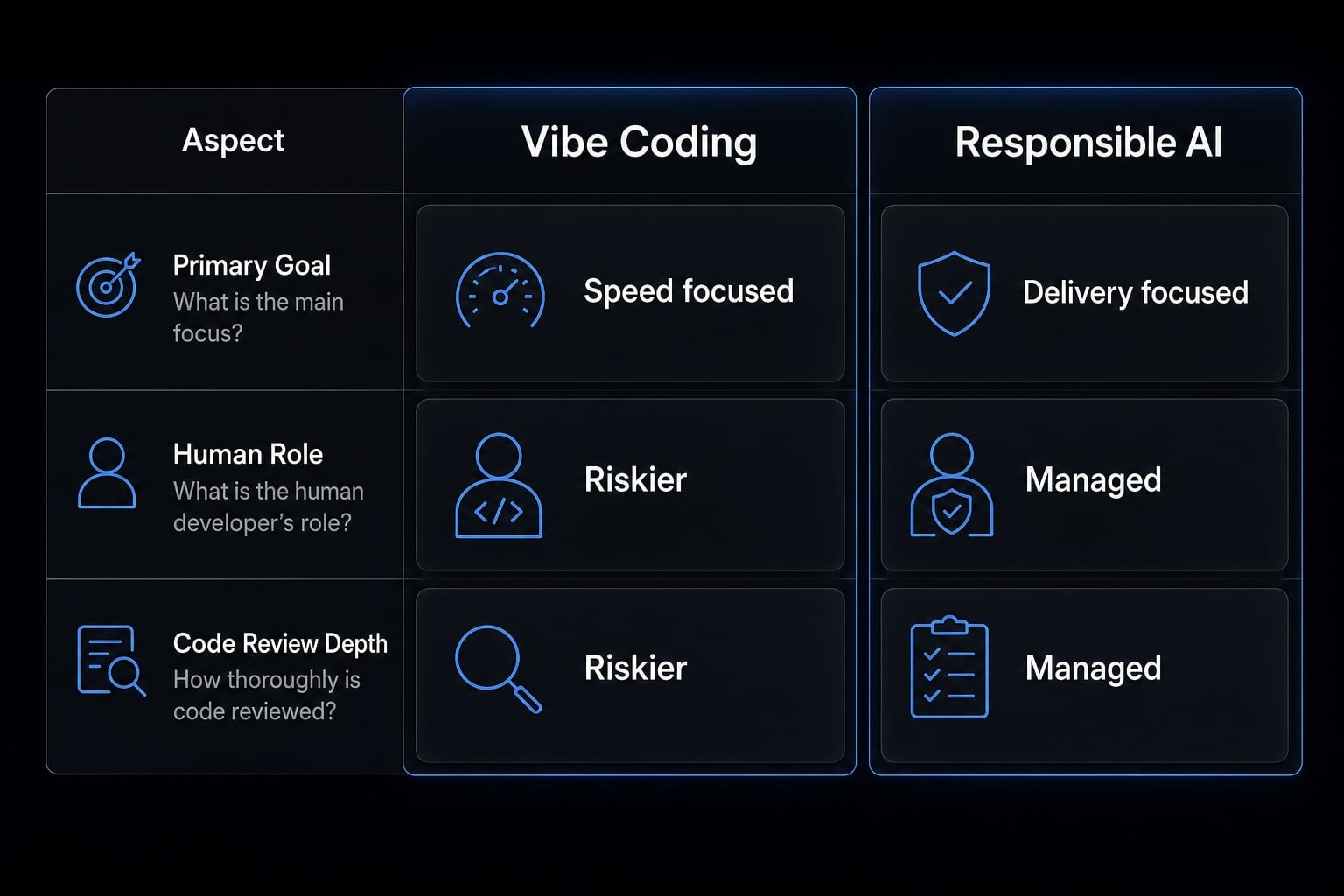
Criteria | Vibe coding | Responsible AI-assisted development |
|---|---|---|
Primary goal | Speed and experimentation | Quality and dependable delivery |
Human role | Prompter and refiner | Prompter, reviewer, tester, owner |
Code review depth | Minimal or none | Required |
Testing expectations | Light or inconsistent | Structured and repeatable |
Best fit | Prototypes, throwaway tools, experiments | Production apps, team codebases |
Security posture | Riskier if unchecked | Managed through review and controls |
Maintainability | Often weak | Deliberate and expected |
Words matter because they shape expectations. In vibe coding vs AI-assisted programming, the core difference is not whether AI was used. It is whether the human still maintains meaningful control over correctness and risk.
Why the term gets misused online
- Catchy phrases spread faster than careful definitions.
- Beginners often flatten all AI coding into one category.
- Teams may confuse prototype speed with production readiness.
These vibe coding misconceptions are common because prompt-driven programming can look similar from the outside. But a prototype that “mostly works” and a system that is reliable under real use are not the same thing.
How vibe coding works in practice
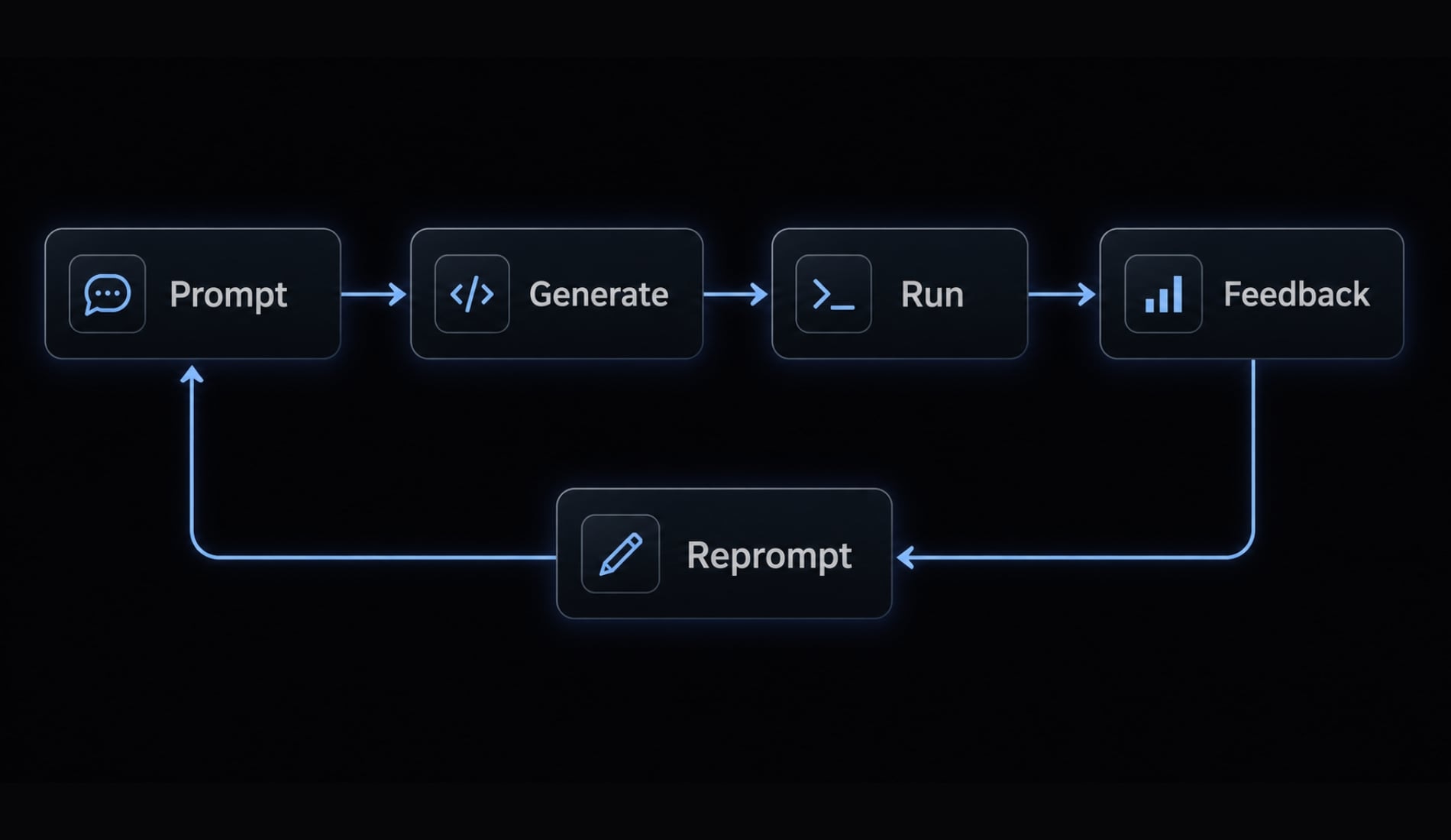
When people ask how vibe coding works, the answer is usually simpler than they expect. The workflow is conversational, iterative, and driven by visible output rather than deep inspection. It is a fast loop of asking, running, reacting, and reprompting.
The basic workflow
- Describe the app or change in plain English.
- Let the AI generate code.
- Run it and see what happens.
- Paste errors or ask for changes.
- Repeat until it mostly works.
This is why how vibe coding works is often described as a conversational feedback loop. The user does not need to specify every implementation detail. Instead, they guide through outcomes: “make this cleaner,” “fix this bug,” “add a contact form,” or “reduce the spacing.”
That back-and-forth is a form of iterative refinement. The AI proposes code, the user reacts to the result, and the system evolves through repeated prompt cycles. In many cases, “good enough for now” is acceptable within the vibe coding mindset.
Tools matter less than interaction style
Popular AI coding assistants can support this workflow in different ways, including Cursor, Claude, Copilot-style tools, and similar assistants. But the brand is not the main point.
What defines vibe coding is the interaction pattern: Prompt-driven programming, fast feedback, and a relatively loose relationship with the underlying code. A tool can support that style, but the tool itself does not create the definition.
One caution matters here: Something can appear to work and still be brittle, messy, or hard to maintain after a few quick iterations.
Why vibe coding feels powerful for beginners and fast-moving builders
The main benefits of vibe coding are not mysterious. It feels powerful because it removes a lot of early friction. People can focus on what they want to make instead of getting blocked immediately by syntax, framework setup, or missing implementation details.
For many users, that creates instant momentum. You describe an outcome, the screen changes, and progress becomes visible quickly. That feeling is a big reason AI coding for beginners has attracted so much attention.
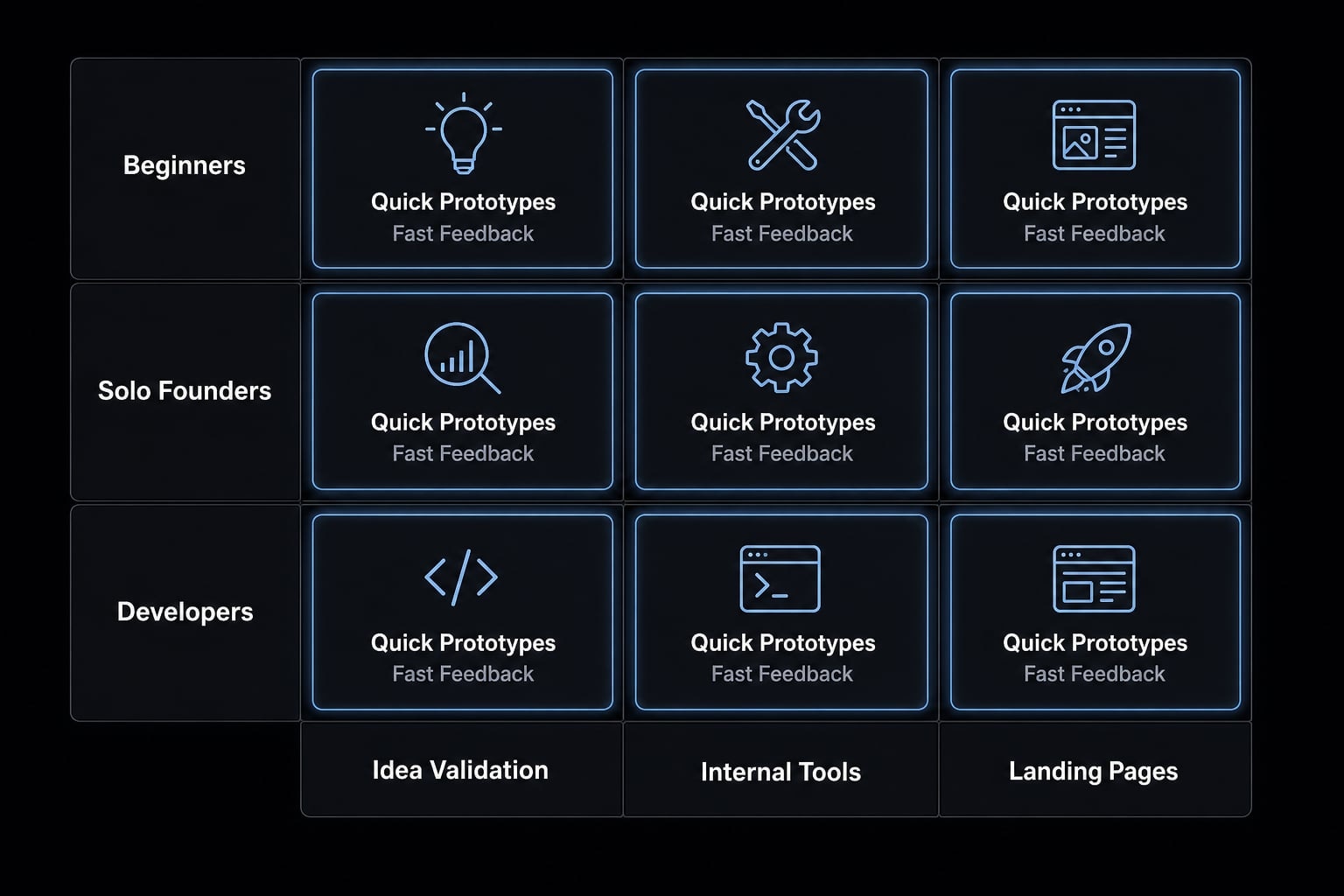
Why different audiences like it
- Non-developers: They can describe outcomes without mastering syntax first.
- Solo founders: They can test ideas faster and explore product directions cheaply.
- Experienced developers: They can use it for rough experiments or disposable internal tools.
This is where rapid prototyping becomes the strongest argument. The reduced barrier to entry helps more people turn vague ideas into something interactive. For non-developers vibe coding often feels like a new kind of creative leverage: less waiting, less setup, more visible output.
Simple use cases that fit the model
- Landing page mockup.
- Personal productivity script.
- Lightweight internal tracker.
- Quick prototype for idea validation.
The appeal is real, but the limitation is just as real. Feeling fast is not the same as being robust. The benefits of vibe coding are strongest in early experimentation, not in proving long-term reliability.
When vibe coding makes sense - and when it becomes risky
This is the boundary that matters most. Vibe coding can be useful, but it is not automatically safe. The best way to think about vibe coding risks is by looking at what is at stake if something breaks.
If the project is small, disposable, or personal, the downside may be limited. If the software touches customer data, money, credentials, or business-critical operations, the risk profile changes immediately. That is where safe vibe coding practices for beginners need to be clear rather than vague.
Good situations for vibe coding
- Weekend projects.
- Disposable prototypes.
- Internal drafts.
- Personal tools.
- Low-stakes projects where speed matters more than polish.
These are good fits because the cost of mistakes is lower. If the result is rough, you can discard it, rebuild it, or use it only as a learning tool.
Risky situations where vibe-only building is not enough
- Anything involving secrets or credentials.
- Payment flows or billing logic.
- Customer-facing systems.
- Integrations with real dependencies.
- Compliance-sensitive or private data.
This is where security in AI coding becomes a serious issue. If a tool handles API keys, private records, real customer actions, or external services, then “it worked on my machine” is not enough. The same applies to production app risks like fragile logic, hidden failure modes, weak error handling, and code that no one can confidently maintain later.
Many vibe coding risks are not obvious at first glance. A prototype may appear fine until a small change breaks another feature, exposes data, or creates unexpected usage costs through external APIs.
A simple rule of thumb
The more real users, real money, or real data involved, the less vibe-only your workflow should be.
That single rule captures most of the decision-making logic. If the stakes go up, review, testing, documentation, and human control need to go up too.
For readers exploring safer next steps, it is worth learning how teams move from loose experimentation to reviewed workflows, checklists, and stronger human-in-the-loop controls.
A simple real-world example of vibe coding
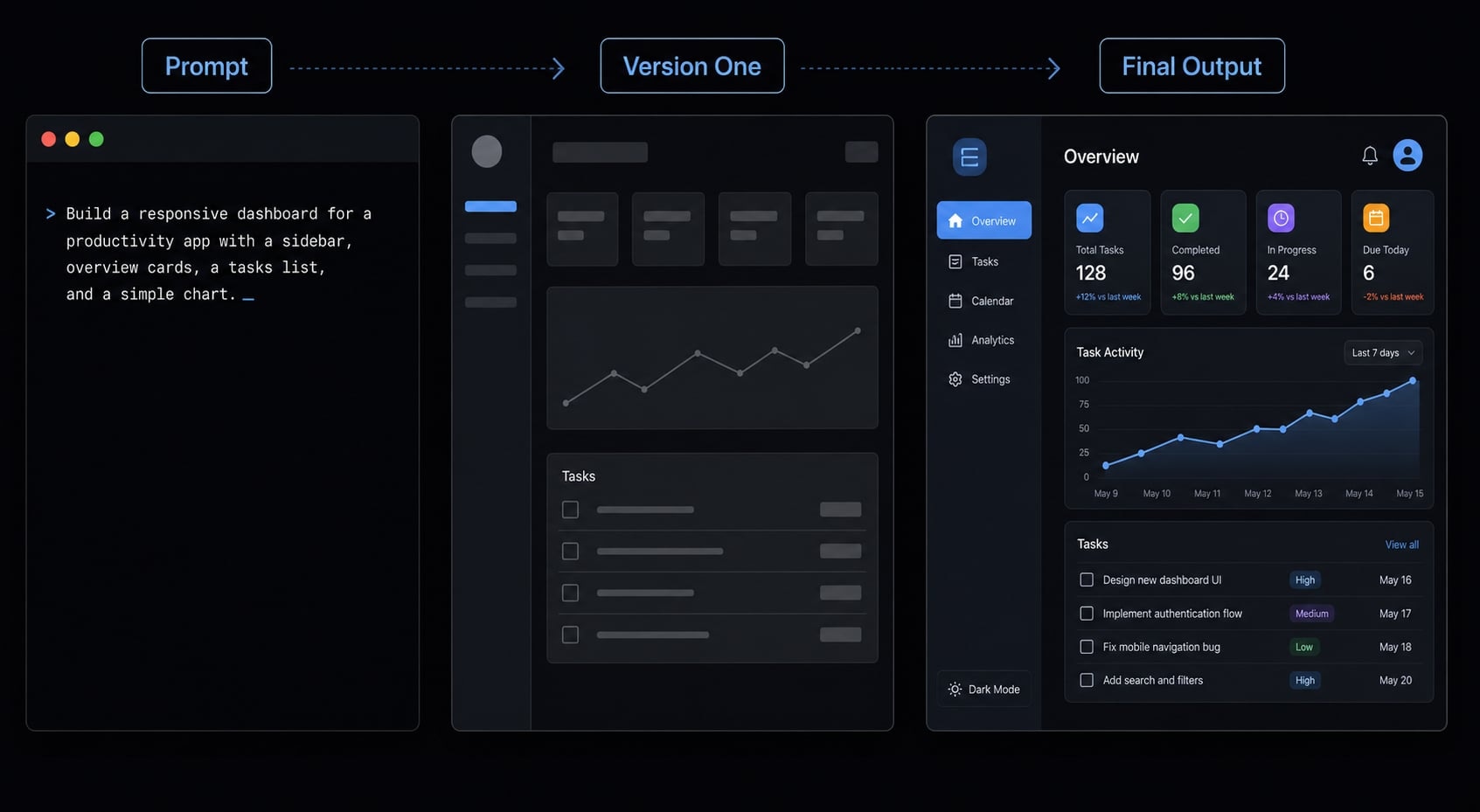
A simple vibe coding example makes the idea easier to picture than a long theory section. Imagine someone wants a personal portfolio page but does not want to write the front-end from scratch.
A simple prompt and what happens next
They type: “Build me a simple portfolio page with a hero section, project cards, and a contact form.”
The AI creates a first version. The user opens it, sees the layout, and then asks for changes like: “Make it cleaner,” “Use darker colors,” or “Move the contact form lower on the page.” After two or three rounds, the result already looks impressively usable.
That is why building web applications using vibe coding workflow feels powerful. The cycle from prompt to visible result is short, and the AI-generated prototype gives immediate feedback.
Where the cracks usually appear
After a few more edits, small issues often start to show up:
- Styling becomes inconsistent.
- One fix breaks another section.
- The code gets messy after repeated prompting.
This is where the limits of conversational software engineering become visible. It can feel smooth at the surface while the underlying structure gets harder to reason about. That is exactly why this vibe coding example fits prototypes better than important systems.
The bigger takeaway: Vibe coding is great for exploration, not a substitute for engineering discipline
The most useful conclusion is a balanced one. Vibe coding is genuinely valuable for exploration. It helps people test ideas faster, learn by building, and reduce the friction between concept and prototype. That is a meaningful shift.
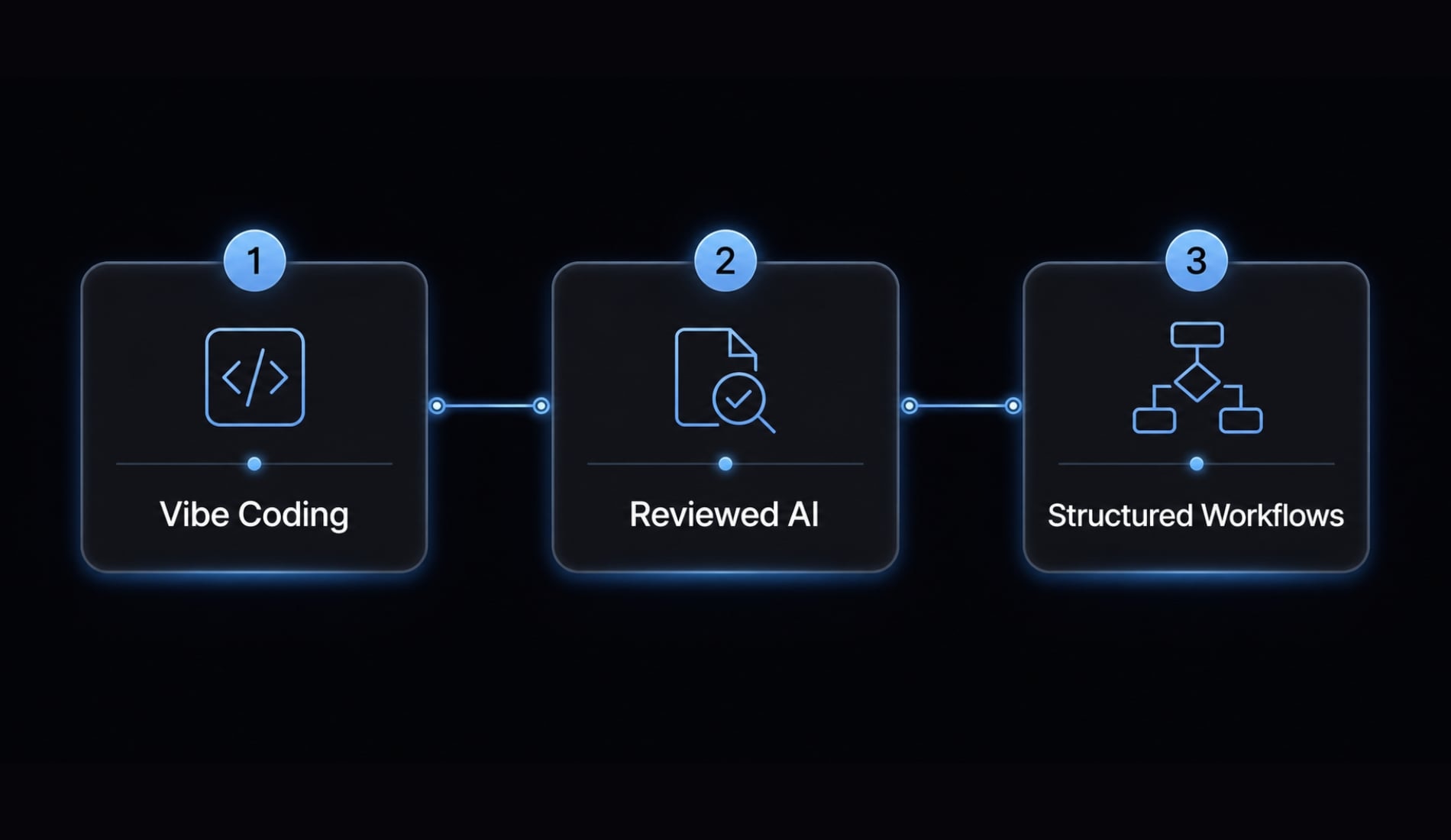
But important systems need more than speed. They need repeatability, review, testing, ownership, and control. As the stakes rise, teams naturally move away from pure vibe coding and toward structured AI workflows.
Why mature teams move past one-off prompting
Mature teams do this for practical reasons, not ideological ones:
- Important systems need repeatable results.
- Review and testing increase as risk increases.
- Human-in-the-loop AI systems provide accountability.
- Structured AI workflows are easier to manage than ad hoc prompting.
- In more advanced environments, autonomous agentic workflows still need boundaries and oversight.
This is the progression that matters most: Exploration first, then process. AI coding assistants can help at every stage, but production-ready AI development depends on whether humans can still verify, control, and maintain what gets built.
Frequently asked questions
What is Andrej Karpathy’s concept of vibe coding?
Andrej Karpathy’s concept of vibe coding is an AI-driven programming style in which users focus on describing goals in natural language instead of writing code manually. Its defining characteristics are a high level of trust in AI, limited inspection of the underlying code, and an emphasis on speed and experimentation.
Why did the term “vibe coding” become popular so quickly?
The term gained popularity because it accurately captured the experience of millions of AI users in 2025: achieving results quickly, encountering fewer technical barriers, and enjoying the process of watching an application take shape through simple conversational instructions.
How does vibe coding differ from conventional AI-assisted software development?
Vibe coding emphasizes delegation and minimizes the need to read and understand the code. In contrast, responsible AI-assisted development requires humans to review, test, and understand the generated code to ensure the system remains secure, efficient, and maintainable over the long term.
When is vibe coding safe to use?
Vibe coding is best suited for small projects, personal experiments, and prototypes without strict security requirements. If your project involves real user data, payments, or financial operations, you need a more rigorous approach than vibe coding alone.
What are the main risks of vibe coding?
The greatest risks include creating insecure software, introducing difficult-to-control logic errors, and producing code that is hard to maintain. If you do not understand how the code works, troubleshooting failures and scaling the product will become significantly more difficult.
How do you follow an effective vibe coding workflow?
A basic vibe coding workflow consists of five steps: (1) describe the objective in natural language, (2) ask the AI to generate the initial code, (3) run the application to test it, (4) report any errors that appear, and (5) repeat the process until the product reaches a “mostly working” state.
Read more:
- Vibe code Android: How to build apps faster with AI prompts
- 7 practical vibe coding examples: Build apps faster with AI
- Human in the loop AI coding: Optimize speed and quality
Conclusion
Andrej Karpathy vibe coding has a specific meaning: a fast, prompt-led, AI-heavy way of building software with limited code scrutiny. Andrej Karpathy coined the term in early 2025 in a playful, exploratory context, and that original framing still matters.
Vibe coding can be useful for low-stakes experiments, quick prototypes, and learning by doing, but it should not be confused with disciplined engineering. Once real users, real money, or real data enter the picture, review, testing, and structured AI workflows become much more important.