Claude Code supply chain security: Risks & mitigation guide
Claude Code supply chain security: Incidents, risks and a practical mitigation checklist
Claude Code supply chain security depends on what the agent reads, what it executes, and what those tools can access. Security risks peak when untrusted input crosses a safety boundary - especially alongside write access, deployment rights, or production secrets. Covering local workflows, CI/CD pipelines, MCP integrations, and dependencies, this guide cuts through security noise to help you assess real vulnerability conditions, isolate high-risk boundaries, and prioritize actionable controls.
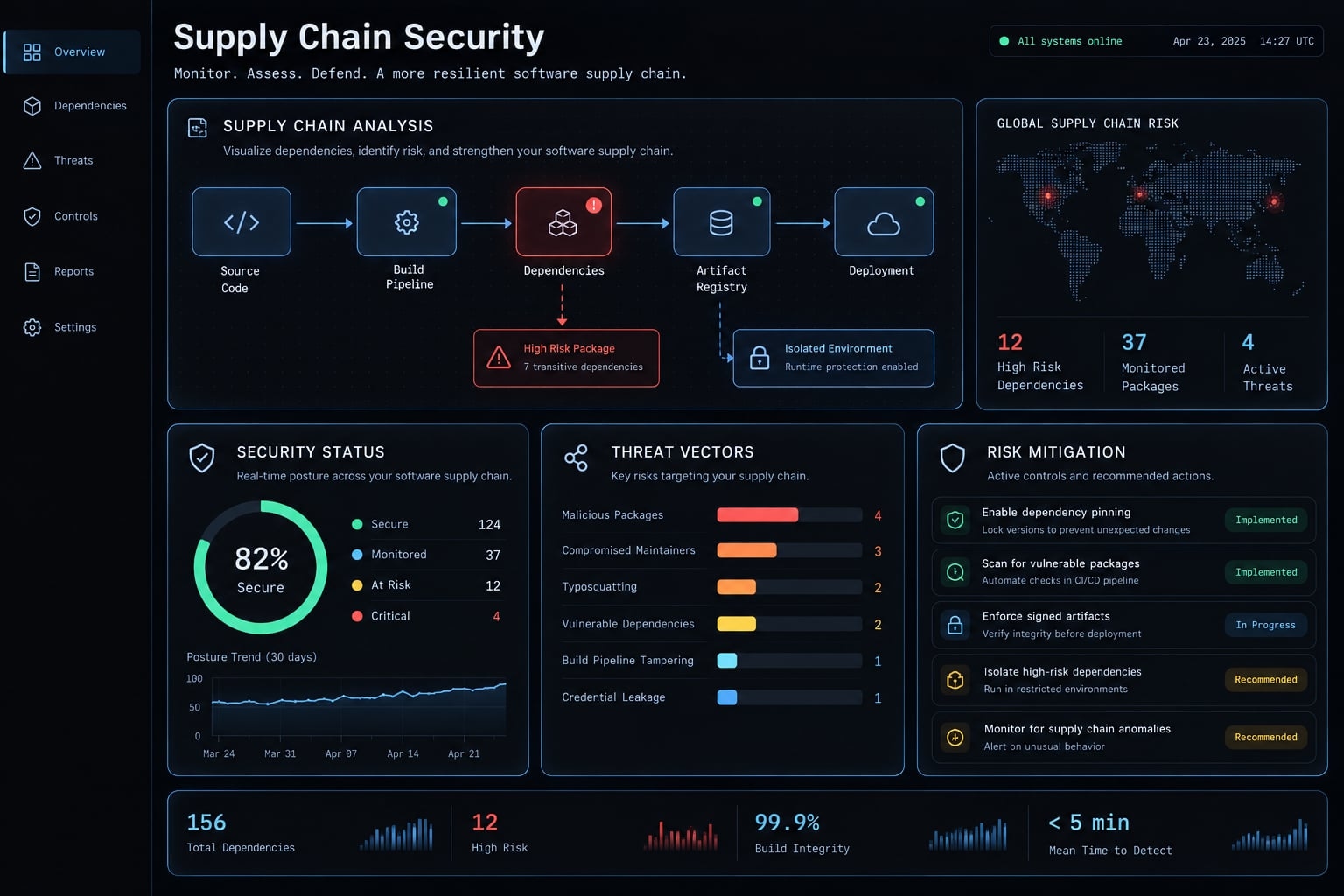
What does “Claude Code supply chain security” actually cover?
Claude Code supply chain security focuses on protecting code, credentials, dependencies, configurations, and delivery pipelines involved in agent-assisted development. Risk arises when untrusted inputs interact with agent execution capabilities across a security boundary - the critical point where data or actions transition between different levels of authorization.
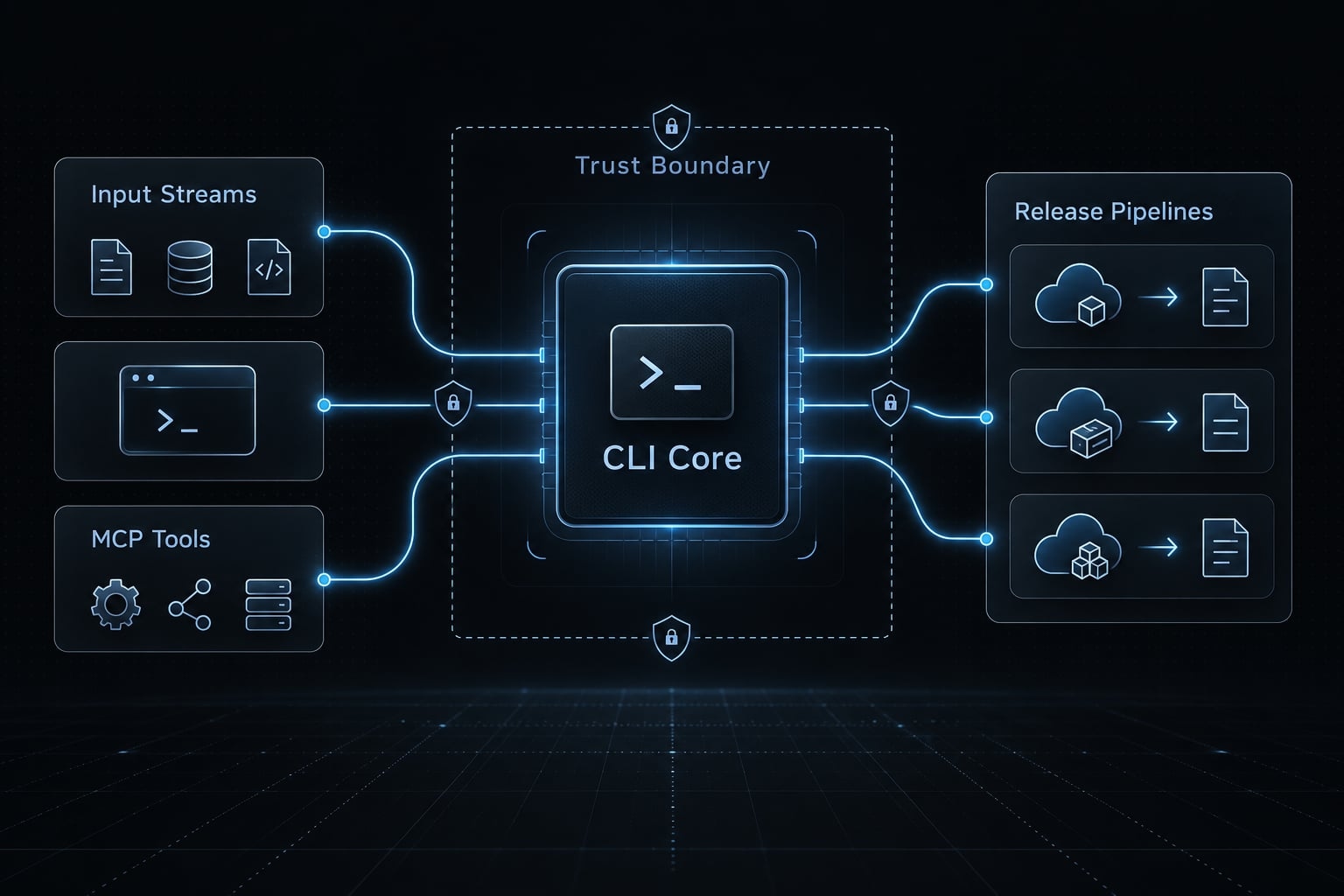
The trust boundaries Claude Code may touch
Depending on your configuration, the Claude Code CLI (command-line interface) interacts with four key operational layers:
- Developer environments: Workstations, repositories, project instructions, configuration and shell tools.
- Connected tools: MCP (Model Context Protocol, a standard for connecting agents to tools and data), APIs and credential helpers.
- Delivery systems: GitHub Actions, package registries, deployment systems, and CI/CD (continuous integration and delivery) credentials.
- Network destinations: External services receiving requests or generated output.
Repository and external content │ Trust and approval boundary ▼ Claude Code / │ \ Shell tools MCP tools Network requests │ │ │ Workspace APIs and data External destinations └──────────┬────────────┘ Identity boundary ▼ Repository / cloud / release access
Conceptual trust-boundary diagram; connections represent possible access, not established compromise.
The five core risk categories in AI agent supply chains
To prevent false alarms and organize defenses, security teams should categorize risks into five distinct vectors:
- Packaging or release errors: Unintended source files, credentials, or source maps embedded in distributed artifacts.
- Product vulnerabilities: Core flaws in the agent CLI that bypass security controls or authorization checks.
- Integration vulnerabilities: Weaknesses introduced by custom Model Context Protocol (MCP) servers, GitHub Actions, or third-party extensions.
- Unsafe configuration: Granting excessive broad permissions (e.g., auto-approving shell commands) to automated workflows.
- Downstream dependency attacks: Malicious packages introduced via typosquatting, dependency confusion, or compromised maintainer accounts.
Typosquatting uses misleading package names. Dependency confusion exploits package-resolution ambiguity. Compromised dependencies involve altered packages or maintainers’ accounts.
An isolated review workspace differs substantially from automation holding release authority. Broad capability increases potential impact; it does not establish exploitability.
Reported Claude Code incidents and vulnerability disclosures
This edition does not independently verify specific incident claims. Consequently, this section omits definitive CVEs, affected versions, or status tags for unverified reports
This limitation does not rule out vulnerabilities. Instead, readers should view the details below as unconfirmed context rather than a verified incident timeline
Accidental source-map publication
A source map connects generated code to its original representation. It can reveal source content when that content is embedded or otherwise accessible.
To substantiate an exposure, identify the exact package, registry, release, artifact, and included files. A map’s presence alone does not establish complete source reconstruction.
Public source maps are not inherently a security failure; intended publication matters. Implementation exposure also does not establish leaked credentials, customer-data exposure, or system compromise.
Internal package names exposed by the leak were reportedly targeted by typosquatted packages. Verify package sources before building or installing anything derived from leaked code, and avoid unofficial mirrors.
Claude Code GitHub Actions permission and prompt-injection findings
Separate a validated integration defect from an overprivileged workflow and from indirect prompt injection - instructions embedded in content the agent was supposed to analyze.
These mechanisms may interact, but they require different remediation. A code fix addresses a defect; permission reduction addresses excessive authority.
GitHub’s “Secure use reference” and “Automatic token authentication” documentation explain why workflow events and permission settings matter. External pull requests do not automatically receive repository secrets. Inspect the actual trigger, checkout behavior, token permissions, runner, and cloud identity access.
Reported Claude Code CLI Command-Injection findings
Command injection occurs when untrusted input changes the commands a program executes. It differs from prompt injection, which manipulates the agent’s interpretation of instructions.
A valid security finding must clearly specify the affected operation, attacker-controlled input, required access levels, and the security boundary breached. It must also distinguish newly gained authority from authority already intentionally granted.
No specific CLI operation, affected release, or patched version is established here. Configurable commands and credential helpers should not automatically be labeled vulnerabilities.
Repository configuration and MCP-Related risk
Project configuration, hooks and tool definitions can influence execution, subject to the product’s trust and approval behavior.
Cloning or opening a repository does not, by itself, establish inevitable execution. Claims about pre-approval behavior require version-specific evidence.
Likewise, any MCP finding must name the server, integration, or SDK involved. STDIO - communication through a local process’s standard input and output - is not inherently proof of shell injection or an ecosystem-wide vulnerability.
How an attack can move through the Claude Code supply chain
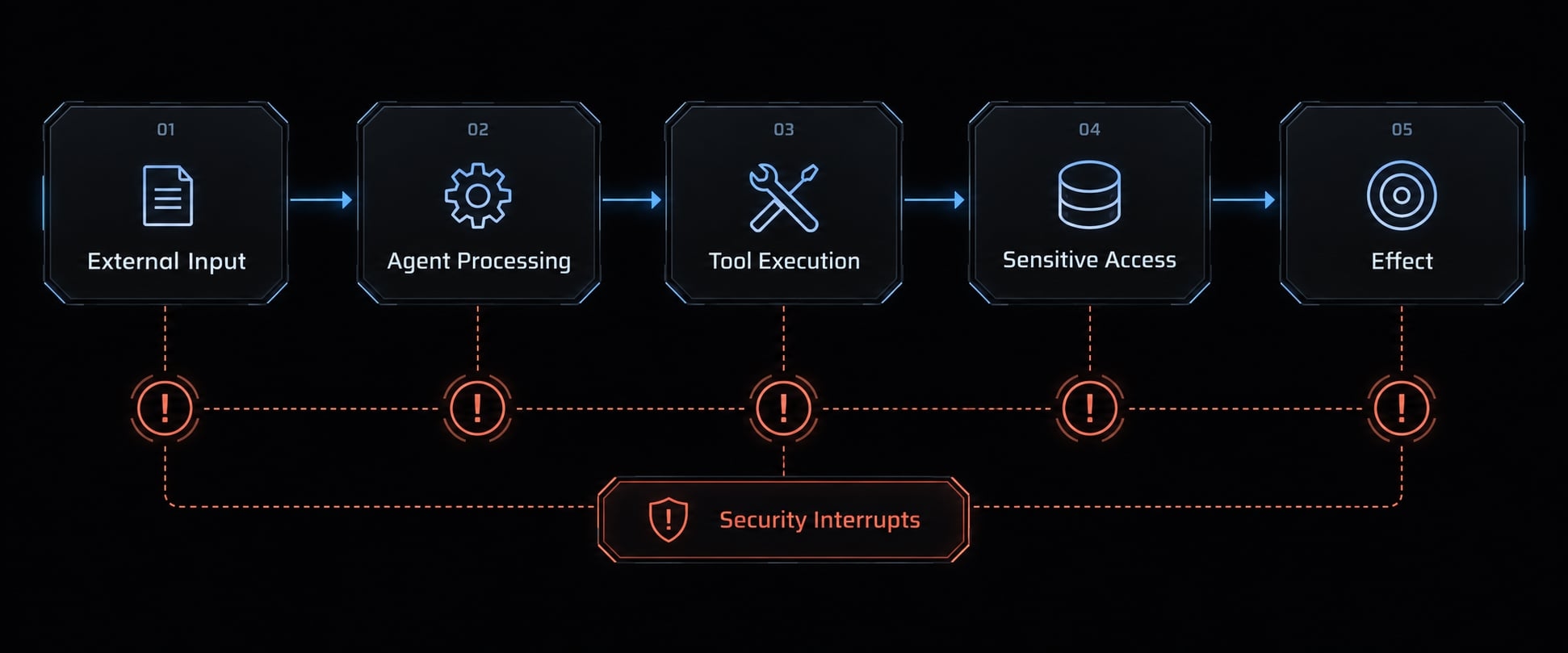
An attack model helps illustrate how untrusted material can escalate into elevated system access:
Attacker-controlled material │ Interrupt: classify inputs and restrict triggers ▼Agent processing │ Interrupt: separate content from trusted instructions ▼Authorized tool access │ Interrupt: approvals and least privilege ▼Reachable sensitive resources │ Interrupt: isolation and restricted credentials ▼Unauthorized effect Limit: egress controls, detection, and recovery
Illustrative conditional attack path. Each transition requires enabling conditions; the diagram is not evidence of exploitation.
Attack path 1 - Malicious issue or pull request to CI/CD compromise
An external contributor controls content that an automated agent processes. Prompt injection attempts to redirect the agent from review work toward unauthorized actions.
Potential impact depends on reachable tools and identities. A read-only job without deployment credentials presents a different exposure from a job holding write access and cloud authority.
Secret exfiltration - unauthorized transfer of sensitive credentials - also requires access to a secret and a usable outbound path.
Separate untrusted-content analysis from privileged writes and deployment jobs. Do not assume generated output becomes trustworthy simply because it came from another job.
Attack path 2 - Malicious repository to local developer compromise
Illustrative scenario: A developer evaluates an unfamiliar repository containing project instructions, hooks or MCP integrations.
Whether those elements execute depends on the installed version, trust settings, approvals, and workflow. Tool output can also introduce misleading instructions.
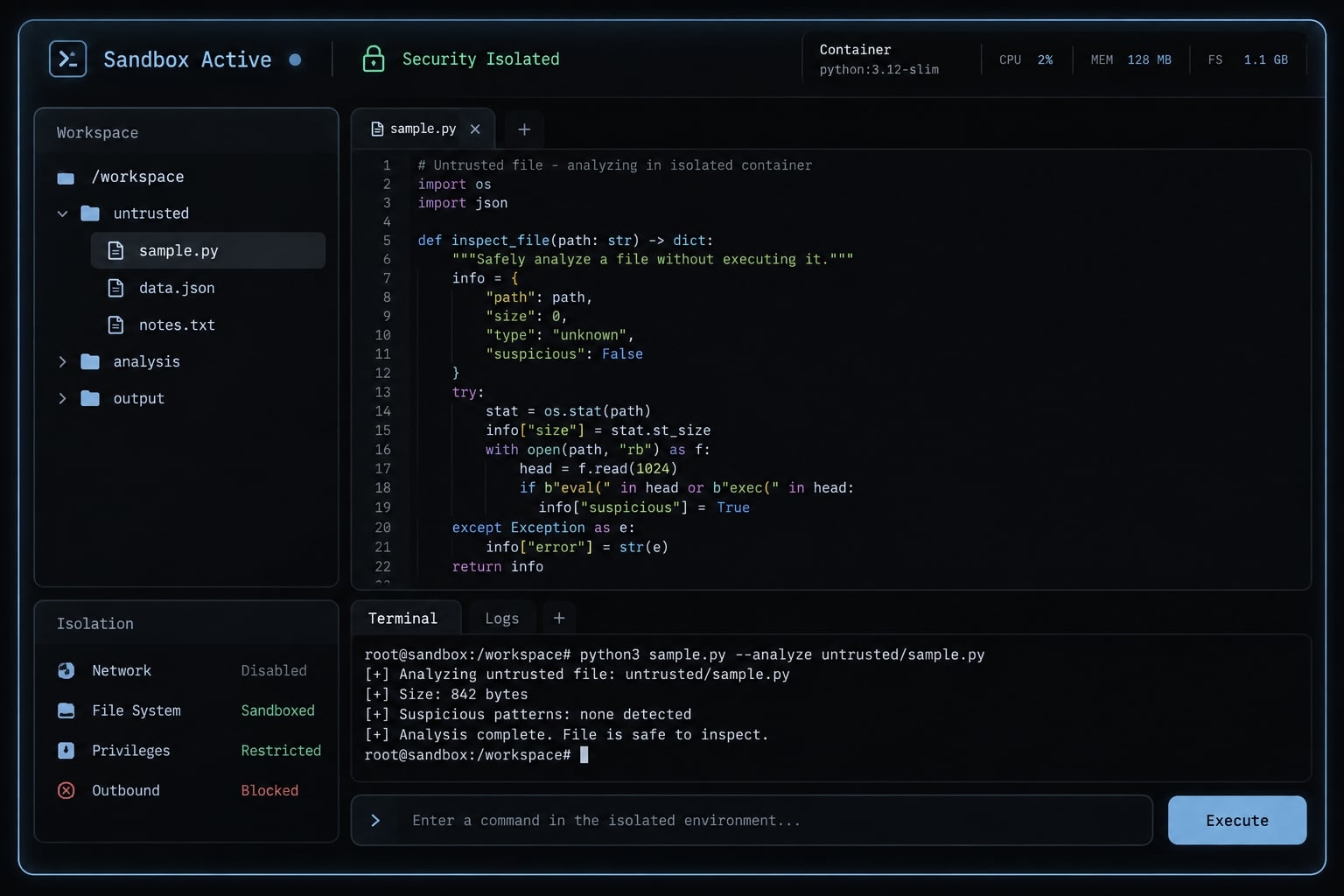
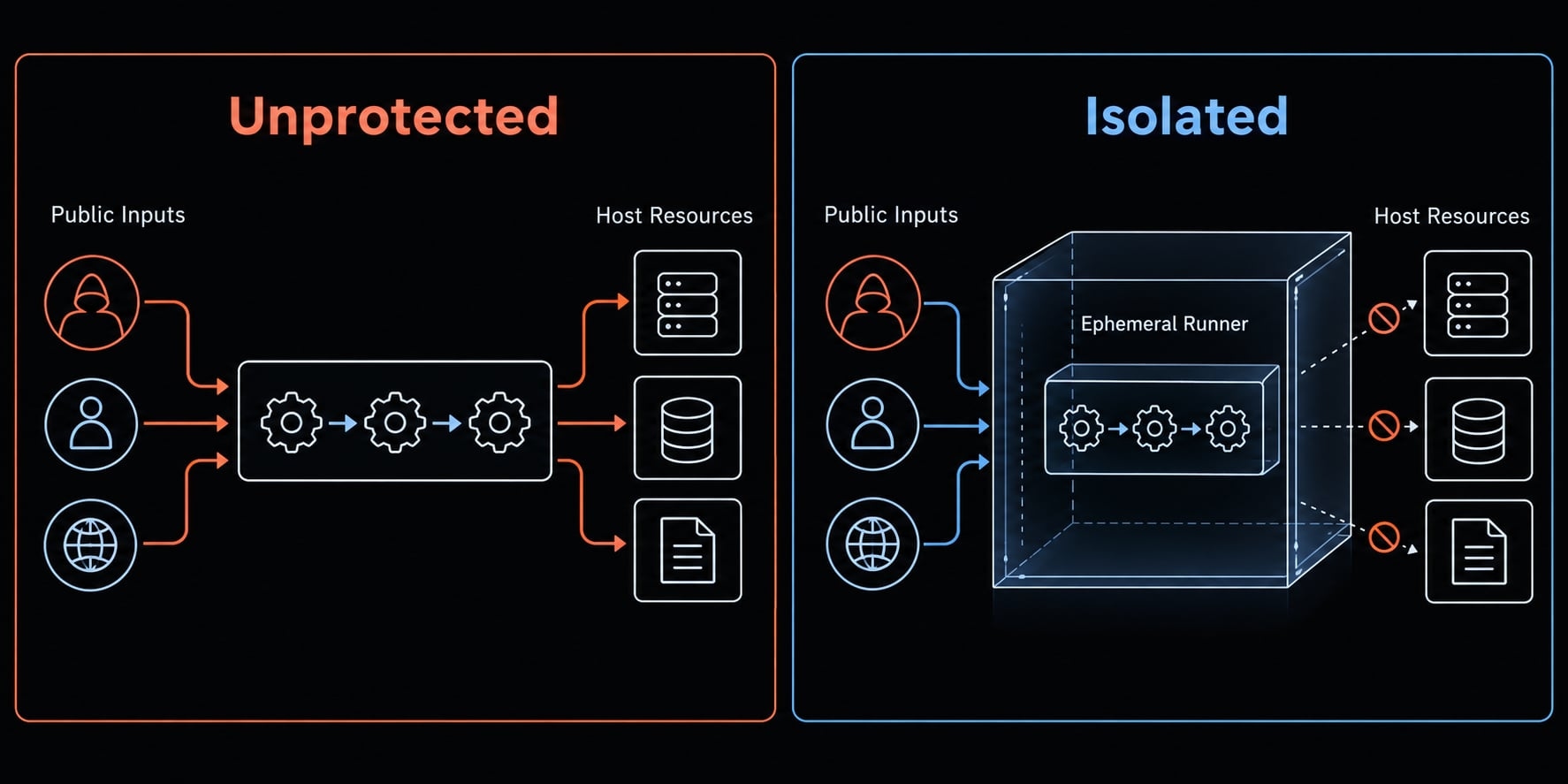
An isolated development environment, restricted credentials, and meaningful approvals reduce exposure. Isolation primarily limits blast radius, the extent of possible damage; it does not necessarily prevent the initial manipulation.
Attack path 3 - Package or dependency to persistent agent configuration
Illustrative scenario: A malicious dependency executes during installation or a build and modifies writable agent settings.
Those changes could outlast package removal if configuration resides elsewhere. This is a persistence concern, not a validated campaign claim here.
Restrict configuration writes, review changes, and restore affected environments from known-good state when warranted. Uninstalling a package alone does not prove recovery.
Confirmed, patched, disputed or Configuration-Dependent?
Configuration-dependent exposure means a finding matters only when particular settings, inputs, permissions, or execution conditions are present.
Evidence confidence, remediation, and deployment exposure are separate dimensions. Useful labels include:
- Officially confirmed: An authoritative product source acknowledges the finding.
- Researcher-validated: Original research documents the mechanism and supporting evidence.
- Independently reproduced: A separate party documents reproduction in an identified environment.
- Unverified: Available evidence is insufficient - not proof the claim is false.
- Fixed: A specified release addresses the documented weakness.
- Disputed: Identified parties disagree about a defined aspect of the finding.
- Configuration-dependent: Particular deployment conditions are required.
A finding can be researcher-validated, fixed, and configuration-dependent simultaneously.
For vulnerability analysis, a CVE - a standardized vulnerability identifier - helps locate records. CVE status does not prove exploitation in the wild, universal exposure, or a relationship between separate findings. Missing CVE coverage also does not invalidate well-supported research.
“Fixed upstream” means a correction exists. “Remediated here” requires evidence that the relevant deployment runs the patched version and no longer meets the exposure conditions.
Check the installed CLI, referenced Action revision, running MCP components, and any cached execution environments separately. Updating one component may leave another unchanged.
Are you affected? A Claude Code deployment risk matrix
A Claude Code risk assessment should begin with authority, not product labels. Inspect untrusted inputs, repository permissions, CI/CD secrets, sandbox configuration, and outbound network access.
The priorities below are editorial triage guidance, not standardized vulnerability-severity scores or measured compromise probabilities.
Deployment pattern | Typical exposure | Conditional priority | Main reason | First action |
|---|---|---|---|---|
Trusted local repositories | Host files and developer identities | Lower only with constrained access | Familiar code can still introduce dependencies | Inventory accessible credentials |
Unknown repositories | Unreviewed code and configuration | Elevated with host access | Execution may reach personal or corporate resources | Use a restricted disposable workspace |
Internal read-only workflows | Code and internal content | Lower impact, not risk-free | Read access can expose confidential material | Confirm actual token scope |
Public-input workflows | Issues, comments, pull requests | High when privileged | External content reaches authorized automation | Inspect triggers and granted authority |
Non-interactive agents | Automated tool execution | Elevated with deployment authority | Missing approvals can remove interruption points | Separate sensitive operations |
Arbitrary MCP servers | External code, tools, and identities | Elevated until assessed | Trust depends on implementation and access | Review origin, tools, and execution model |
Ephemeral workspaces | Short-lived execution environments | Lower persistence if constrained | Host mounts and credentials can defeat isolation | Inspect mounts, identities, and egress |
Non-interactivity alone is not a vulnerability. Likewise, accepting public issues does not justify a “critical” rating without examining what processing those issues can do.
Prioritized Claude Code supply chain security checklist
Implementing effective Claude Code supply chain security requires a combination of least-privilege policies, workspace isolation, credential hygiene, and continuous monitoring.
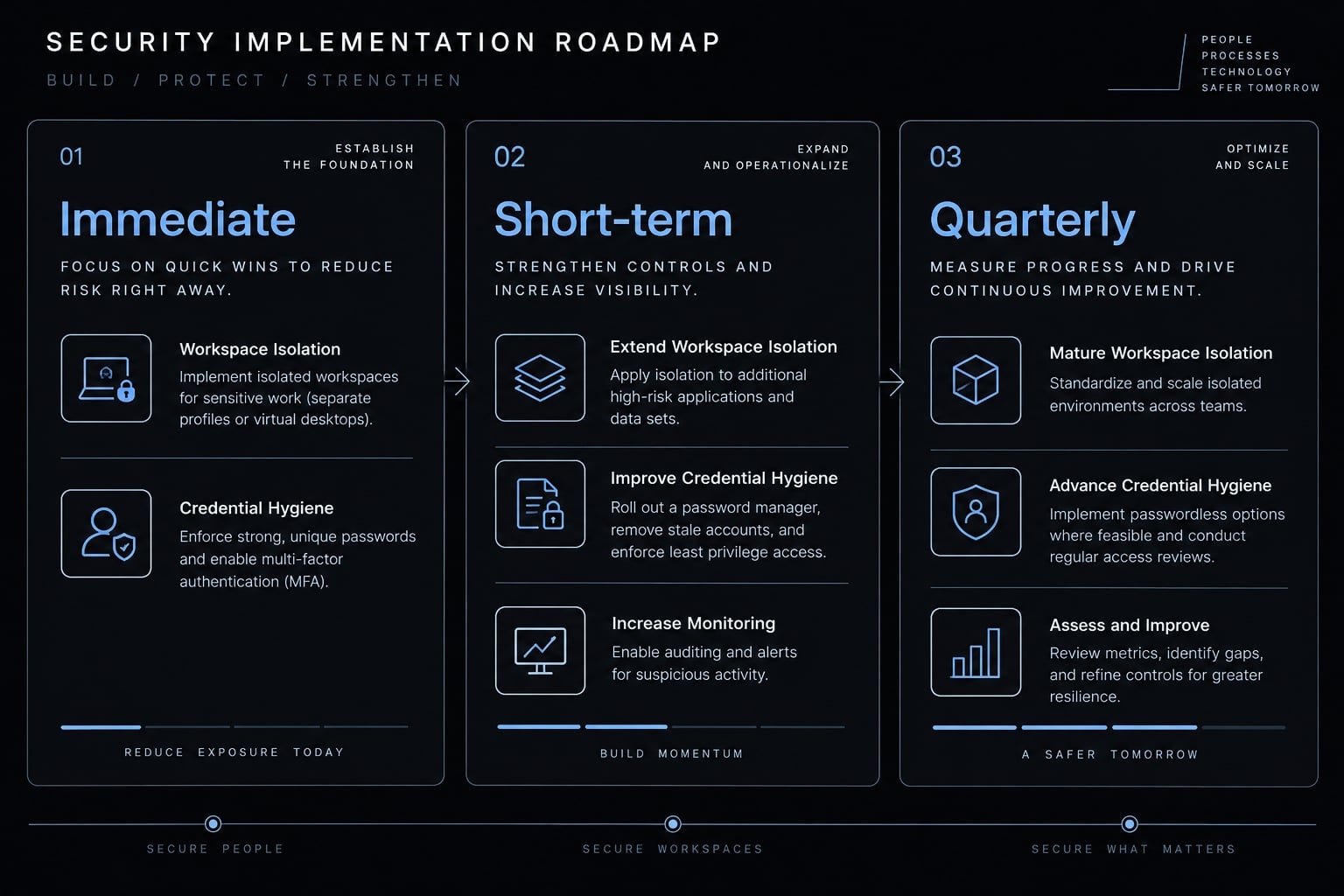
Actions to take today
- Inventory versions and revisions. Compare installed CLI versions and Action references with verified advisories and releases. This identifies component-specific exposure.
- Review public-input triggers. Identify jobs processing issues, comments, and pull requests. This reveals paths from external content to automation.
- Set explicit minimum permissions. Apply least privilege - only the authority needed for each task - to reduce unauthorized write impact.
- Remove unnecessary sensitive access. Exclude production secrets and deployment authority from analysis jobs. This limits credential exposure.
- Inspect configuration changes. Review project instructions, hooks, MCP definitions, and their change history. This identifies unexpected execution paths.
- Retain meaningful approvals. Require appropriate confirmation for untrusted repositories and sensitive operations. This preserves an intervention point.
- Respond proportionately to suspected exposure. Preserve evidence and revoke or rotate affected credentials under incident-response procedures. Publication of an article alone does not justify indiscriminate rotation.
- Review activity records. Investigate unexplained tool use, identity requests, and repository changes. This helps establish actual impact.
Controls to implement this sprint
- Workflow separation: Keep untrusted-content analysis apart from privileged writes and deployments. Validate transferred artifacts and require authorization for consequential actions.
- Execution boundaries: Use isolated or ephemeral environments with constrained mounts, privileges, credentials, and network access. This limits damage beyond the workspace.
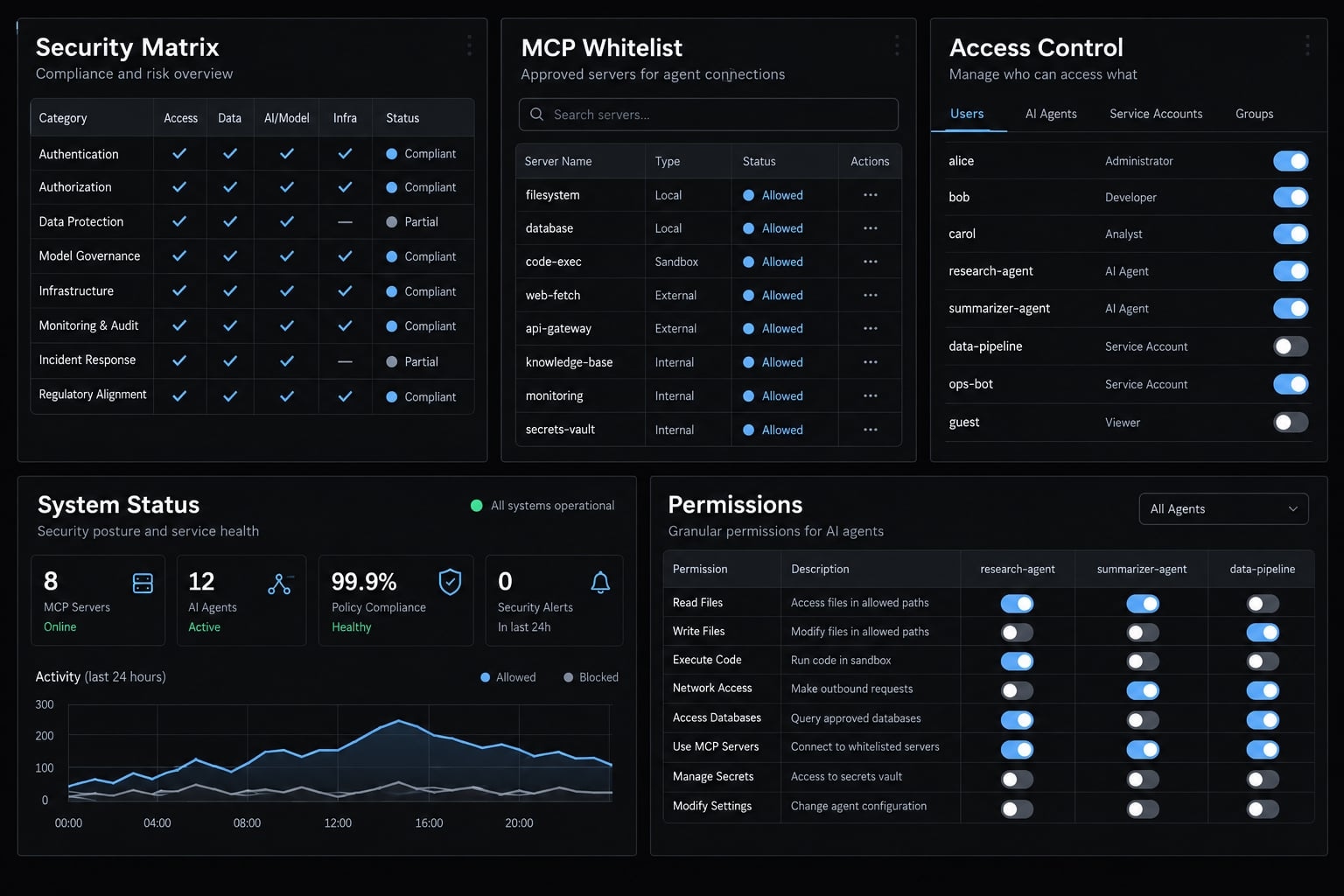
- Configuration and integrations: Review sensitive changes and inventory approved MCP servers, tools, and identities. This makes expanding access visible.
- Dependencies and releases: Use reviewed references, lockfiles, dependency review, and release-content checks. This improves reproducibility and detects unintended artifacts.
Pinning needs an update process. Dependency provenance, evidence about a dependency’s origin and build process, does not prove benign behavior. Source-map checks should follow intended publication policy.
Platform controls to implement this quarter
- Central policy enforcement: Use Claude Code managed settings to enforce organization-wide permissions and approved tools. Shared workflow toolkits such as AgentKit can standardize skills and hooks, but they complement, rather than replace, centrally managed policy.
- Short-Lived credentials: Mandate OpenID Connect (OIDC) with tightly scoped roles for all cloud interactions initiated by AI agents.
- Outbound network restrictions: Implement egress filtering on CI/CD runners and local agent environments to prevent unauthorized data exfiltration.
Minimum viable baseline for solo developers and small teams
- Separate unknown code from the primary credentialed workstation.
- Use an appropriately configured disposable environment.
- Retain meaningful manual approvals.
- Exclude production credentials.
- Review agent, MCP, and dependency changes.
- Keep tested recovery copies of important settings.
Assign one named owner if necessary. A container is not an absolute security boundary: privileged execution, broad host mounts, and shared credentials can undermine isolation.
Security control tracking matrix
Control roadmap: Today - reduce authority. This sprint - separate execution. This quarter - standardize governance.
Control | Owner | Evidence | Status | Next action | Due date | Exception |
|---|---|---|---|---|---|---|
Analysis jobs lack deployment authority | Named maintainer | Workflow and identity review | To assess | Inspect effective permissions | Set locally | Record approval and expiry |
Long-Term governance for AI coding agents
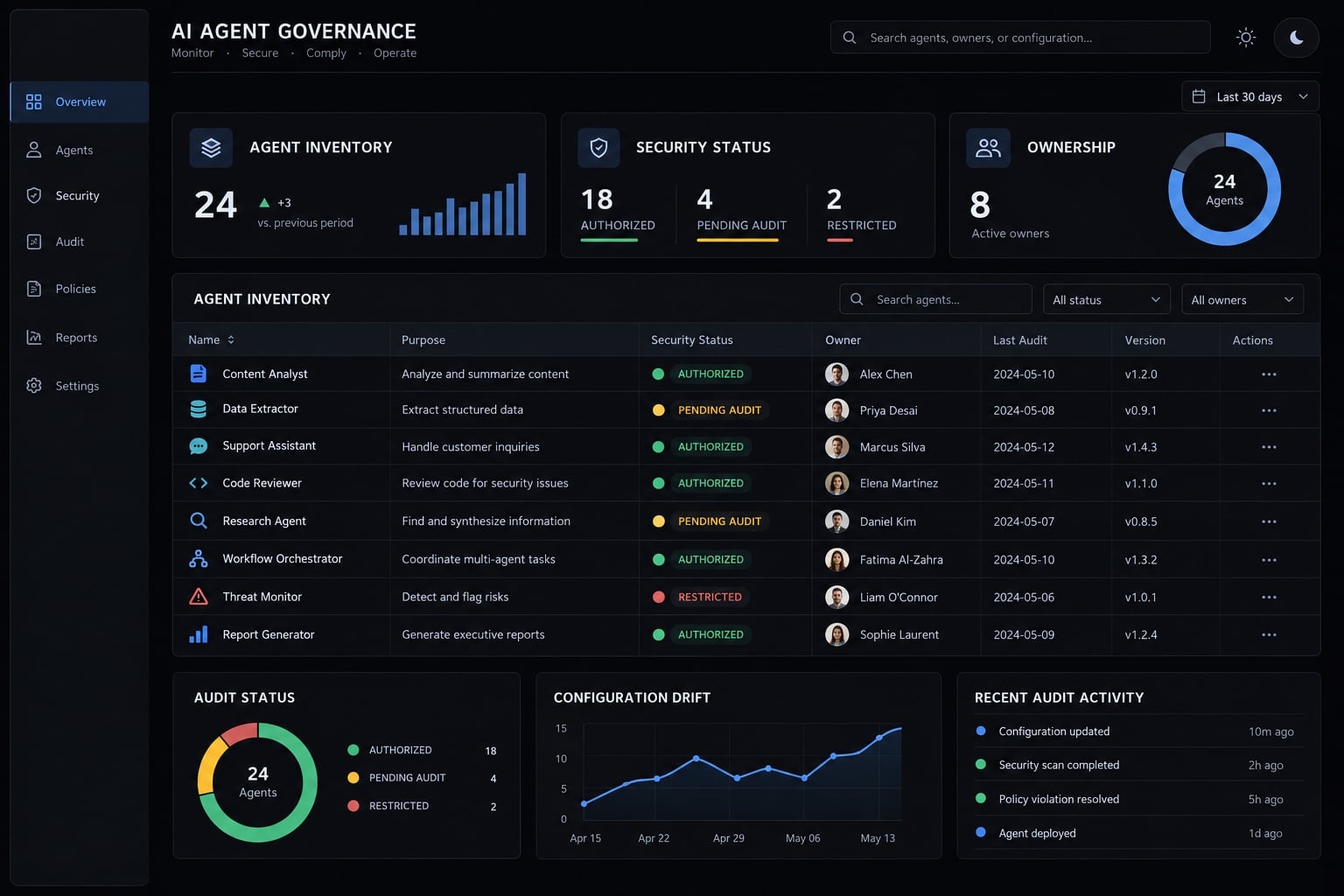
AI coding agent governance assigns accountability for where agents operate, what they can access, and how changes and incidents are managed.
Organize it around three lifecycle stages:
- Inventory and classify trust: Record versions, repositories, approved tools, dependencies, and external-input sources.
- Control permissions and execution: Define identity scope, approval requirements, configuration ownership, and isolation.
- Monitor and respond: Retain useful logs, investigate anomalies, update controls, and test recovery.
Recommended ownership model:
Control area | Accountable owner |
|---|---|
Approved versions | Platform Engineering |
Workflow permissions | Repository Maintainers |
MCP approval | Application Security |
Secrets and machine identities | Identity and Access Management / Security Engineering |
Dependency provenance | Development, Security, and Operations |
Agent logging | Security Operations |
Incident response | Security Operations, with Engineering and Legal as appropriate |
This is a recommended model, not an industry mandate. Small teams can assign several responsibilities to one person, but accountability should remain explicit.
One measurable outcome is reviewed configuration coverage: the share of inventoried agent environments with current configuration reviews. Define the review interval internally and track overdue exceptions rather than inventing a universal benchmark.
Sources, verification method and update policy
Primary-source verification should precede any incident-specific decision. This edition provides deployment guidance; it does not claim completed review of current vulnerability disclosures.
Use this source hierarchy:
- Vendor advisories and release documentation, including Anthropic’s Claude Code security documentation.
- Official repositories, commits, tags, and changelogs.
- GitHub Security Advisory entries and authoritative CVE records.
- npm package metadata and relevant package artifacts.
- Original researcher disclosures.
- Documented independent reproductions.
- Secondary reporting.
GitHub’s “Secure use reference” and “Automatic token authentication” support workflow-permission analysis. The Model Context Protocol specification supports distinctions between transports, tools, and implementations. These references do not independently establish a particular incident.
Frequently asked questions
What are the primary supply chain risks when using Claude Code?
The main risks stem from untrusted inputs (such as malicious repository files or PR comments) influencing the agent's decision-making. This can lead to unauthorized command execution, secret leakage, or the introduction of compromised dependencies.
How does indirect prompt injection impact agent security?
Indirect prompt injection occurs when malicious instructions are embedded in files or web pages analyzed by the agent. If the agent has access to sensitive tools or credentials, these instructions can hijack its execution flow to exfiltrate data or modify code.
Can I run Claude Code securely in GitHub Actions?
Yes, provided you isolate untrusted inputs, run the step with read-only permissions, avoid passing production secrets to pull-request analysis jobs, and maintain human approval gates before executing generated code.
What is the role of MCP servers in supply chain exposure?
Model Context Protocol (MCP) servers act as integration bridges. If an MCP server is malicious or compromised, it can function as a "confused deputy," granting the agent unauthorized access to local databases, network resources, or credentials. Auditing your MCP configurations and enforcing least-privilege API access is critical for defense.
How can I harden my local Claude Code environment?
To harden your environment, run the agent within isolated workspaces (e.g., Docker or VMs) with read-only host mounts. Explicitly define and audit your .claude configuration files, avoid skipping permissions for untrusted repositories, and monitor for unauthorized network activity or unexpected changes to agent settings.
What should I do if I suspect a security compromise?
If you suspect a compromise, immediately isolate the affected machine or CI/CD runner. Revoke and rotate any credentials or API keys that may have been exposed, review agent logs for unexplained activity, and preserve the system state for forensic analysis according to your organization’s incident response procedures.
Read more:
- Claude Code authentication security: A practical enterprise guide
- Claude Code permissions security: Guide to safe workflows
- Claude Code managed-settings.json: Admin guide & security
Conclusion
Claude Code supply chain security comes down to controlling inputs, limiting execution authority, and enforcing strict network boundaries. Rather than reacting to headline vulnerabilities, focus on securing public-input workflows, separating analysis from deployment, and protecting production secrets. Use the provided checklist to isolate your highest-risk trust boundaries, enforce human approvals, and verify security fixes directly in your runtime environment.