Vibe coding SEO: What it means, what it can build, and how to start safely
SEO teams increasingly need more than static articles and page updates. They need calculators, QA helpers, comparison widgets, and lightweight utilities that improve search usefulness. The problem is that even small ideas often sit behind an engineering backlog, long approval chains, or unclear specs. Vibe coding SEO has become a practical shortcut for some of these builds. In plain terms, it means using AI-assisted SEO development to turn a clear idea into a small working asset faster. This guide explains what it is, what it can realistically build, where it works well, where it does not, and how beginners can start without creating unnecessary risk.
What “vibe coding” means in SEO
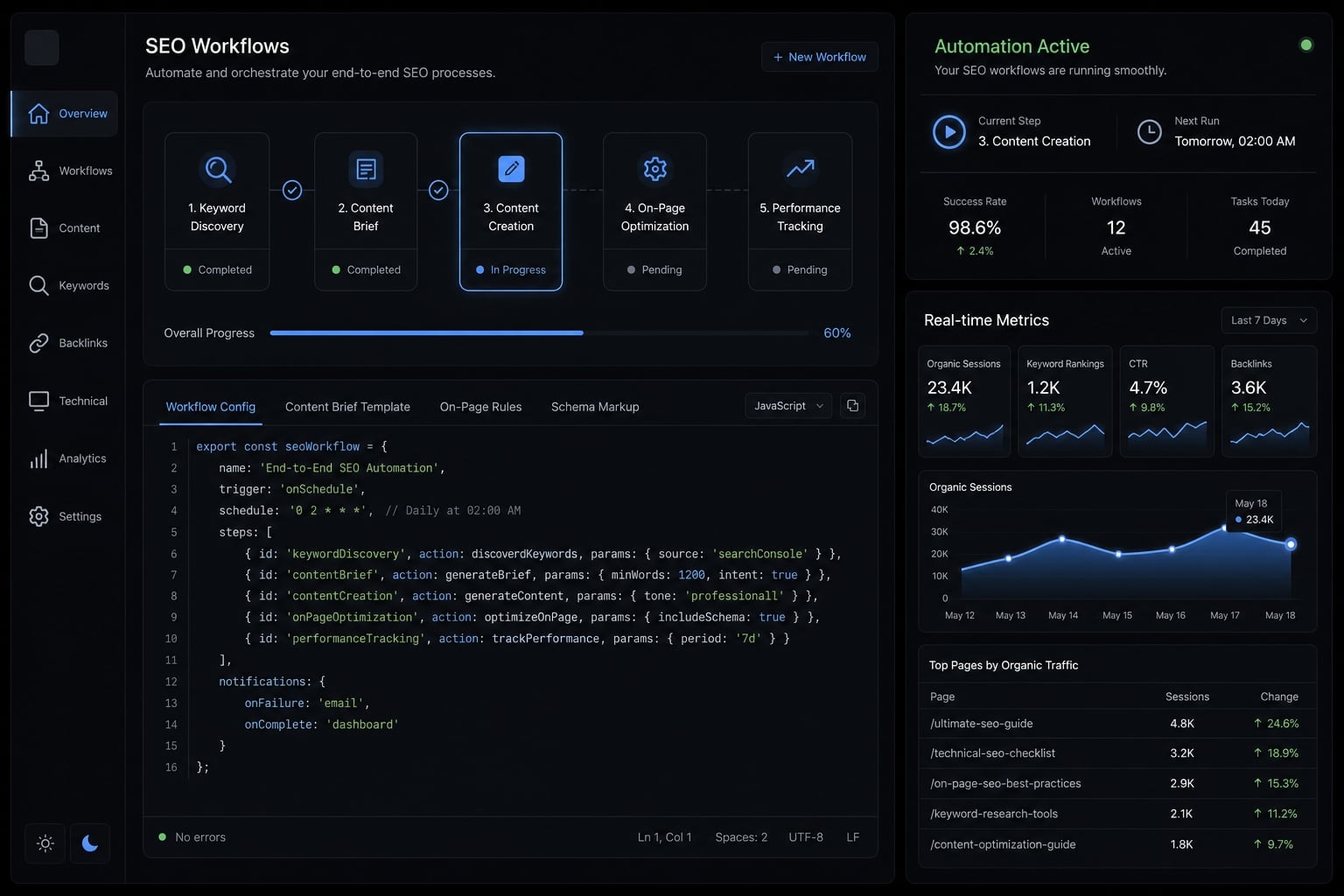
Vibe coding in SEO means using AI coding assistants to build small working tools, scripts, pages, or automations from natural-language instructions. The goal is not just to generate ideas, but to produce something functional that can be tested, reviewed, and improved for a real SEO workflow.
A plain-English definition for non-developers
Vibe coding in SEO is a way to build useful SEO assets with AI help, even if you are not a full-time developer. That might include asking a tool like Cursor, Windsurf, or GitHub Copilot to help create a page checker, a simple calculator, or a metadata helper. The important distinction is that vibe coding SEO is about building something that works, not just brainstorming ideas or generating copy.
In many teams, SEO ideas stall not because they lack strategic merit, but because they sit behind product and engineering priorities. A common pattern is that the requested SEO asset is small, but the coordination cost is not. That is where AI coding for marketers starts to matter.
Vibe coding vs no-code tools vs custom development
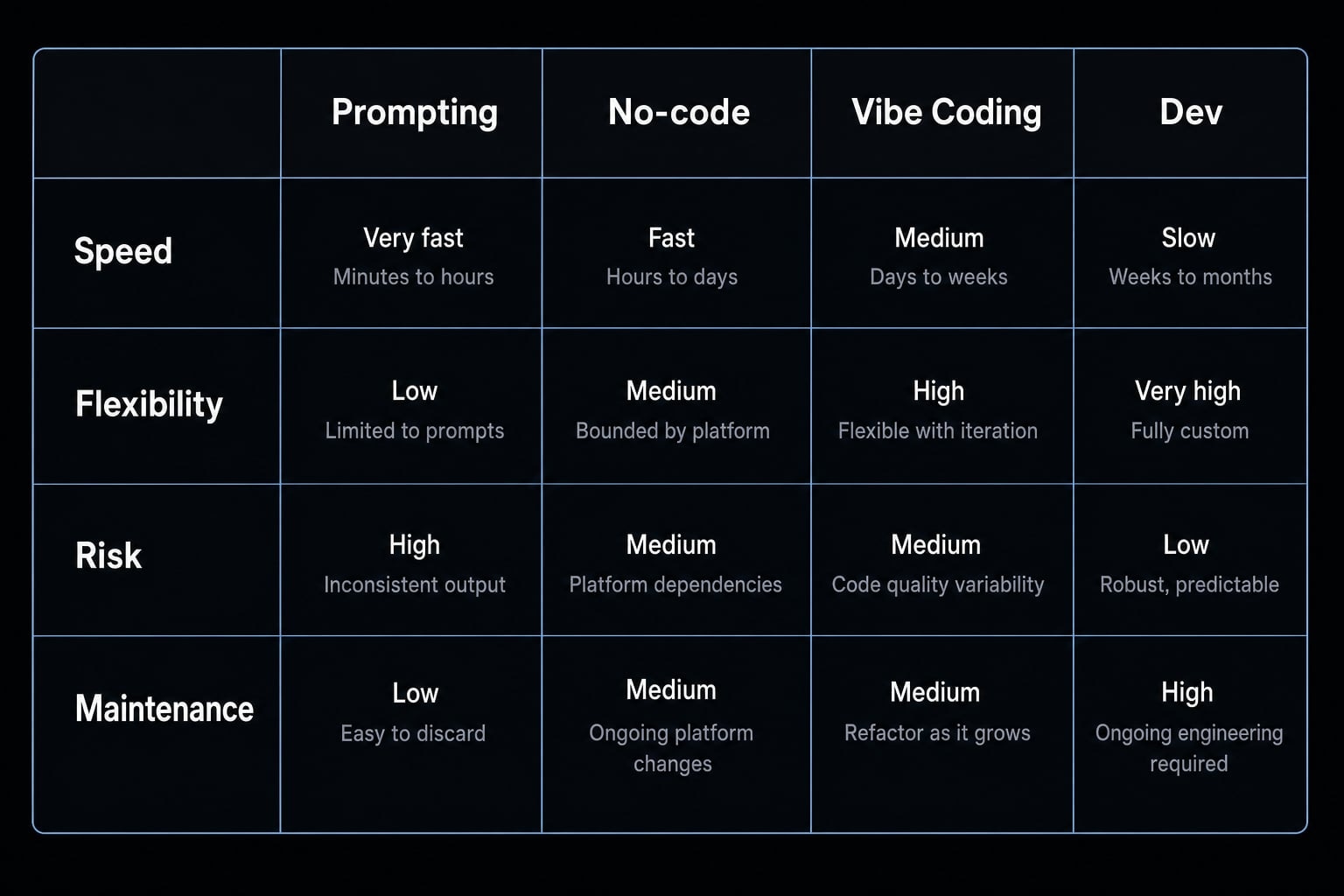
It helps to separate vibe coding SEO from nearby concepts.
- Prompting for ideas: You ask AI for concepts, outlines, or logic suggestions. Nothing is actually built.
- No-code tools: You assemble workflows or interfaces inside a predefined system. Speed is high, but flexibility is limited.
- Vibe coding: You describe what you want in natural language, and AI helps generate code for a usable asset.
- Traditional development: Engineers design, build, test, and maintain the system with stronger controls and deeper reliability.
This is why the distinction between no-code and vibe coding matters. Traditional development is still the better path when risk, complexity, or long-term maintenance becomes meaningful.
AI-assisted SEO development is useful, but it is not magic and it is not autonomous engineering. It still needs scope control, prompt iteration, testing, and disciplined human review.
Why vibe coding is becoming relevant for SEO teams
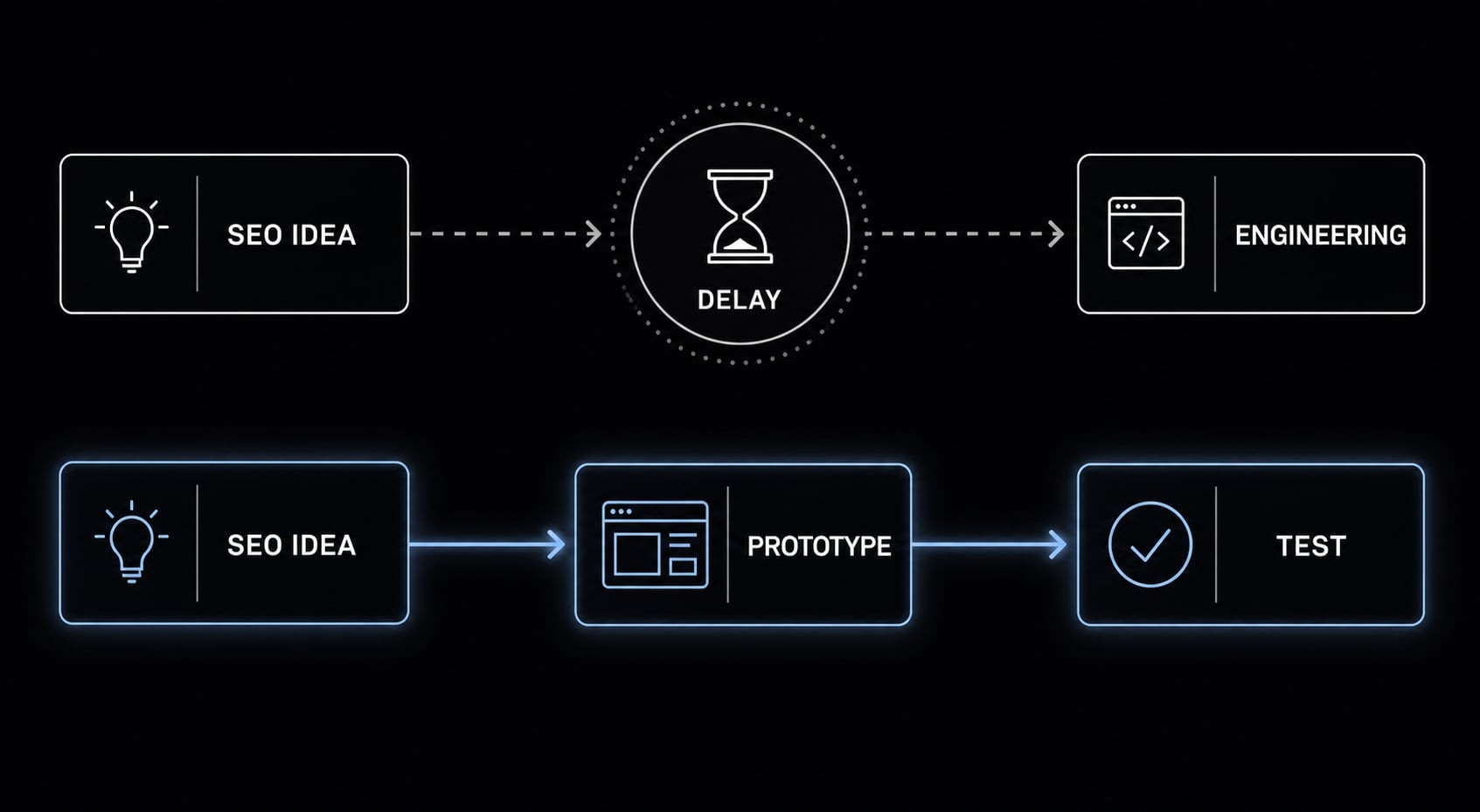
The main reason SEO teams are discussing this now is simple: Many high-value ideas are too small for a formal product roadmap, yet too useful to ignore. SEO experimentation often slows down because every lightweight request still requires specs, backlog time, stakeholder coordination, and engineering support.
Traditional SEO bottlenecks and why lightweight builds matter
In practice, teams frequently wait weeks for things like a metadata helper, an internal linking checker, or a comparison widget. The build itself may be small. The process around it is not. For operators focused on faster SEO execution, this creates a structural problem: by the time the asset is built, the test window may already be gone.
That is why SEO automation with AI and lightweight prototyping have gained traction. They let teams validate whether an idea is useful before asking engineering to productionize it.
Interactive experiences as an SEO lever
SEO has also shifted beyond publishing text alone. In many categories, users respond better to interactive SEO experiences that reduce friction and answer intent faster.
Examples include:
- Calculators: Estimate savings, eligibility, pricing, or ROI.
- Dynamic comparison tables: Let users filter vendors, features, or plans.
- Simple generators: Produce titles, descriptions, or structured outputs.
- Microsite utilities: Support one narrow task tied to a specific query intent.
Used well, these assets improve usefulness and support SEO experimentation. But faster shipping does not automatically mean better rankings. A weak tool still underperforms, and a useful tool still needs relevance, quality, and solid page execution.
What you can realistically build with vibe coding for SEO
- Internal page QA checkers.
- Metadata and title helpers.
- Keyword clustering or SERP extraction utilities.
- Internal linking suggestion tools.
- SEO calculators and comparison widgets.
- Content brief and reporting helpers.
- Lightweight recurring audit automations.
The most practical way to build SEO tools with AI is to stay narrow. Single-purpose assets usually work better than broad systems because they are easier to test, easier to debug, and easier to replace if needed. Most successful SEO tool prototyping happens in low-to-medium complexity use cases.
Internal tools for analysis and operations
These are often the best starting point for internal SEO tools because the risk is lower and the usefulness is immediate.
- Metadata helper: Generate draft titles and meta descriptions from page inputs and editorial rules.
- Page QA checker: Flag missing titles, duplicate H1s, weak internal links, or basic on-page issues across a list of URLs.
- Keyword clustering utility: Group related terms into themes for content planning.
- SERP extraction helper: Pull top-result titles, headings, or page patterns for quick analysis.
- Internal linking suggestion helper: Suggest possible internal links based on keyword relevance or page relationships.
Public-facing pages and interactive components
This is where many teams start to explore public-facing SEO tools and SEO widgets.
- SEO calculator: Help users estimate traffic value, content ROI, or migration impact.
- Comparison widget: Let visitors compare plan tiers, use cases, or feature fit.
- Interactive checklist: Turn a static “how-to” into a more usable step-based experience.
- Persona-based page component: Show different content blocks based on role, business size, or objective.
These builds can support search visibility, but they should still be treated carefully. Public-facing assets affect user trust, brand perception, and page quality more than internal tools do.
Workflow automations for content and reporting
Another good category for AI-powered SEO workflows is repetitive support work.
- Content brief helper: Turn target keywords and page type into a draft structure.
- Schema support tool: Suggest structured data fields for common page templates.
- Reporting helper: Summarize ranking changes, page performance, or content updates.
- Recurring audit assistant: Run a checklist against a defined set of pages on a schedule.
The strongest pattern is clear: When you build SEO tools with AI, narrow tasks beat platform-sized ambitions. The smaller the job, the easier it is to get useful output without accumulating avoidable risk.
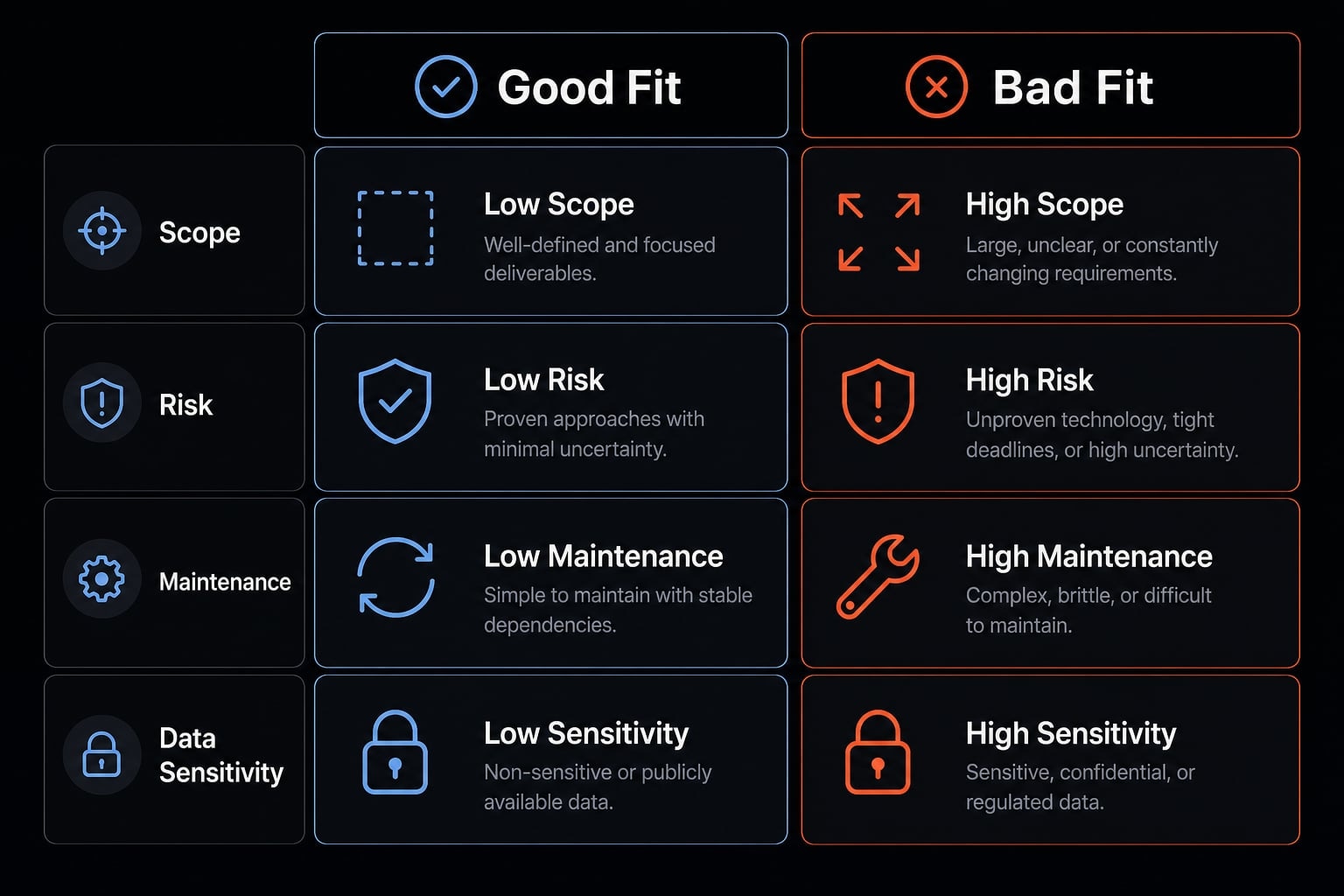
When vibe coding works well - and when it does not
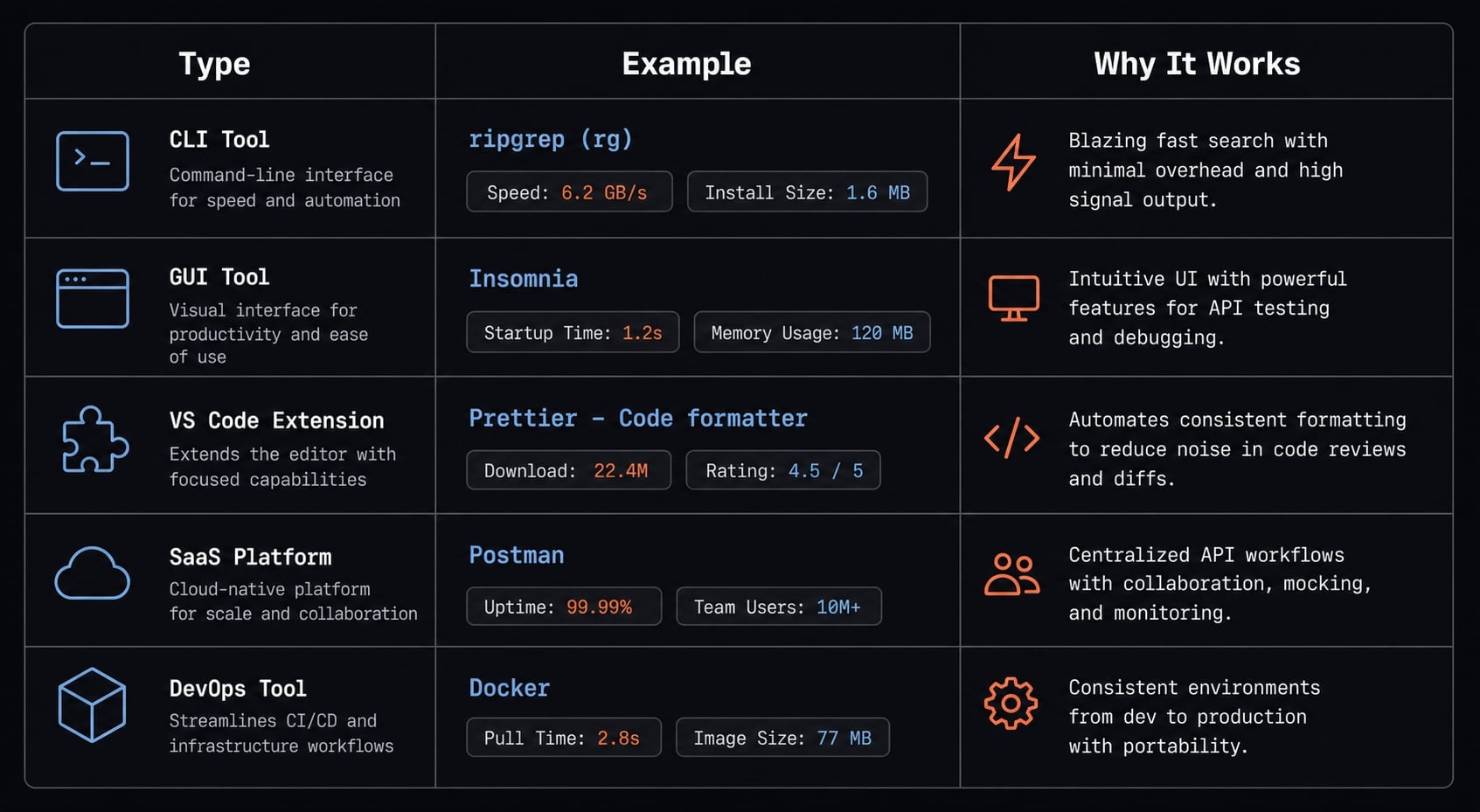
Criteria | Good fit for vibe coding | Bad fit for vibe coding |
|---|---|---|
Scope clarity | One narrow task with clear inputs and outputs | Broad or poorly defined project |
Time sensitivity | Fast experiment or prototype needed | Long-term system with no urgent validation need |
Technical risk | Low-to-medium risk if it fails | High-risk failure impact |
Data sensitivity | Public or low-sensitivity data | Sensitive credentials, regulated, or private business data |
Maintenance needs | Lightweight updates, easy replacement | Ongoing complex maintenance |
Use case example | Internal QA utility, calculator prototype, simple widget | Mission-critical production system, complex backend app |
Best suited for | Operators testing usefulness quickly | Engineering teams building durable systems |
Good-fit scenarios
If you are deciding when to use vibe coding, the best cases usually look like this:
- Internal QA utility: A checker for titles, headings, links, or basic page issues.
- Calculator prototype: A fast way to test whether users engage with a practical tool.
- Simple microsite feature: A comparison block or small interactive component.
- Repetitive low-risk workflow: A reporting helper or brief generator.
- Light integration: A small tool that connects to an API (Application Programming Interface) with limited complexity.
These are a good fit for vibe coding because speed matters, scope is clear, and the downside of failure is manageable.
Bad-fit scenarios
The vibe coding limitations become much clearer in these cases:
- Sensitive credentials or business-critical secrets.
- Regulated or highly sensitive data.
- Mission-critical business logic.
- Complex production systems with many dependencies.
- Poorly defined projects with shifting requirements.
These are a bad fit for vibe coding because the AI coding risks are no longer small. Broken logic, weak security handling, or unclear ownership can create more cost than the shortcut saves.
A simple decision rule for operators
Use vibe coding when speed matters, scope is narrow, and risk is manageable. If the build affects critical systems, sensitive data, or long-term maintainability, treat it as real engineering instead. That is the simplest SEO workflow fit test most teams need.
Common risks, mistakes, and quality-control guardrails
Common vibe coding mistakes usually happen early:
- Starting with a project that is too large.
- Trusting outputs without testing them.
- Exposing API keys or credentials carelessly.
- Assuming working code is correct code.
- Failing to document changes or keep backups.
Why prompting alone is not enough
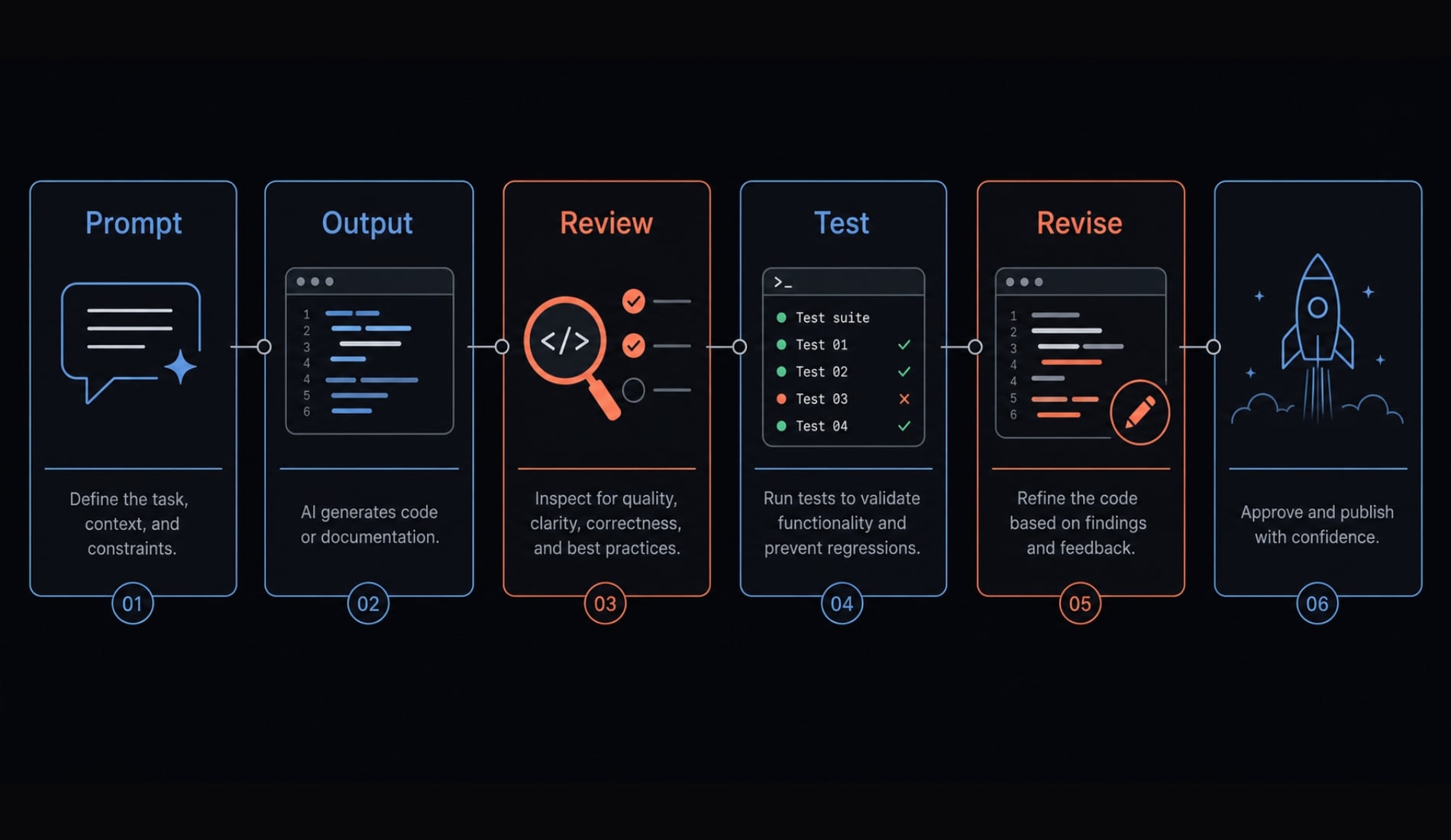
Prompting helps, but prompting alone is not a system. Vague instructions create vague outputs. Large requests often hide broken assumptions. AI-generated code can look correct while still failing in real use. This is why AI code quality depends less on one clever prompt and more on structured iteration.
One practical issue is the context window, which is the amount of information an AI model can keep in working memory during a session. When too much context piles up, outputs often become less reliable. That leads to practical business problems: Broken logic, wrong outputs, code that is hard to maintain, and avoidable security mistakes.
The real skill is prompt iteration: Define the task clearly, review what was generated, test the result, and refine it in small steps. Human review is not optional. It is the control mechanism that keeps lightweight experiments from becoming messy liabilities.
A lightweight beginner governance checklist
- Use a test environment before publishing anything live.
- Protect API keys, tokens, and credentials carefully.
- Validate outputs manually against expected results.
- Review generated code before deployment.
- Keep versions, backups, and rollback options.
- Document what worked and what failed.
- Keep human review in the loop at every stage.
For most teams, these guardrails matter more than the choice between tools like Cursor or Windsurf. Process discipline is what reduces risk.
A beginner-friendly way to start with vibe coding for SEO
The best approach to vibe coding for beginners is to choose one small, useful task and avoid anything that feels like a full product. You do not need an advanced setup to learn the workflow. You need a manageable first win.
Best first projects by user type
- SEO specialist: Metadata helper, page checker, internal linking helper.
- Founder: ROI calculator, pricing helper, simple landing-page widget.
- Small team: Reporting helper, content brief generator, QA utility.
- Content lead or marketer: Title/meta assistant, publishing checklist helper, brief structuring tool.
These are strong beginner SEO projects because they have visible outputs and relatively clear success criteria.
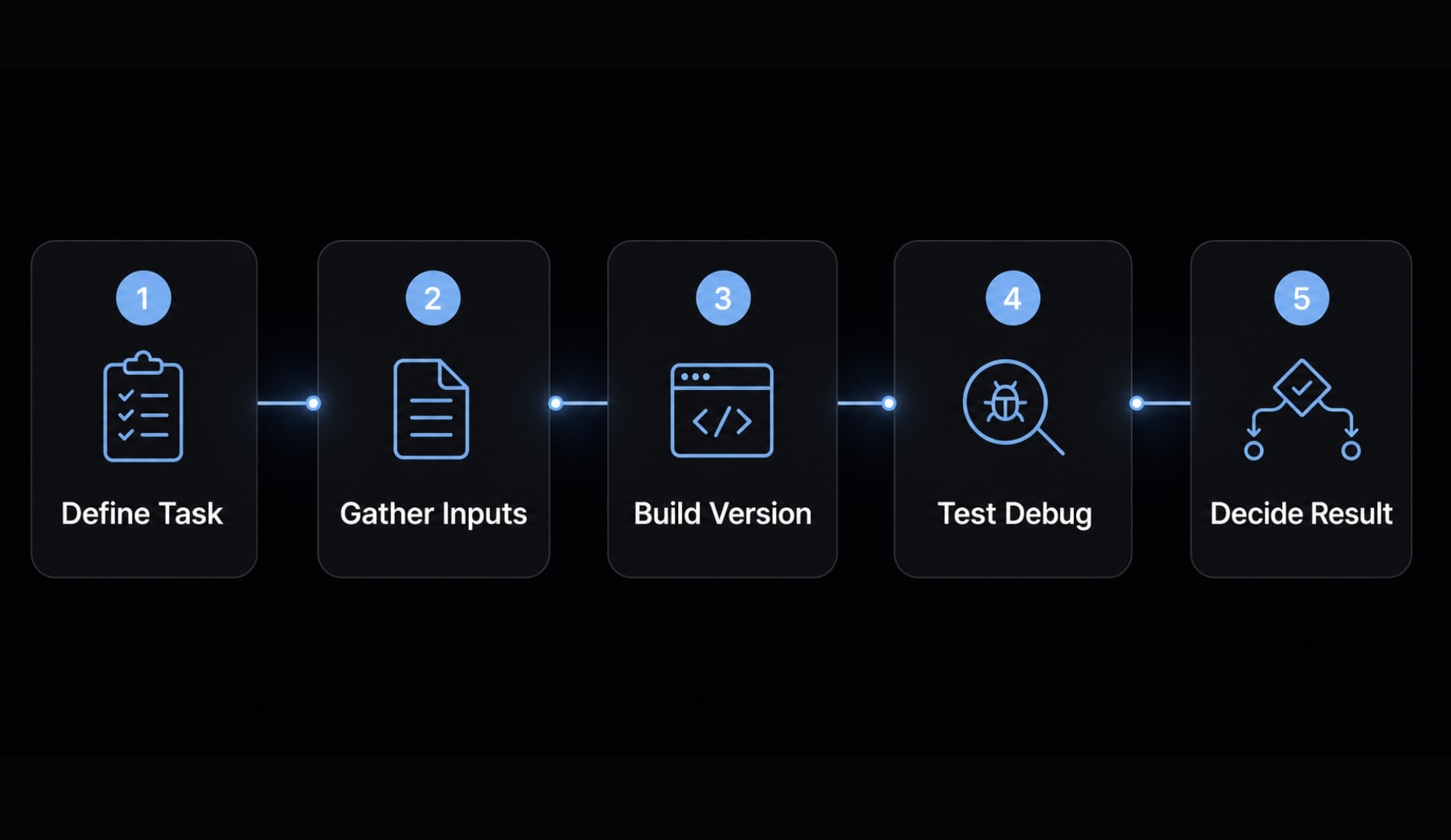
A 5-step beginner workflow
- Define one narrow task: Choose a single problem with a clear output, such as checking title tags or generating a brief template.
- Gather examples and inputs: Collect sample URLs, keyword sets, page rules, or spreadsheet inputs so the tool has real context.
- Build the smallest working version: Start with the most basic SEO tool prototype that proves the idea. Do not add extra features yet.
- Test and debug: Check whether outputs are accurate, useful, and repeatable. If needed, revise through a simple AI coding workflow.
- Decide whether to keep, improve, or rebuild: If it works, improve it carefully. If it fails, reduce scope or start over with a cleaner approach.
If you are learning how to start vibe coding, keep the environment simple. A tool such as Cursor or Windsurf can help, but the bigger issue is not the interface. It is whether you keep the task tight, the review process clear, and the risk contained. For vibe coding for beginners, small scope is the main advantage.
From one-off experiments to repeatable SEO workflows
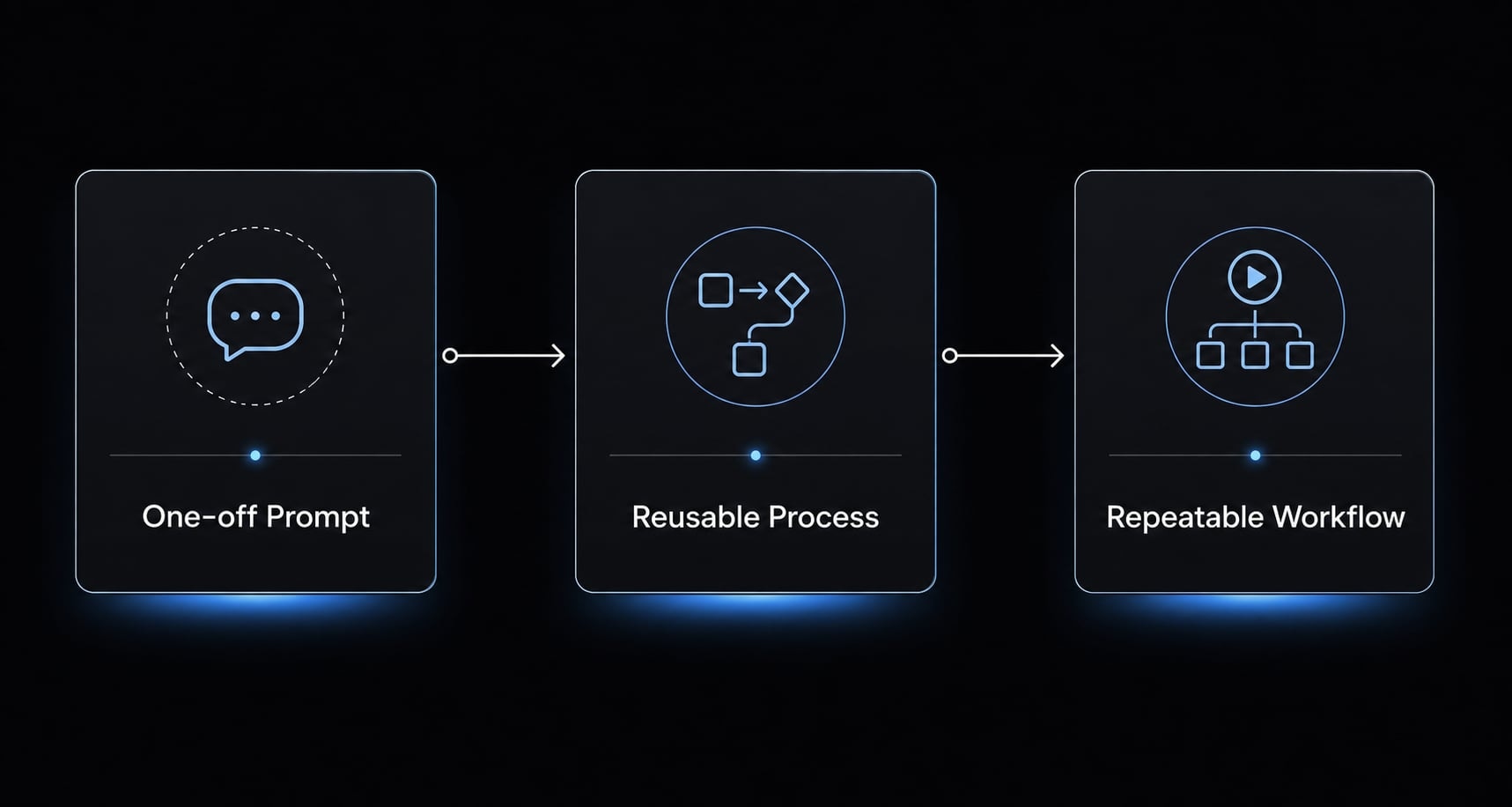
A one-off success does not automatically become a reliable operating model. As teams run more experiments, inconsistency becomes the problem. Different prompts, different review standards, and undocumented fixes make results harder to trust.
Mature teams usually move toward repeatable AI workflows and more structured AI execution so useful experiments can be reused without recreating the process every time.
- Standardize prompts, inputs, and review steps
- Turn successful patterns into reusable skills
- Add simple ownership and QA rules for SEO agent workflows
This is the point where platforms like AgentKit become relevant: Not for replacing judgment, but for helping teams make AI-assisted execution more controlled and repeatable across SEO, content, and development workflows.
Frequently asked questions
What is vibe coding in SEO?
Vibe coding in SEO is an approach to building tools, utilities, and interactive components with AI coding assistants. Instead of writing code manually, SEO professionals describe their objectives in natural language, allowing AI to create practical solutions that improve workflows and the website user experience.
How does vibe coding differ from no-code tools?
Vibe coding is more flexible because it enables custom logic based on actual source code, while no-code tools are generally limited to predefined functional blocks. Vibe coding is suitable for specialized SEO tools that require flexible integrations, whereas no-code platforms are better suited for building interfaces quickly.
Should you use vibe coding to build SEO tools?
Yes, particularly when you need to solve a small, specific problem with limited time and budget. It is an effective approach for creating calculators, metadata validation tools, or dynamic data tables. However, it is not a replacement for complex systems requiring strong security and long-term maintainability.
What are the greatest risks of adopting vibe coding?
The main risks include logic errors in AI-generated code, security vulnerabilities caused by improper API key management, and long-term maintenance challenges. To reduce these risks, you must implement a quality assurance process, review outputs manually, and never enter sensitive data into an unsecured environment.
How do you begin vibe coding for an SEO project?
- Define one specific SEO task, such as creating an ROI calculator.
- Prepare examples of the expected inputs and outputs.
- Use an AI coding assistant to build the smallest viable version.
- Test the source code and performance in a staging environment.
- Review and refine the solution before deploying it.
Can vibe coding replace a software engineering team?
No. Vibe coding does not replace engineers. It helps SEO professionals work more independently on small projects while reducing the technical team’s backlog. Close collaboration with professional engineers remains essential for core systems or projects involving complex infrastructure.
Read more:
- 7 practical vibe coding examples: Build apps faster with AI
- How to vibe code a landing page that actually converts
- Vibe coder meaning: How AI is changing software development
Conclusion
Vibe coding SEO is best understood as a practical way to test and build small SEO assets faster, not as a replacement for engineering discipline. It works best when the scope is narrow, the business risk is manageable, and the team is willing to use structured iteration instead of blind trust.
For vibe coding for beginners, the safest path is simple: start with one small task, validate outputs carefully, and keep human review in place. That is how lightweight experiments become useful workflows instead of fragile shortcuts.