Vibe coder meaning: What the term actually means
“Vibe coder” is one of those AI-era terms that keeps appearing in X threads, LinkedIn posts, YouTube demos, and developer conversations. If you are searching for vibe coder meaning, you are probably trying to figure out whether it describes a real way of building software or just internet slang. This guide explains the vibe coding meaning in plain English: What the term means, where it came from, how the workflow usually works, and why people use it both seriously and casually.
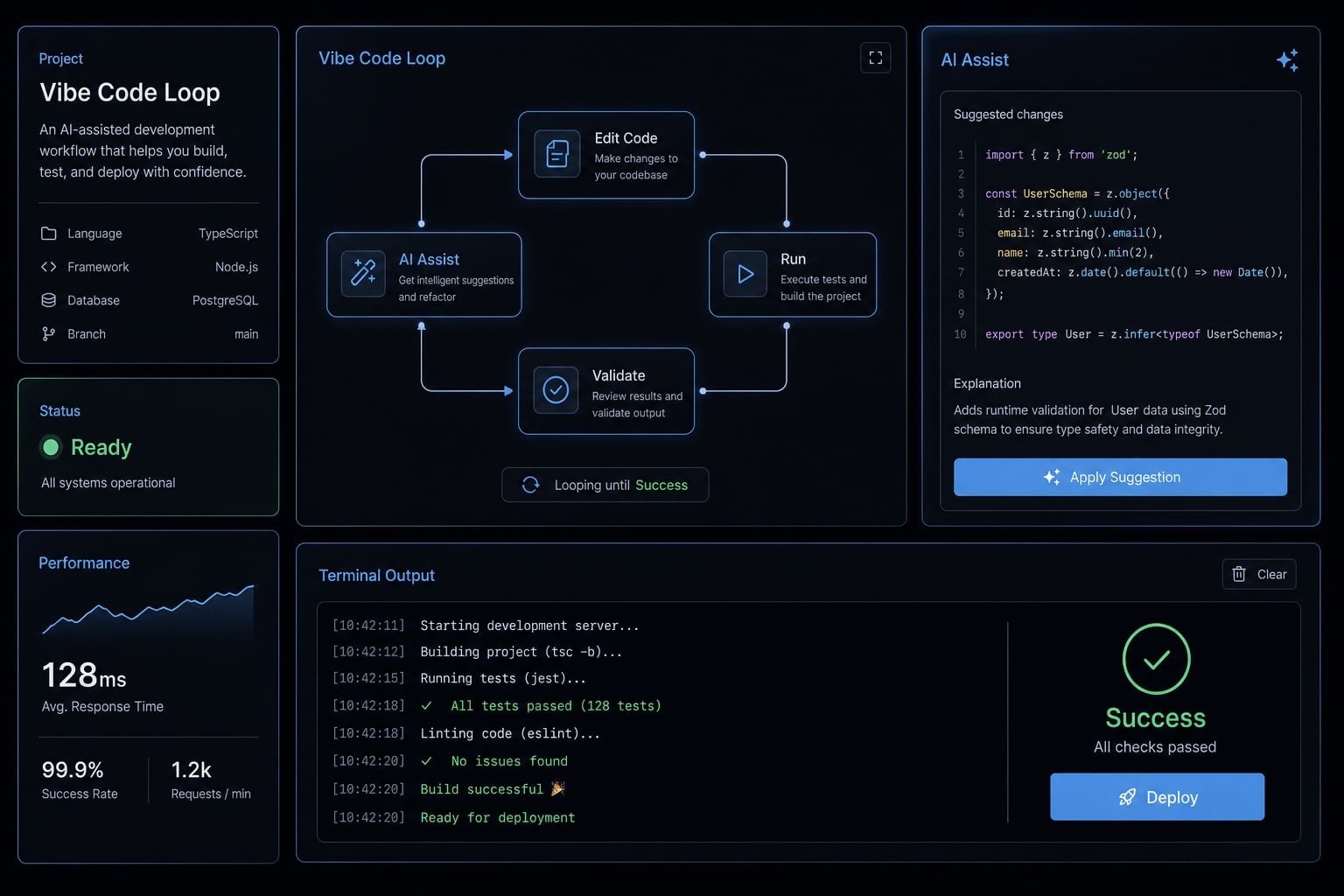
What does “vibe coder” mean?
A vibe coder is someone who uses AI as the main interface for building software, relying more on prompts, feedback, and iteration than on writing every line of code manually. In simple terms, the AI generates much of the code, while the human guides the goal, constraints, and review process. That is the most honest answer to the question: Is vibe coding real?
When people ask what is a vibe coder, they usually mean a person working in an AI-assisted programming (using AI tools to help create, revise, or explain code) style. The workflow is often prompt-to-code: The person describes what they want in natural language, the AI produces code, and the person then tests, corrects, or refines the result.
Plain-English definition
The easiest way to understand a “vibe coder” is this: The person is still building the software, but AI is doing more of the typing. The human contributes intent, priorities, rules, and judgment. The AI contributes speed and first drafts.
That is also why vibe coding does not simply mean ‘someone who cannot code. Some vibe coders are beginners. Others are experienced developers who use AI to move faster.
The term covers a spectrum
In practice, vibe coder meaning can describe several kinds of people:
- A non-technical builder using prompts to create a simple app.
- A founder prototyping an MVP.
- A marketer or operator testing a lightweight internal tool.
- A developer using AI as a pair programmer.
- A product team member exploring ideas before formal engineering starts.
The term is informal, and its meaning depends on context. Sometimes people use it seriously. Sometimes they use it playfully. Either way, the connection to vibe coding meaning is the same: Software is being shaped through AI-led iteration more than manual line-by-line coding.
Where did the term “vibe coder” come from?
The term grew out of the broader idea of vibe coding, which became more visible as generative AI tools improved and natural-language software building entered mainstream discussion. In public AI coding discourse, the phrase is widely associated with Andrej Karpathy, who helped popularize the concept in early 2025.
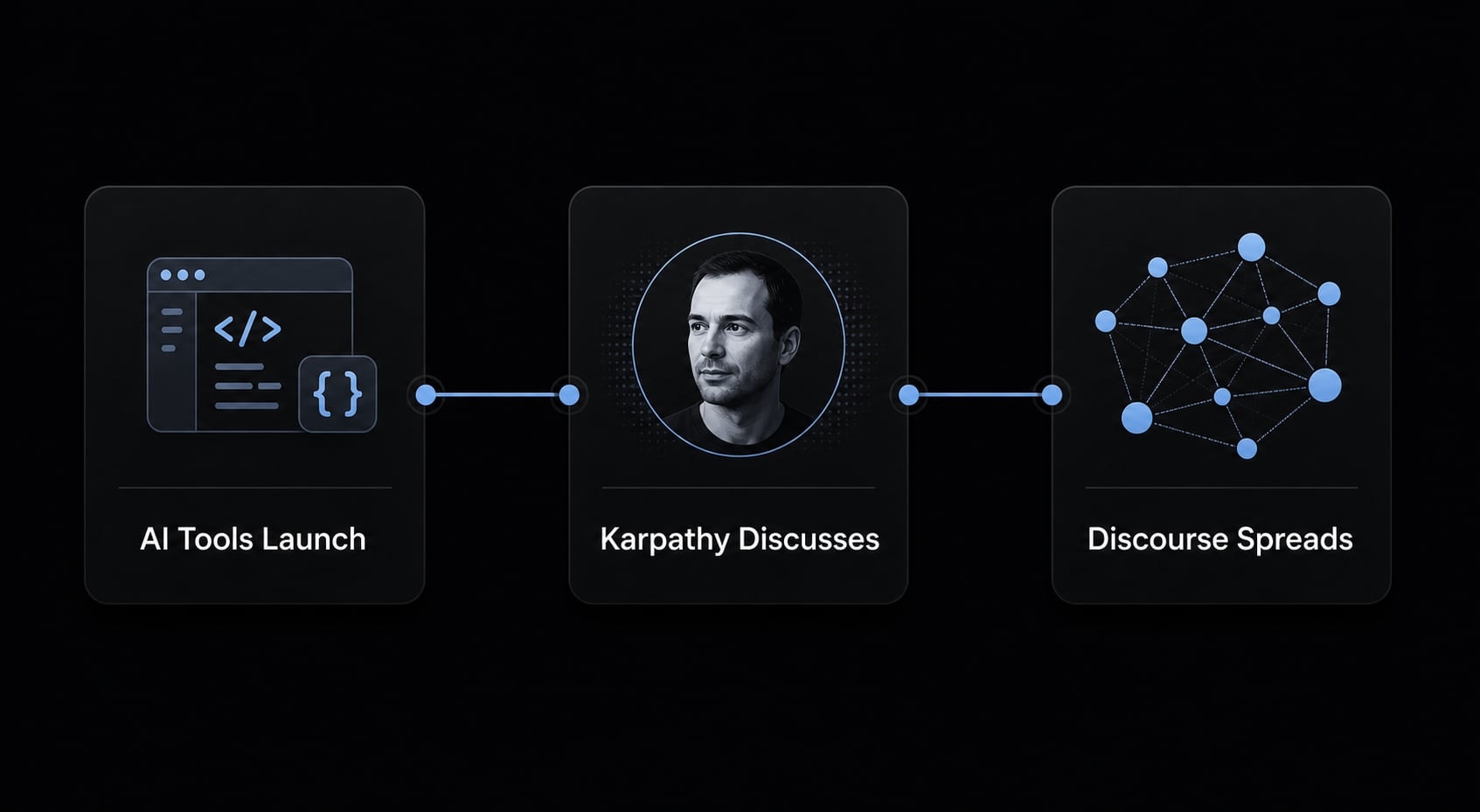
Why the term appeared when it did
The origin of vibe coding is tied to a larger shift in software creation. As AI tools got better at producing usable code from prompts, more people could build rough apps, landing pages, scripts, and prototypes without deep programming knowledge.
That changed the public conversation. Instead of focusing only on syntax, people began talking about intent-driven software development: Describing what a product should do, then using AI to generate and revise the implementation.
This is why the vibe coder term appeared when it did. The workflow became visible enough that people needed a shorthand label for it.
A workflow label, not a job title
The safest way to describe the origin of vibe coding is that the phrase was popularized in public discussion, not formalized as an official discipline. “Vibe coder” is best understood as community language.
It is not a certified role. It is not a standard hiring title. It is a convenient label for someone building software in an AI-first, prompt-led way.
How vibe coding works in real life
At a practical level, how vibe coding works is not mysterious. It is usually an iterative refinement loop: you describe what you want, AI generates a draft, you test it, then you ask for changes until the result is usable.
- Describe what you want.
- Let AI generate a first draft.
- Run it or test it.
- Ask for fixes or changes.
- Repeat until it works as expected.
The core loop
That five-step sequence is the simplest answer to how vibe coding works. In real use, a person may start with something like: “Build a simple landing page with a waitlist form, email capture, and mobile-friendly layout.” The AI then produces code, structure, and sometimes styling. After that, the human checks the result, spots problems, and asks for revisions.
This is why how vibe coding works is less about one perfect prompt and more about a cycle of correction. The output usually improves through iterative refinement, not through a single instruction.
What the human still contributes
Even when AI handles most of the initial code generation, the human still provides the parts that matter most:
- Feature goals.
- UI preferences.
- Business rules.
- Constraints.
- Error feedback.
- Expected behavior.
- Quality standards.
Better prompts usually include the goal, constraints, and expected output.
That is where contextual prompting matters. Contextual prompting means giving the AI enough useful background to produce something more accurate, such as the app’s purpose, target user, design style, content structure, or functional limits.
This is also why vibe coding works well for rapid prototyping (quickly turning an idea into a rough working version), but often becomes weaker when the instructions are vague.
Tools commonly associated with this workflow
Common examples include:
- Cursor.
- Replit.
- GitHub Copilot.
- Windsurf.
- Claude Code or similar coding agents.
These tools are examples, not endorsements. The important point is the workflow itself, not the specific brand.
Vibe coder vs. traditional programmer
The core difference in vibe coding vs traditional programming is the interface. Traditional coding starts with direct control over syntax and structure. Vibe coding starts with natural language input and uses AI to translate intent into working code.
Dimension | Vibe Coding | Traditional Programming |
|---|---|---|
Main input | Prompts and feedback | Manual code writing |
Speed | Often faster for first drafts | Usually slower at the start |
Required coding knowledge | Lower to begin, though limits appear quickly | Higher from the beginning |
Best use cases | Prototypes, experiments, simple apps, MVPs | Complex systems, production software, large-scale products |
Risk level | Higher if outputs are not reviewed | Lower when built with established engineering practices |
Reliability at scale | Often weaker without careful review | Typically stronger for long-term systems |
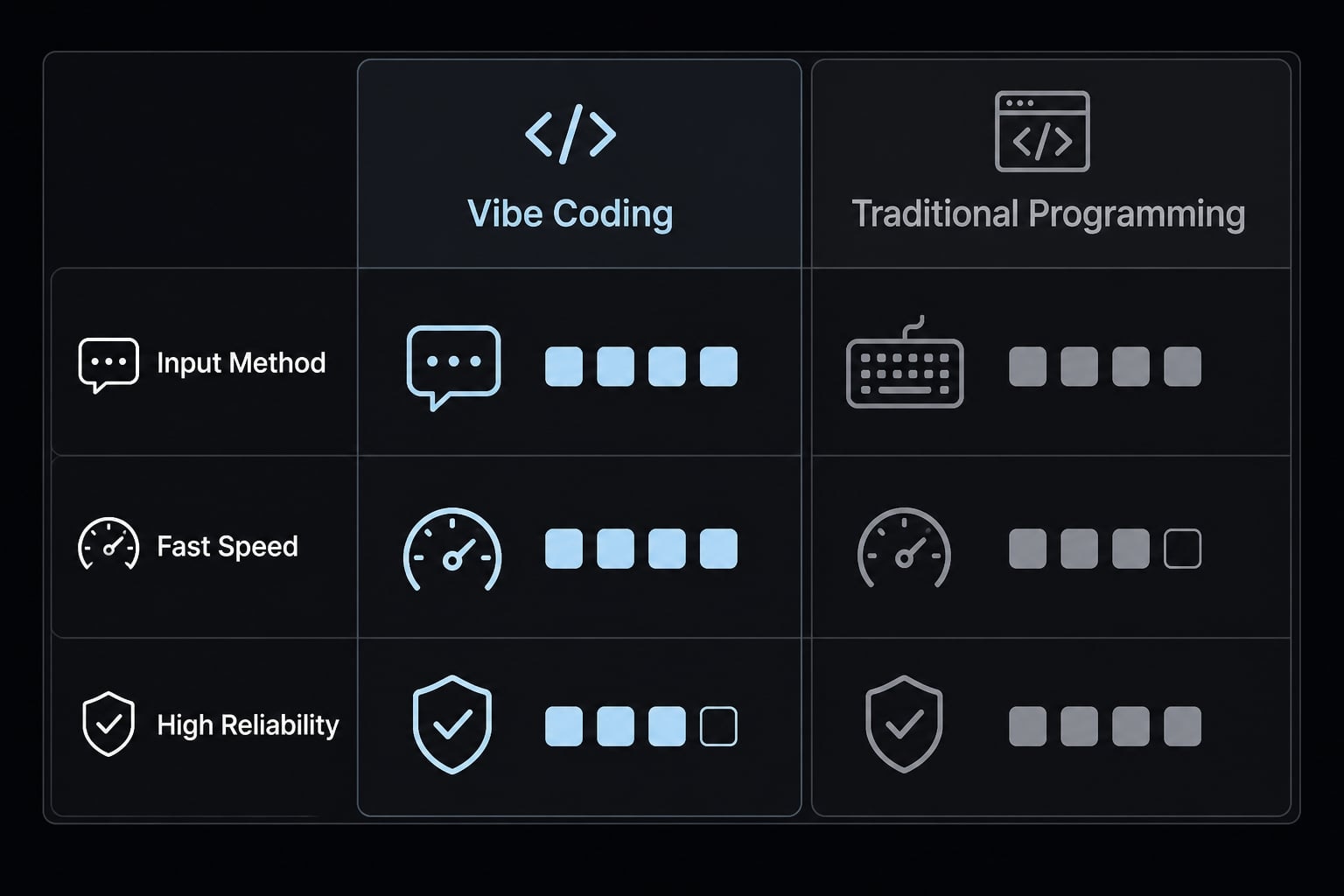
When people compare vibe coding vs traditional programming, the wrong conclusion is that one completely replaces the other. In reality, both belong to the modern software development workflow.
Experienced developers may use AI-generated code to accelerate drafts, reduce repetitive work, or explore options faster. Beginners may start with vibe coding because it lowers the barrier to entry. But traditional programming still matters when systems need scale, reliability, clean architecture, and long-term support.
Is a vibe coder a real developer, a beginner, or just a meme?
Vibe coding is real as a workflow, but the term is often used loosely or jokingly online. That is the most honest answer to the question: Is vibe coding real? The practice is real. The label is informal.
You may see vibe coder slang used in different ways depending on who is speaking. In some posts, it describes a hobbyist building with prompts. In others, it describes a founder moving fast with AI tools. In more technical circles, it can describe an experienced engineer leaning heavily on AI to speed up delivery.
Three common meanings in practice
In real conversations, the label usually points to one of these:
- A hobbyist prompt-builder making simple tools or side projects.
- A founder prototyping an MVP with minimal manual coding.
- An experienced engineer accelerating work with an AI coding trend that supports faster drafts.
The meaning depends on context. That is why trying to force one strict definition usually creates more confusion than clarity.
Responsible vibe coding vs blind trust
The useful version of vibe coding is close to intent-driven development: define the outcome clearly, use AI to generate options, then review and improve them.
The risky version is blind trust. That happens when someone ships code they do not understand, have not tested, or cannot maintain. So the real dividing line is not whether someone uses AI. It is whether they use AI carelessly.
Benefits and risks of being a vibe coder
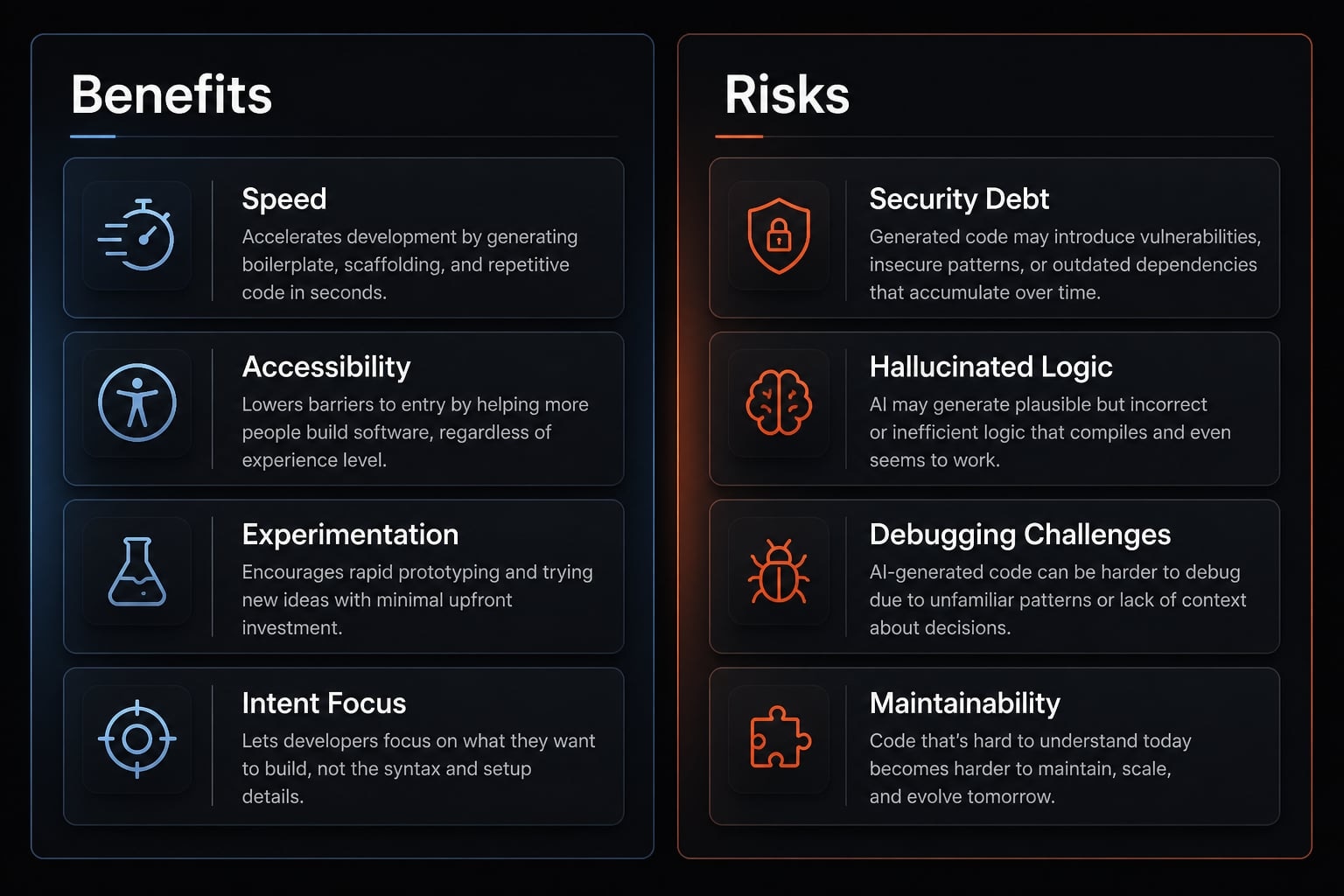
The main appeal is obvious: Speed, accessibility, and easier experimentation. The main downside is just as important: Quality problems can appear quickly when fast output is mistaken for finished software.
Main benefits in simple terms
The biggest benefits of vibe coding usually include:
- Faster prototyping and idea validation.
- Lower barrier for non-developers to build simple software.
- Easier experimentation with product concepts.
- More focus on user needs than on syntax details.
- Faster first drafts for developers handling repetitive tasks.
- Better support for rapid prototyping in early-stage projects.
For founders, operators, and small teams, the benefits of vibe coding are strongest when speed matters more than perfection in the first iteration.
Main risks to understand
The main risks are less visible at first, but they matter more over time:
- Security issues hidden inside generated code.
- Hallucinated logic, where the code looks plausible but behaves incorrectly.
- Technical debt from fast but messy implementation.
- Dependency confusion from packages or components that are added without enough scrutiny.
- Fragile structure that becomes harder to extend later.
- Debugging challenges when the user does not fully understand the generated system.
- Weak maintainability (how easy software is to understand, update, and support over time).
One term worth knowing here is security debt. It means security problems that build up quickly when fast-generated code is not reviewed carefully. This can include weak authentication, unsafe data handling, or exposed secrets.
A simple rule: Vibe coding is great for exploration, but anything serious still needs testing, review, and engineering judgment.
A simple example of a vibe coder workflow
A simple prompt-to-code workflow might look like this: A founder wants to launch a basic waitlist page for a new SaaS idea and uses an AI coding assistant to create the first version.
- Ask for a simple waitlist page with a headline, email form, and confirmation message.
- The AI creates a first draft with layout, styling, and form logic.
- The founder asks for edits, such as cleaner branding and mobile improvements.
- The founder tests the form behavior and analytics tracking.
- Problems are fixed through follow-up prompts until the page works well enough for an MVP.
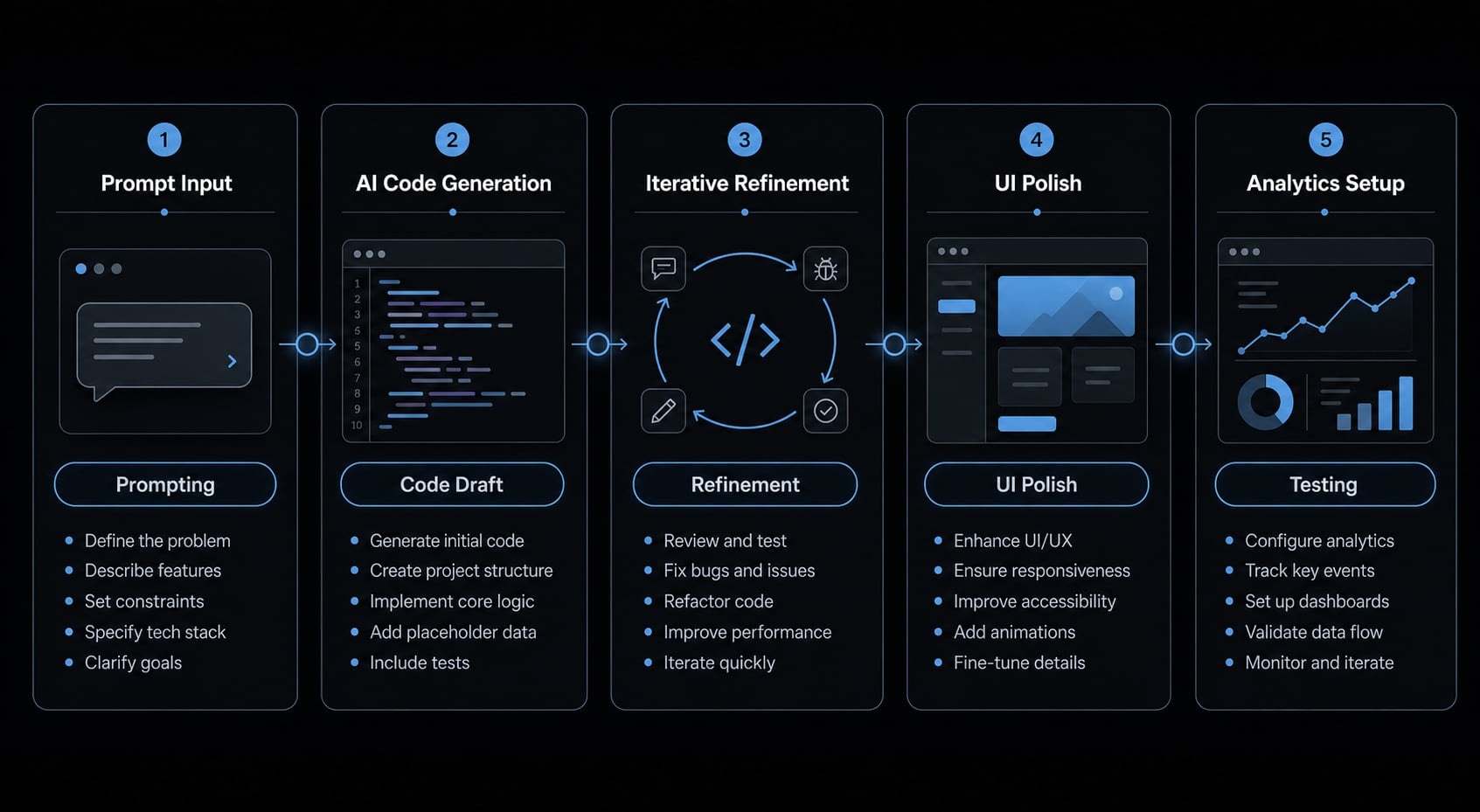
This is a realistic AI development workflow. It is fast, useful, and often good enough for early validation. But it is still different from production-grade delivery, where code review, security checks, and maintainability matter much more.
Frequently asked questions
What is a vibe coder?
A vibe coder is someone who uses AI as the primary interface for building software, relying on prompts and iterative refinement instead of writing source code manually, line by line. This intent-driven development style allows the creator to focus on goals and logic rather than technical syntax.
How does a vibe coder differ from a traditional programmer?
The difference lies in how software is created. A vibe coder uses natural language to guide AI in generating code, while a traditional programmer writes the code manually. Vibe coders prioritize speed and rapid experimentation, whereas traditional programmers place greater emphasis on structure, long-term sustainability, and system optimization.
Is vibe coding actually effective?
Yes, but its effectiveness depends on the context. Vibe coding is highly useful for rapid prototyping and personal projects. However, using it for large production applications requires testing skills, security reviews, and an understanding of system architecture to avoid technical debt.
How do you start a vibe coding workflow?
Follow this five-step process:
(1) Describe the idea in natural language.
(2) Ask the AI to create an initial draft.
(3) Test the result.
(4) Provide feedback for refinement.
(5) Repeat until you achieve the desired outcome.
What are the main risks of being a vibe coder?
The risks include security debt, unstable software logic, long-term maintenance difficulties, and debugging challenges.
Read more:
- Andrej Karpathy vibe coding: What it is and how it works
- 7 practical vibe coding examples: Build apps faster with AI
- Vibe code Android: How to build apps faster with AI prompts
Conclusion
The simplest answer to vibe coder meaning is this: a vibe coder is someone who uses AI as the main interface for building software, relying on prompts and iteration more than manual line-by-line coding. The vibe coding meaning behind the term is real, but the label itself is informal and flexible.
Used well, vibe coding can speed up exploration and make software creation more accessible. Used carelessly, it can create fragile code, quality problems, and security risk. If you want to go deeper, explore related guides on AI-assisted software workflows, prompt design, and reviewing AI-generated code in modern product development.