Vibe code extra income: Building profitable AI products fast
Vibe Code extra income: A practical guide to building small AI-assisted products that can actually earn
When exploring "vibe code" for extra income, the challenge isn't building quickly with AI-it's building something people will actually pay for. For solo builders, the real opportunity is rapid market testing, not instant passive income. In this guide, AgentKit shares realistic project types, how to scope your first launch, and how to validate a credible income idea without wasting weeks on the wrong one.
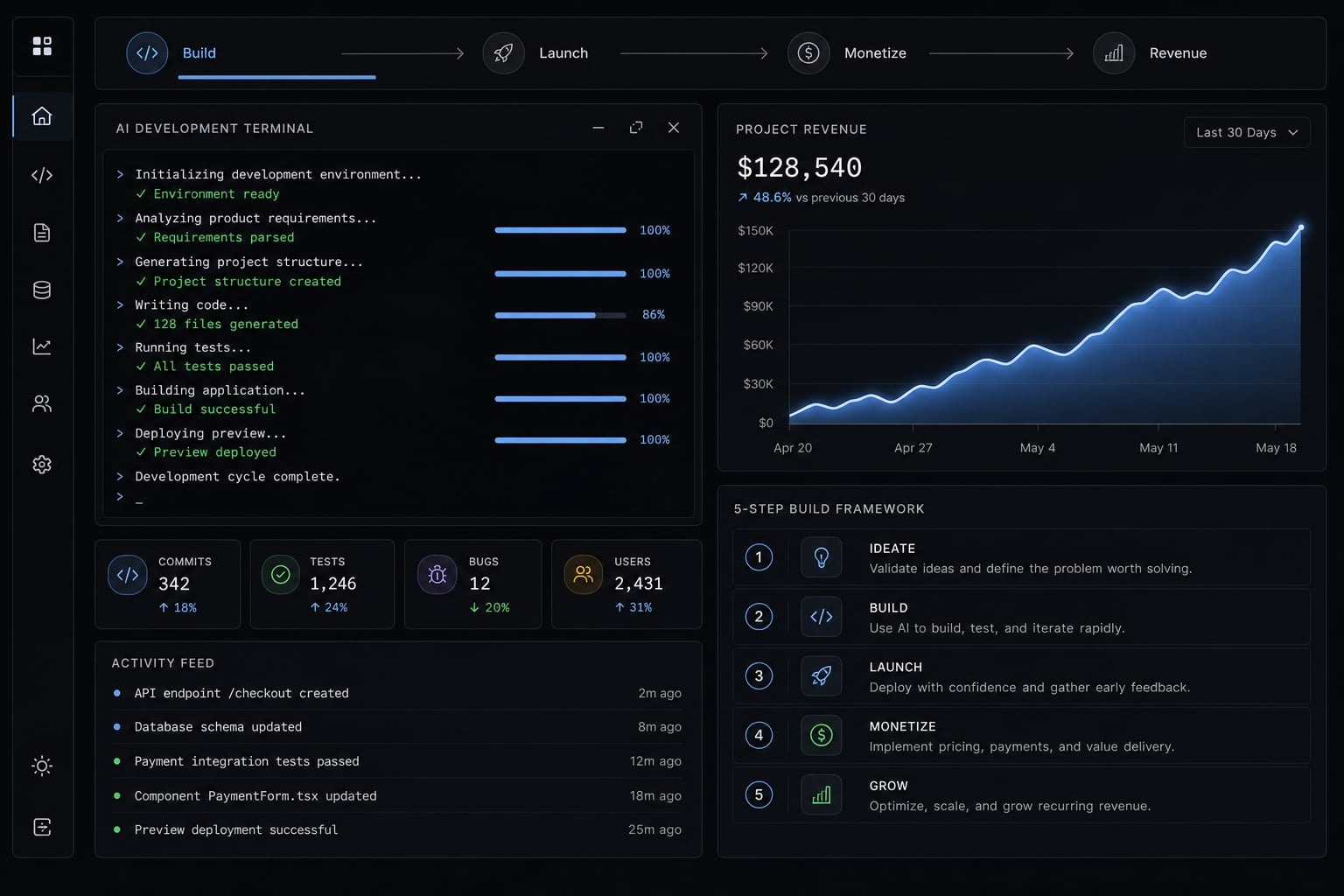
What “Vibe coding for extra income” actually means
Vibe coding for extra income means using AI-assisted development to build a small digital product faster, then pairing that product with a clear monetization path and a clear way to reach users. What makes it viable is not the AI layer itself. It is whether the product solves a narrow problem people already care about.
Vibe coding is best understood as a faster production workflow. It helps non-technical and semi-technical builders move from idea to usable prototype without waiting on a full development cycle. But speed alone is not the business.
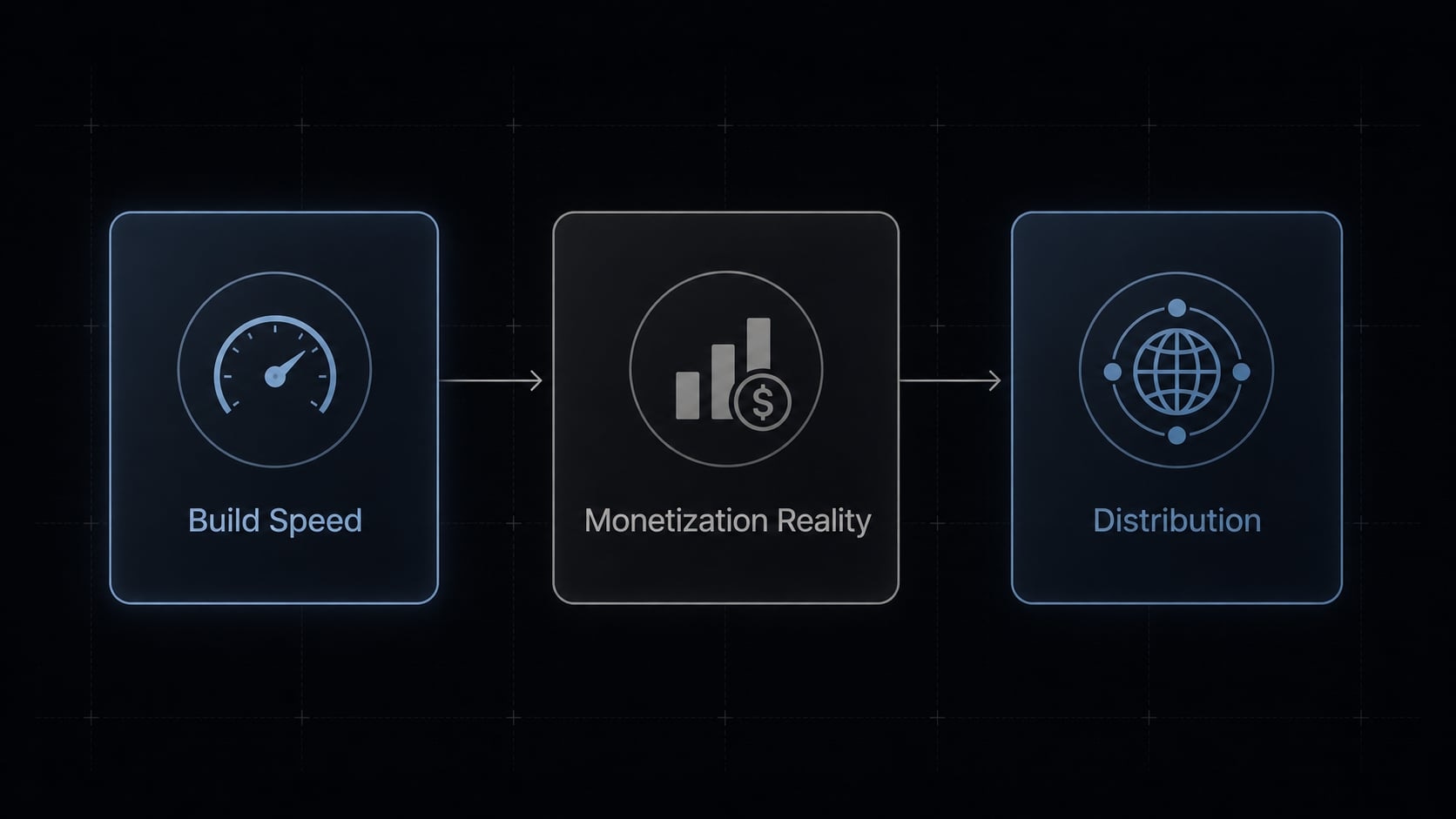
Vibe coding is not a business model by itself
This is the distinction that matters most. Vibe coding speeds up production; it does not replace demand. AI reduces the time needed to create landing pages, simple apps, directories, generators, and lightweight workflows. That is useful. But monetization still depends on market demand, positioning, and distribution. A polished tool stack is not the same as a commercially viable offer.
In practice, many first launches do one of two things:
- Generate a little revenue.
- Generate signal, not revenue.
That signal still matters. It tells you whether users understand the value proposition, whether the offer is too broad, and whether your traffic source is viable.
What counts as a realistic first project
A realistic first project usually has these characteristics:
- It can launch in days, not months.
- It solves one narrow problem.
- It has a one-sentence value proposition.
- It produces immediate utility.
- It can be distributed through:
- SEO
- Niche communities
- A newsletter
- LinkedIn or X
- An existing audience channel
- It has one obvious monetization angle:
- Affiliate links
- Lead generation
- One-time purchase
- Simple paid access
If your first idea sounds like “an AI platform for everything,” it is too broad. A small micro-SaaS (a narrowly scoped software product for a specific use case) or utility tool is usually a better starting point. Useful beats clever.
The best types of vibe-coded projects for small, realistic income
The best first project is usually not a startup-scale app. It is a micro-product with a clear use case, a simple interface, and an obvious reason to exist. In operator terms, boring utility often outperforms ambitious complexity. That is because build difficulty and monetization difficulty are not the same thing.
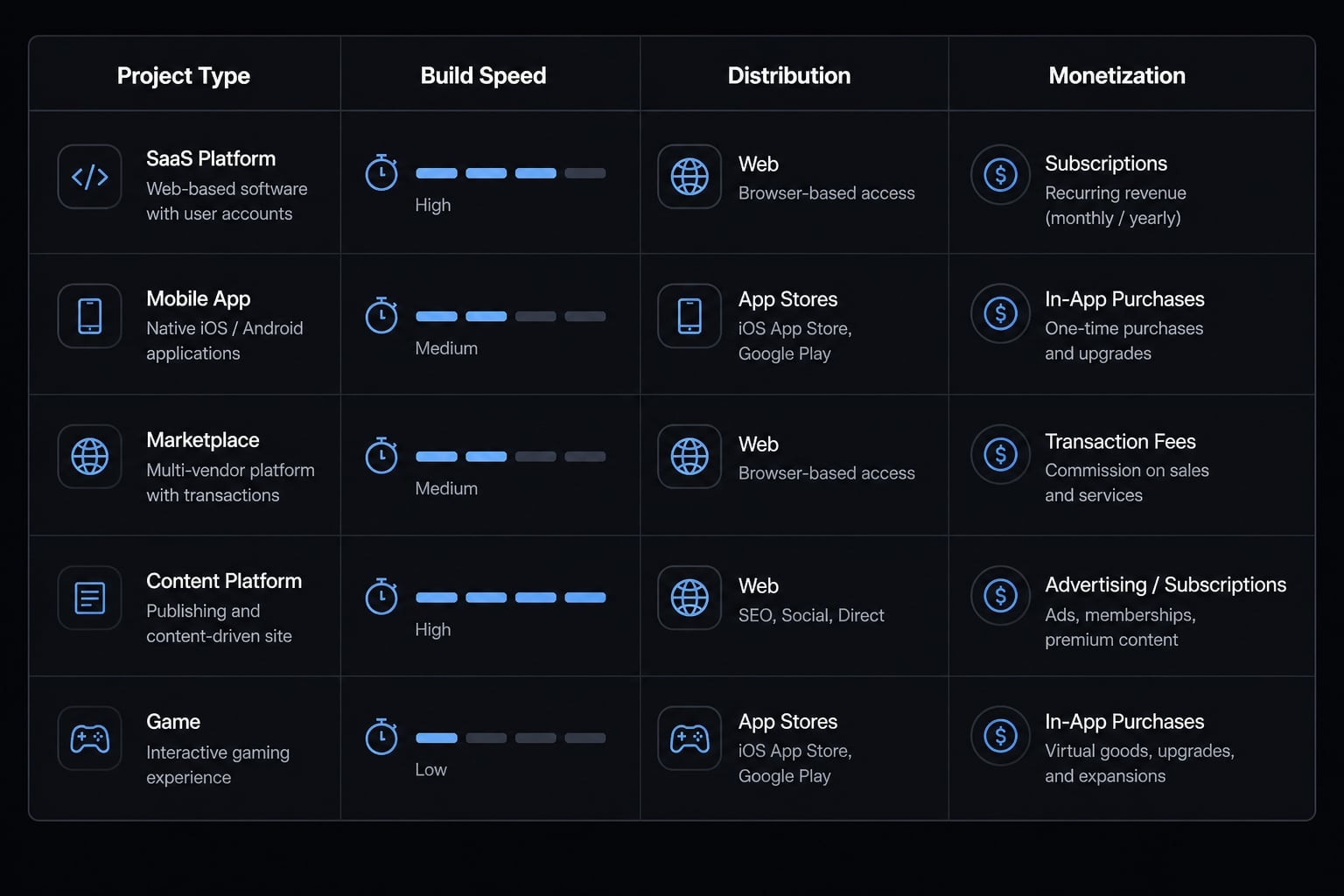
Project type | Build speed | Distribution difficulty | Best monetization fit |
|---|---|---|---|
Niche directories and databases | Medium | High | Affiliate, listing fees, lead generation |
Calculators, estimators, generators | Fast | Medium | One-time payment, paid access, lead capture |
Lightweight workflow tools | Medium | Medium | Freemium, subscription, team access |
Productized knowledge apps | Fast to medium | Medium | Paid access, service upsell, lead generation |
Option 1: Niche directories and databases
Niche directories are effective when users are actively searching for curated options and want to save time on research.
Examples include:
- A directory of tools for a specific industry.
- A local service or vendor database.
- A grant or funding directory.
- A curated job board.
- A specialized resource library.
Why this format works:
- It provides clear utility.
- The content structure is easy to organize.
- It can support lead generation.
- It can monetize through:
- Listing fees.
- Affiliates.
- Sponsorships.
- Referral partnerships.
Main limitation:
- This format is distribution-heavy.
- It requires ongoing freshness, accuracy, and coverage.
Directories can become strong SEO assets over time, but early traction usually depends on targeted community distribution.
Option 2: Calculators, estimators, and generators
A calculator tool is often one of the best formats for a first launch because the value is immediate and easy to understand.
Examples include:
- ROI calculator.
- Pricing estimator.
- Budget planner.
- Content brief generator.
- Name, angle, or summary generator for a niche task.
Why it works:
- The user gets instant output.
- The value proposition is simple.
- It can be a highly SEO-friendly tool.
- It supports content-led discovery through landing pages and long-tail search.
Main limitation: It only works if tied to a real decision or repetitive task.
A calculator that helps someone make a buying decision is often more monetizable than a novelty generator with no business outcome.
Option 3: Lightweight workflow tools
A workflow tool helps users complete recurring tasks with less friction. This category is attractive because recurring utility can support repeat usage.
Examples include:
- Campaign tracker.
- Lead follow-up dashboard.
- Simple planner for recurring processes.
- Internal checklist assistant for a niche team.
Why it works:
- It creates recurring utility.
- It has a stronger path to paid access if the pain repeats.
- It may support a freemium model if the free layer is useful enough.
Main limitation:
- Support burden increases quickly as scope expands.
- Users will expect stability, saved state, and cleaner UX than a simple content tool.
This category can become a real product business, but it is easy to overscope too early.
Option 4: Productized knowledge apps
Productized knowledge means turning expertise into utility instead of leaving it as static content. For creators, consultants, and operators, this is often the most practical category.
Examples include:
- Audit app.
- Recommendation tool.
- Evaluator or scorecard engine.
- Guided diagnostic tool.
- Niche checklist app.
Why it works:
- It packages expertise in a faster-to-consume format.
- It makes intangible knowledge feel more actionable.
- It can drive both direct revenue and qualified leads for services.
Best fit for:
- Creators.
- Consultants.
- Marketers.
- Operators.
- Solo founders with domain knowledge.
Main limitation:
- The logic behind the recommendations needs to be genuinely useful.
- If the output feels generic, trust drops fast.
A good utility product helps users make a decision, identify a gap, or move to the next step with less effort.
Mini comparison: Easiest to build vs easiest to monetize
Fast to build does not always mean fast to monetize.
Comparison | Strongest Option | Why |
|---|---|---|
Easiest to build | Calculators and generators | Small scope, clear interface, fast output |
Easiest to explain | Productized knowledge apps | Clear promise tied to expertise |
Easiest to monetize early | Calculators or productized knowledge tools | Immediate value supports direct payment or lead capture |
Strong long-term SEO play | Niche directories | Broad content surface, but harder distribution early |
A useful rule: If the value is immediate, direct payment becomes easier. If the value depends on browsing and discovery, traffic quality matters more.
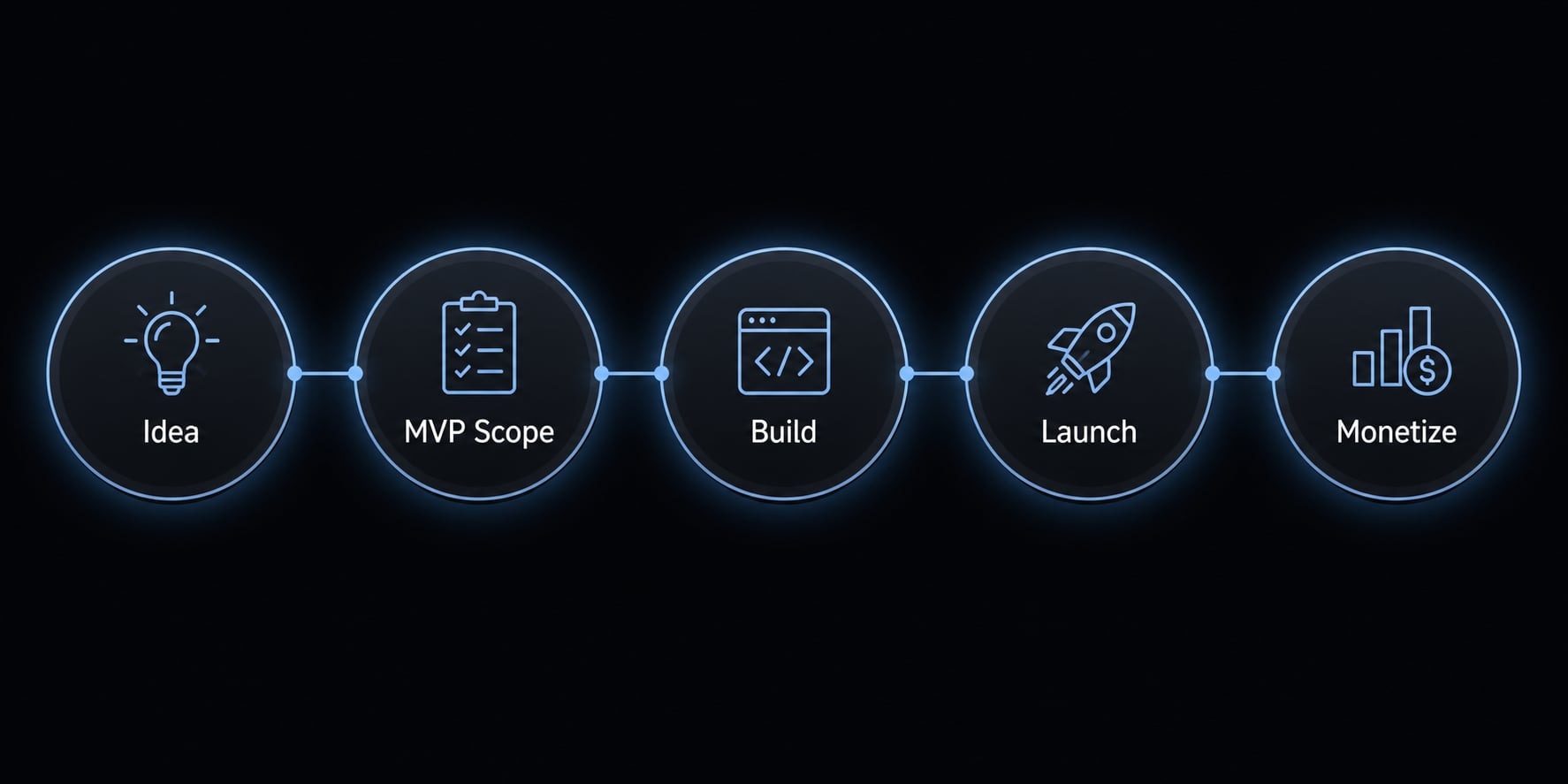
A simple 5-step framework: From idea to first dollar
The fastest path is not “build more.” It is learn faster. Your first target is the smallest useful MVP (Minimum Viable Product - the smallest version of a product that can deliver real value), not the most impressive version.
- Pick a narrow problem with repeated demand.
- Scope the smallest useful MVP.
- Build the first usable version with AI tools.
- Launch before it feels complete.
- Start with one monetization path and one traffic path.
Step 1: Start with a narrow pain, not a broad market
A strong side-income idea usually starts with repeated frustration, not a giant category. Look for questions people ask repeatedly in:
- Reddit threads.
- Niche communities.
- YouTube comments.
- LinkedIn replies.
- Support forums.
- FAQs on service sites.
- Sales call objections if you already run a business.
Your job here is demand validation, not product dreaming. Try to reduce the problem to one sentence:
- “Freelance designers struggle to price rush work consistently.”
- “Early-stage SaaS founders do not know which directories are worth submitting to.”
- “B2B marketers need a quick way to estimate lead quality before sending contacts to Sales.”
Output for this step:
- One-sentence problem statement.
- One target user.
- One repeated pain.
If you cannot explain the pain clearly, the market will not understand the product either.
Step 2: Scope the smallest useful version
This is where most projects go off track. Builders confuse MVP with “large but unfinished.” That is usually just feature creep wearing startup language.
Use a simple rule:
- One problem
- One promise
- One core action
Example:
- Problem: People do not know whether a side project idea is viable
- Promise: Get a fast viability score
- Core action: Answer 8 questions and receive a recommendation
The smallest useful version should only include what is necessary to deliver the outcome. Remove account systems, dashboards, advanced settings, and edge-case workflows unless they are essential.
Output for this step:
- MVP feature list
- “Must have” vs “later” list
- One landing-page headline
A good MVP is not just smaller. It is easier to explain, easier to launch, and easier to learn from.
Step 3: Use AI tools to build the first usable version fast
This is where AI tools help. You can use AI app builders, coding agents, and UI generators to create a working version without a long development cycle. In some cases, tools like Claude Code or Lovable.dev can accelerate the first pass, especially for solo builders.
The practical rule is simple:
- Use short build cycles.
- Make one change at a time.
- Test after each meaningful update.
- Prefer working flow over perfect architecture.
This is closer to iterative development than traditional spec-heavy building. You are not trying to build a finished product. You are trying to build a usable prototype that proves the value.
Output for this step:
- Live prototype.
- Core user flow that works.
- One key output users can understand.
If the product cannot produce one useful action cleanly, keep simplifying.
Step 4: Launch before it feels complete
Most first-time builders wait too long. They add polish before they have proof. That is backwards. A soft launch is enough. Share the product with a small, relevant audience and watch what happens.
Early launch channels can include:
- A niche community post.
- A LinkedIn post.
- A newsletter mention.
- A short SEO landing page.
- A direct message to a small peer group.
Collect user feedback through:
- A simple form.
- Reply prompts.
- Session analytics.
- Direct comments.
- Manual observation of where people drop off.
Output for this step:
- Live page.
- First user signals.
- Confusion points.
- Feature requests you should mostly ignore at first.
The goal is not applause. It is signal. First launches often validate more than they earn.
Step 5: Add one monetization path and one traffic path first
Do not start with three revenue models and five channels. Pick one monetization path and one traffic path.
Useful pairings:
- Affiliate + SEO
- One-time purchase + LinkedIn or X
- Paid access + niche community
- Subscription + newsletter audience
- Lead generation + service business landing page
A traffic path is simply the first reliable way people discover the product. A monetization path is the first clear way the product earns.
Output for this step:
- First traffic source
- First revenue model
- First conversion event to measure
This discipline matters. Too many builders create a tool, then improvise distribution later. The real bottleneck is usually distribution, not coding. After you have early signal, you can refine:
- Pricing
- Positioning
- Onboarding
- Conversion flow
- Channel expansion
If you need a repeatable system for idea scoring, MVP scoping, and launch workflows, AgentKit’s operational templates and agent-led build processes are designed for that exact stage: reducing setup chaos so you can test faster with more control.
How vibe-coded products actually make money
Many first-time builders default to subscription because recurring revenue sounds attractive. In practice, that is often the wrong first move. The better question is which model matches the user behavior, value frequency, and support burden of the product.
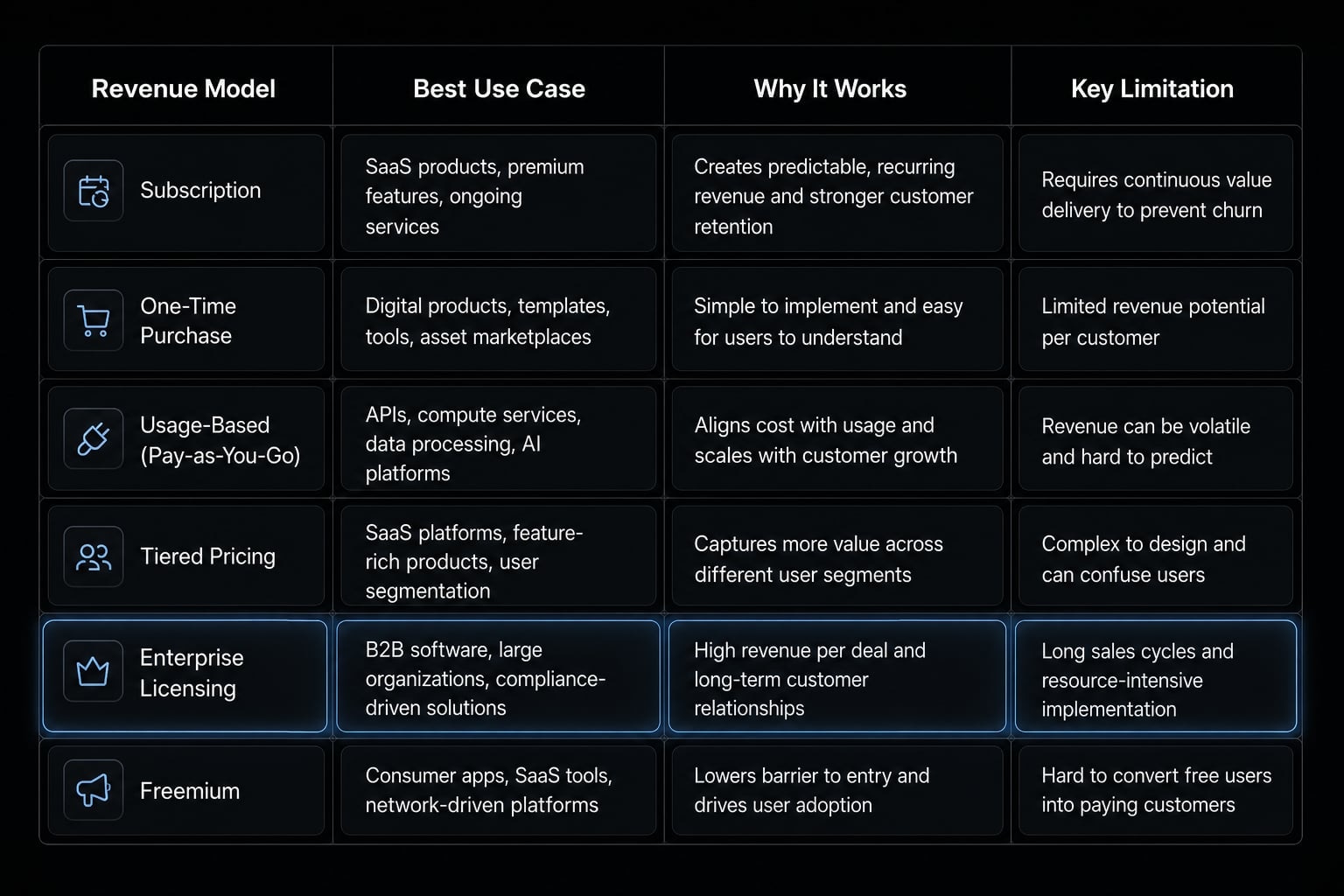
Revenue model | Best for | Why it works | Main limitation |
|---|---|---|---|
Affiliate / lead-gen | Directories, comparison tools, discovery utilities | Monetizes intent with low support burden | Requires qualified traffic |
One-time purchase / paid access | Calculators, templates, mini apps, generators | Clear value exchange, simple to test | Value must be immediate |
Subscription | Workflow tools, recurring-use apps | Fits repeated use and ongoing value | Requires retention, support, maintenance |
Affiliate and lead-gen models
The affiliate model and lead-gen model work well for products that help users discover options or compare choices.
Best for:
- Directories
- Comparison pages
- Discovery tools
- Recommendation engines
Why it works:
- Lower support burden than software-heavy products
- Easier to launch without complex billing
- Good fit for commercial search intent
- Can generate affiliate revenue without heavy product maintenance
Main limitation:
- Traffic quality matters a lot
- Weak intent traffic produces weak monetization
This model is often underrated for first-time builders because it is simpler than subscription and easier to validate.
One-time products and simple paid access
A one-time purchase or lightweight paid access model is often the cleanest first monetization test.
Best for:
- Calculators
- Templates
- Generators
- Mini apps
- Diagnostic tools
Why it works:
- The value exchange is simple
- Users understand what they are buying
- It is easier to test than a complex recurring plan
- It reduces retention pressure
Main limitation:
- The value must be obvious immediately
- If the outcome feels vague, conversion drops fast
For many small utility products, direct payment beats overengineered pricing.
Subscription: Attractive, but not always the best first move
A subscription works when the product delivers recurring value. That means users come back often enough to justify ongoing payment.
This usually requires:
- Retention
- Support
- Product maintenance
- Reliable uptime
- New features or sustained usefulness
The main risk is churn (the rate at which paying users cancel over time). Recurring revenue is appealing, but it is not easy money. It creates an obligation to keep the product valuable month after month.
For a first product, choose the monetization strategy with the lowest support burden and clearest value exchange. That is usually a stronger learning path than forcing a subscription model too early.
Why most vibe-coded side projects never earn meaningful income
The common failure pattern is not “the AI was bad.” It is that the product had no strong path to users, no clear monetization logic, or far too much scope for a first test.
- They solve a vague problem - Fix: Narrow the pain until the value proposition fits in one sentence.
- They build too much too early - Fix: Cut everything that does not support the core action.
- They have no traffic plan - Fix: Choose one source of first users before launch.
- They monetize too late or too vaguely - Fix: Decide early whether the product earns through direct payment, affiliate intent, or lead generation.
- They mistake output for value - Fix: Users pay for outcomes, not for the fact that AI generated something.
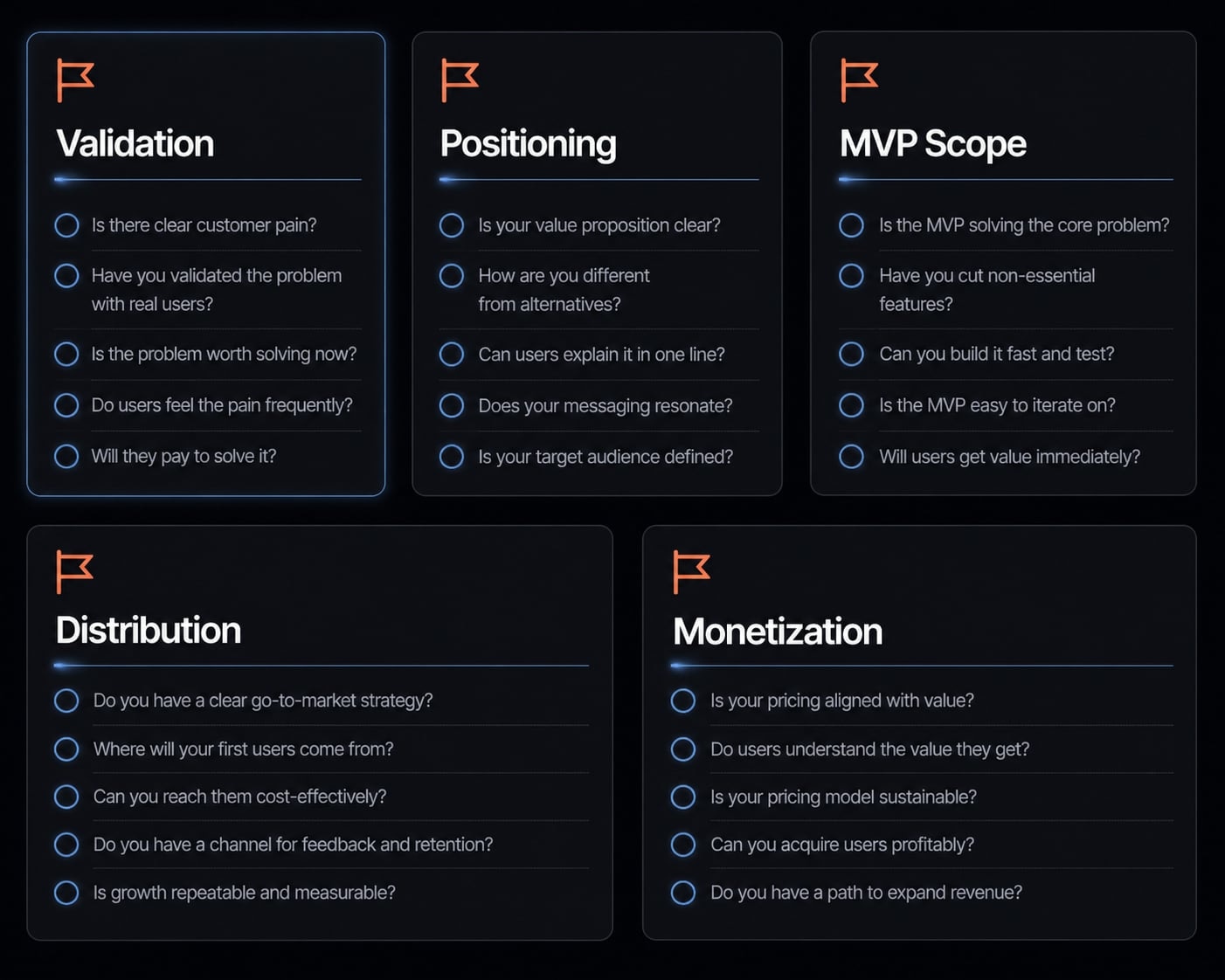
A fast build is useless without a traffic plan
A traffic plan is not optional. If nobody sees the product, build speed does not matter.
Most first users come from one of these sources:
- Existing audience.
- Niche communities.
- SEO landing pages.
- Referrals.
- Personal network distribution.
This is why many decent products stall. The build gets finished, but distribution never gets defined.
Don’t mistake “AI-generated” for “market-worthy”
A product is not market-worthy because it was built quickly or because it includes AI. Users care about whether it saves time, reduces uncertainty, or improves a decision.
Positioning still matters. So does naming, onboarding clarity, and perceived usefulness. Faster production cannot fix a weak value proposition.
If you want to reduce failure risk before you build, download AgentKit’s Idea Scoring Checklist and pressure-test the pain, use case, monetization fit, and traffic path first.
Practical example: A weekend-scale vibe-coded income experiment
A realistic test might look like this: A solo marketer notices that small agencies struggle to estimate whether a B2B content topic is worth pursuing. Instead of building a full SEO suite, they create a narrow topic viability evaluator.
The product idea: Users answer a few questions about search demand, commercial intent, competition, and internal expertise. The tool returns a score with a simple recommendation.
MVP scope:
- One landing page
- One short input form
- One scoring logic
- One output page
- One email capture option
Traffic path:
- A LinkedIn post
- A newsletter mention
- One SEO landing page targeting a specific long-tail query
Monetization path:
- Free tool with lead capture for consulting
- Or a one-time paid version with deeper export and recommendation output
Result:
- A few hundred visits
- A handful of signups
- Possibly one or two paid users or one qualified lead
That is a realistic outcome. Not dramatic, but useful.
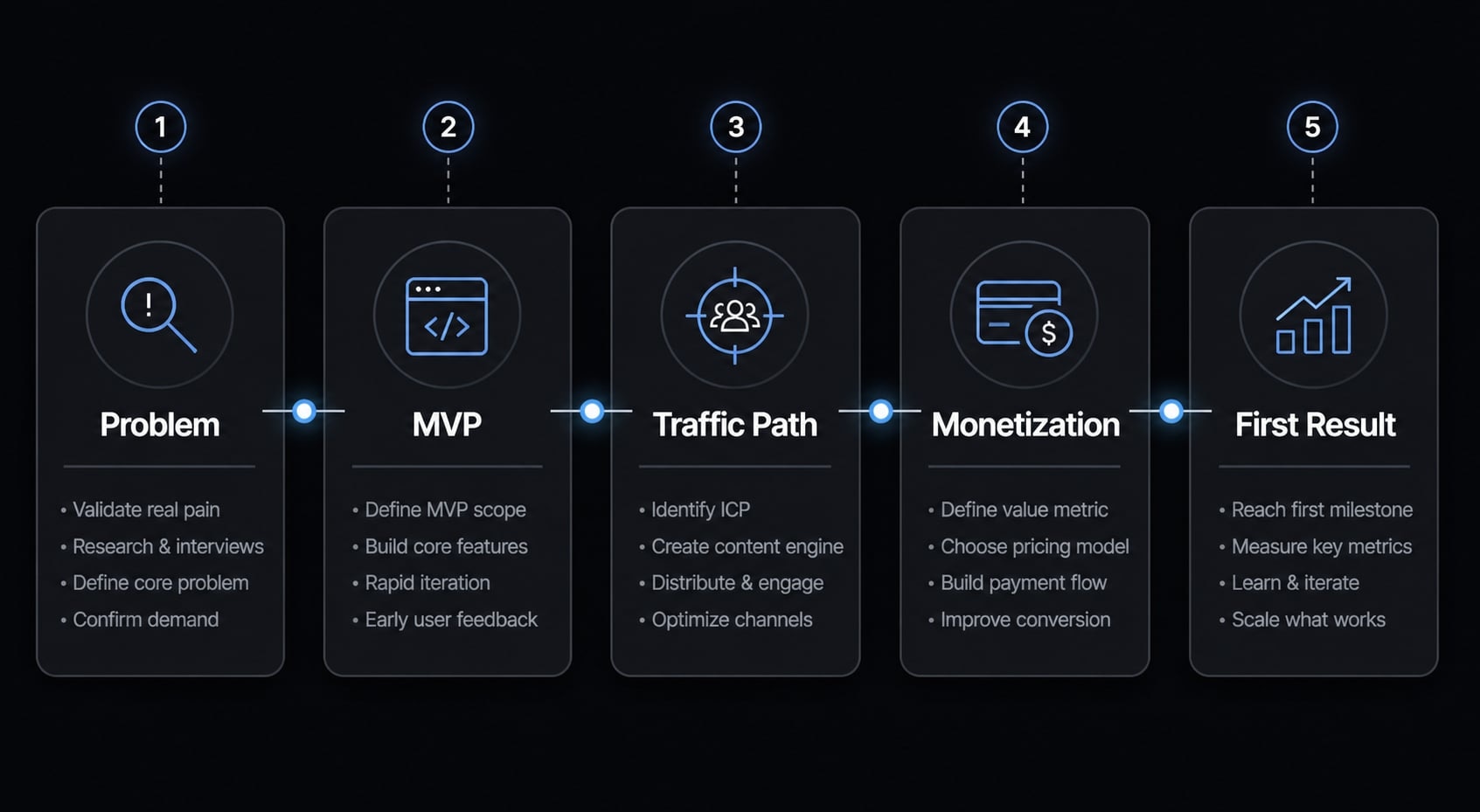
What this example proves - and what it doesn’t
- It proves a rapid launch is possible
- It proves narrow utility is easier to explain and test
- It does not prove every weekend project becomes recurring income
- It does not remove the need for distribution
- It shows a realistic outcome: Validation first, revenue second
Frequently asked questions
What is "vibe coding" in the context of generating extra income?
Vibe coding refers to using AI-assisted development tools to build functional digital products rapidly through natural language instructions. When used for extra income, it focuses on building narrow, useful micro-products - such as niche calculators or databases - where the goal is to validate market demand and generate revenue quickly rather than building complex enterprise software.
How do I choose the best project for my first vibe-coded income experiment?
Focus on projects that solve one narrow, repeatable problem for a specific niche. "Boring but useful" tools, such as lead-generation databases, ROI calculators, or workflow trackers, are typically easier to build and monetize than broad, complex applications. Prioritize products that provide immediate, clear value to a target audience you already understand.
Does "vibe coding" guarantee a passive income stream?
No. Vibe coding only accelerates the build phase; it does not replace the need for market demand, effective positioning, or consistent distribution. Most vibe-coded projects that fail do so because they lack a traffic plan or solve a problem no one is willing to pay to fix. Treat initial projects as experiments, not guaranteed income.
What is the most realistic monetization model for a first-time builder?
For a first project, choose the model with the lowest support and maintenance burden, such as affiliate links, lead generation, or one-time paid access to a utility. While subscription models are attractive, they require ongoing retention, product updates, and customer support, which can overwhelm solo founders before they achieve product-market fit.
Why is distribution more important than the build speed when vibe coding?
A fast build is irrelevant if your target audience never discovers the tool. Distribution is often the primary bottleneck for new side projects. Successful builders spend significantly more time engaging with niche communities, optimizing for SEO, or leveraging existing audience channels than they spend writing code or prompting AI tools.
What are the first steps to take after my vibe-coded tool is live?
After a soft launch, shift your focus immediately to gathering user feedback and driving traffic. Use analytics and direct user replies to observe how people interact with your tool. If the project shows signs of interest, iterate based on actual usage patterns rather than hypothetical features, and begin testing your chosen traffic channel systematically.
Read more:
- How to vibe code: A practical beginner guide to AI development
- Vibe coding jobs: How to land AI-assisted developer roles
- Vibe code Chrome extension: Build AI-assisted browser tools fast
Conclusion
The real advantage of vibe code extra income is not magical automation. It is a shorter path from idea to validation. If you choose a small problem, build the smallest useful version, and pair one monetization path with one traffic path, you give yourself a much better chance of learning what the market will actually pay for.
Extra income from vibe coding usually starts small and compounds through repeated experiments, not one big launch. If you want a structured way to test ideas faster, download the AgentKit workflow template and use it to score, scope, launch, and refine your first AI-assisted product with less guesswork.