Vibe Coding jobs: What they are, who they fit, and how to get started
Vibe coding jobs are becoming a popular way to describe AI-assisted software work, but most employers do not use that exact title. What they do hire for are adjacent roles that combine AI tools with real execution, review, and shipping ability. This confusion stems from the fact that while “vibe coding” is a trendy label, real hiring opportunities are often listed under titles such as product engineer, AI-assisted developer, automation engineer, or AI workflow specialist. This guide breaks down what these roles actually entail, the skills employers expect, salary ranges, and how to land one.
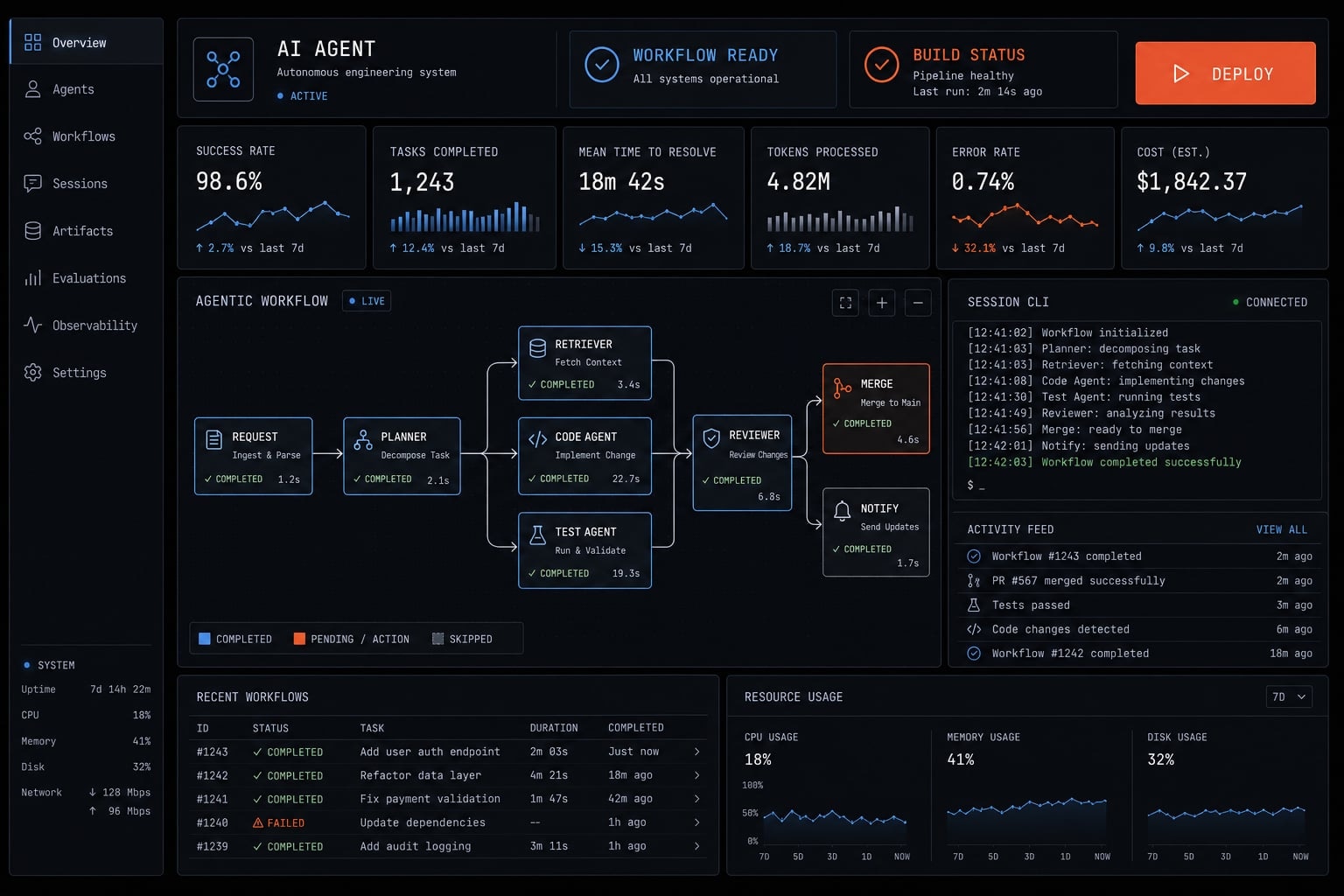
What are vibe coding jobs?
Vibe coding jobs are roles where people use AI tools to help build, prototype, debug, automate, and ship software faster. In practice, it is an umbrella term for modern AI-assisted development roles, not a standardized HR title, and success still depends on human judgment, review, and ownership.
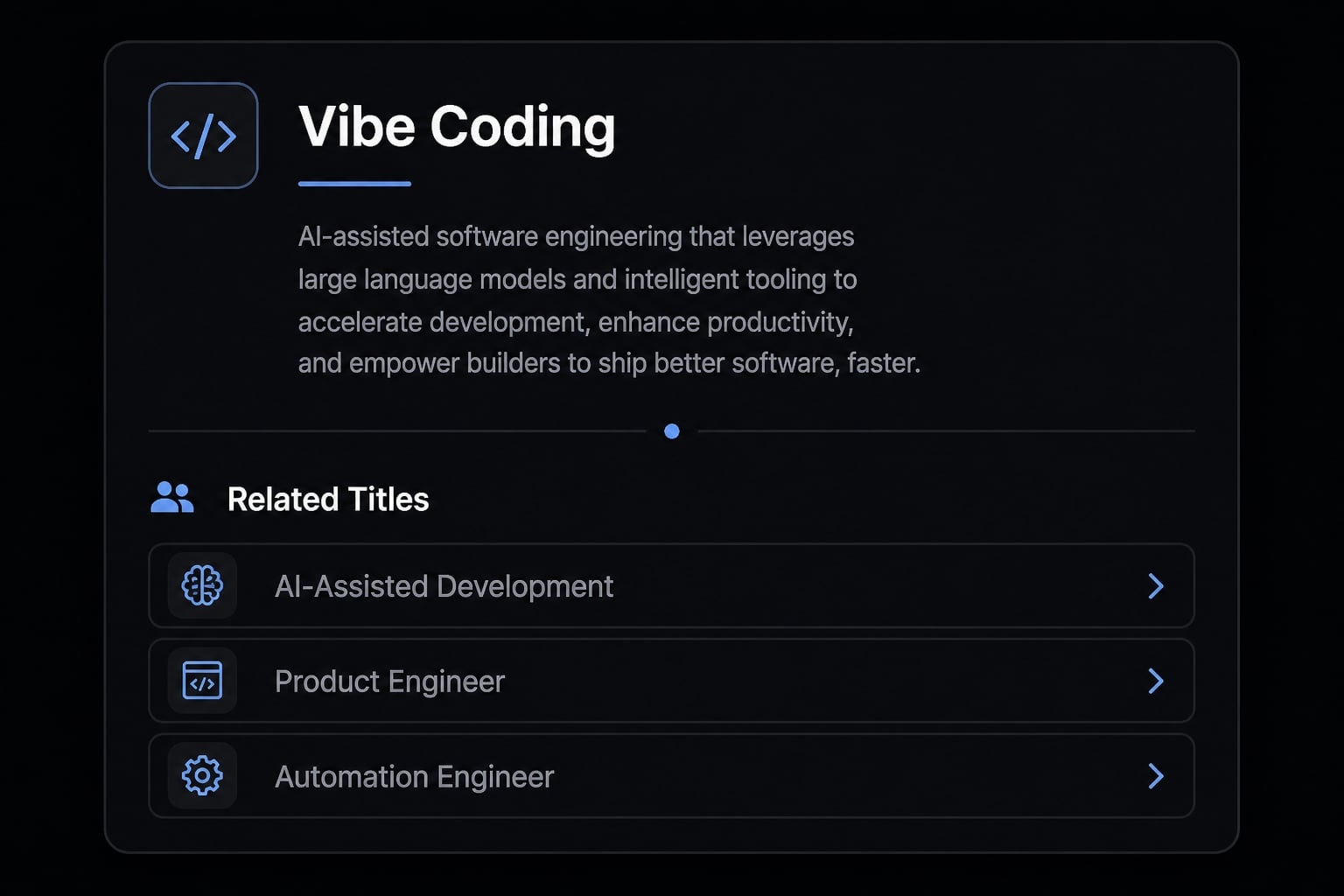
The phrase vibe coding jobs is useful because it captures a real market shift. More teams now expect developers, operators, and product-minded builders to use tools like GitHub Copilot, Cursor, and Claude Code to move faster. But on job boards, you will rarely see a clean, official category with one shared definition.
Instead, think of vibe coding jobs as a practical umbrella for work shaped by code generation, rapid prototyping, workflow design, debugging, and faster shipping. The rise of these roles comes from two forces working together: Mainstream adoption of AI coding tools and the growth of AI-native product building across startups, internal tools, and lean teams.
A simple definition of vibe coding
Vibe coding jobs are roles where someone uses AI to accelerate software or workflow creation, while still being responsible for what gets built, how it works, and whether it is reliable enough to ship.
What vibe coding jobs are not
- Not just typing prompts: Prompt-driven work matters, but employability comes from turning AI output into something usable.
- Not a replacement for software fundamentals: AI can write code, but it cannot remove the need for logic, testing, and validation.
- Not proof that coding knowledge no longer matters: Strong builders still need to read, review, and correct generated output.
- Not “AI does everything for you.”: Humans still own architecture choices, bug fixing, and quality decisions.
- Not always a formal title: Most employers hire through adjacent labels, even when the work clearly fits vibe coding jobs.
The main types of vibe coding jobs
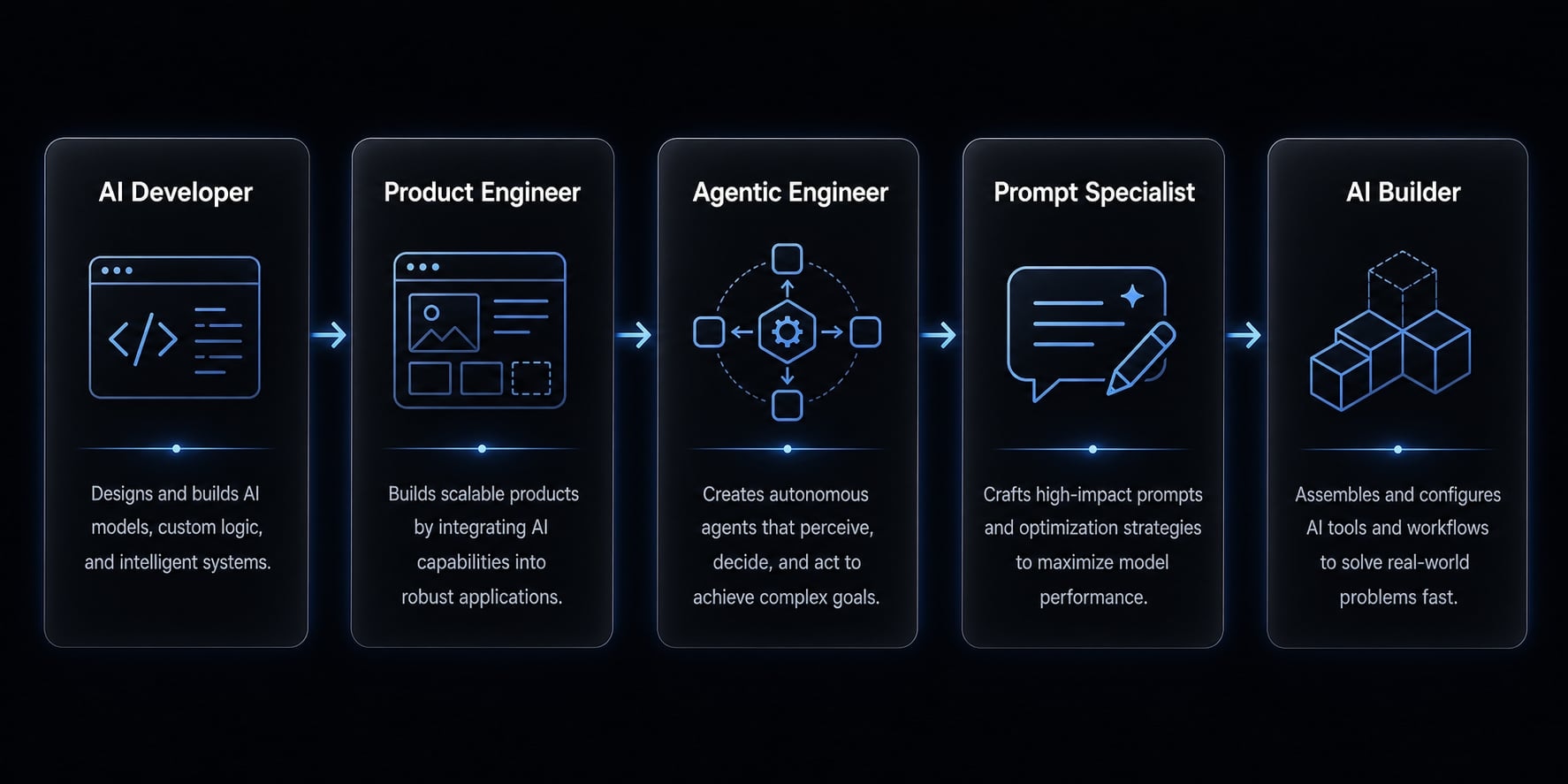
Most vibe coding jobs show up through adjacent titles and hybrid responsibilities, not one official category. Employers hiring for vibe coding jobs usually prioritize practical outcomes over specific job titles.
- AI-assisted software developer.
- Product engineer / AI-native builder.
- Agentic engineer / AI workflow engineer.
- Prompt engineer / AI workflow specialist.
- Non-engineering AI-assisted builder roles.
AI-assisted software developer / Full-stack developer
This is the most direct path for readers who already have coding fundamentals. An AI-assisted software developer uses tools like Cursor, Claude Code, GitHub Copilot, or Replit to speed up feature work, bug fixes, refactoring, and testing.
Employers still expect real engineering ownership. That means writing when needed, performing code review, debugging weak output, understanding APIs, and shipping working software. In many postings, this may also appear as AI-forward full-stack developer, software engineer with AI experience, or full-stack builder.
Best fit:
- Developers with at least one programming language.
- People comfortable reading and correcting code.
- Candidates who can explain what AI generated versus what they changed.
Technical depth: Medium to high
Product engineer / AI-native builder
A product engineer usually owns work end to end. In startups and lean product teams, this means moving from idea to prototype to production without waiting for large handoffs between design, engineering, and product.
This role is heavily tied to AI-native product building because teams want speed, autonomy, and strong product sense. Tool familiarity helps, but it is rarely the main hiring signal. Employers care more about whether you can make good decisions, prioritize effectively, and ship features that solve a real problem.
Best fit:
- Builders who like working across product and engineering.
- Startup candidates comfortable with ambiguity.
- People who can balance speed with usability and quality.
Technical depth: Medium to high
Agentic engineer / AI workflow engineer
This is one of the more advanced role paths inside vibe coding jobs. People in agentic engineering careers design systems where AI agents handle multi-step work across tools, rules, APIs, and data sources.
The work goes beyond prompting. It includes workflow automation, orchestration logic, reliability, guardrails, and system architecture thinking. Employers typically expect stronger technical depth here because poorly designed agent workflows can break in subtle ways even if the demo looks impressive.
Best fit:
- Developers with backend or systems experience.
- Engineers who enjoy process design and orchestration.
- Candidates who can think in terms of reliability, not just output speed.
Technical depth: High
Prompt engineer / AI content and workflow specialist
The prompt engineer title gets a lot of attention, but it is not the universal end state many people assume. In practice, it is often an adjacent or transitional role for teams running many AI experiments across content, support, operations, or internal tooling.
The valuable skill is not clever phrasing alone. It is prompt-driven engineering combined with output review, prompt iteration, testing, and workflow design. Many employers now fold this work into broader specialist roles rather than hiring only for prompts.
Best fit:
- Experiment-heavy teams.
- Candidates strong in language, testing, and workflow logic.
- People moving from operations, content, or support into AI work.
Technical depth: Low to medium
Non-engineering vibe coding roles
Not all vibe coding jobs sit inside engineering teams. PMs, marketers, designers, founders, and operators increasingly use AI for prototyping, internal tools, and workflow automation. In these roles, domain expertise often matters more than deep coding skill.
A marketer may build a lead-routing workflow. A designer may prototype product interactions. A founder may launch an internal dashboard. These are real non-engineering AI-assisted roles, even when the job title says product manager, growth operator, or automation builder.
Best fit:
- Domain experts solving repeatable business problems.
- Operators building internal tools or automations.
- Product-minded professionals comfortable learning through projects.
Technical depth: Low to medium
Which vibe coding jobs fit your background?
The best path into vibe coding jobs depends on what you already know. Trend-chasing usually leads to weak positioning. Skills you can already prove are a better starting point than trying to imitate a title.
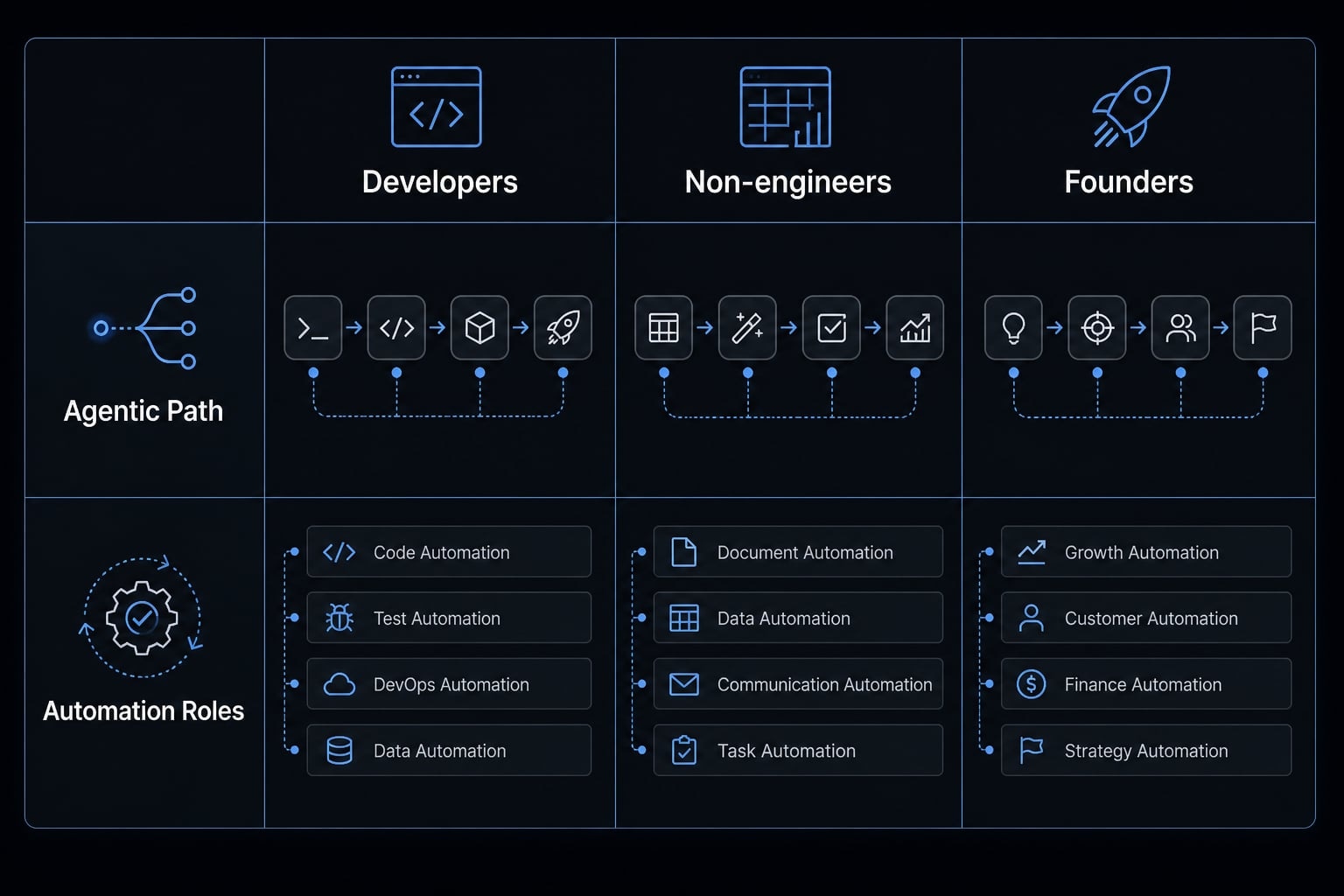
Background | Best-fit role | Why it fits |
|---|---|---|
Developers | AI-assisted developer / product engineer / agentic path | Strongest direct path because debugging, architecture awareness, and shipping ability are already in place |
Non-engineers | Automation / prototyping / workflow roles | Best fit when paired with domain expertise, process knowledge, and product sense |
Founders / Indie builders | AI-native builder / product path | Proof comes from shipped projects, fast iteration, and solving a real problem quickly |
Best-fit roles for developers
- Strongest direct path into AI-assisted software roles.
- Best positioned for debugging, review, and architecture decisions.
- Can move into product engineer or agentic workflow paths faster.
- Usually more credible in hiring because they can validate generated code.
- Benefit most when AI increases speed without reducing engineering judgment.
Best-fit roles for non-engineers
- Yes, vibe coding jobs are suitable for non-engineers in some cases.
- Strongest entry points are prototyping, ops automation, growth workflows, and internal tools.
- Best results come from domain expertise first, AI second.
- Useful paths exist in marketing, product, design, and operations.
- Less suitable for engineering-heavy roles unless technical depth is built over time.
Best-fit roles for founders and indie builders
Founders and indie builders are often a natural fit because they already think in terms of constraints, speed, and real-world outcomes. In this path, polished resumes matter less than shipped projects. If you can identify a pain point, build a working version, and iterate quickly, you already align with the logic behind many modern vibe coding opportunities.
What skills employers actually look for
The most important hiring reality is simple: Employers do not hire for prompting alone. They hire for practical capability, review quality, and judgment.
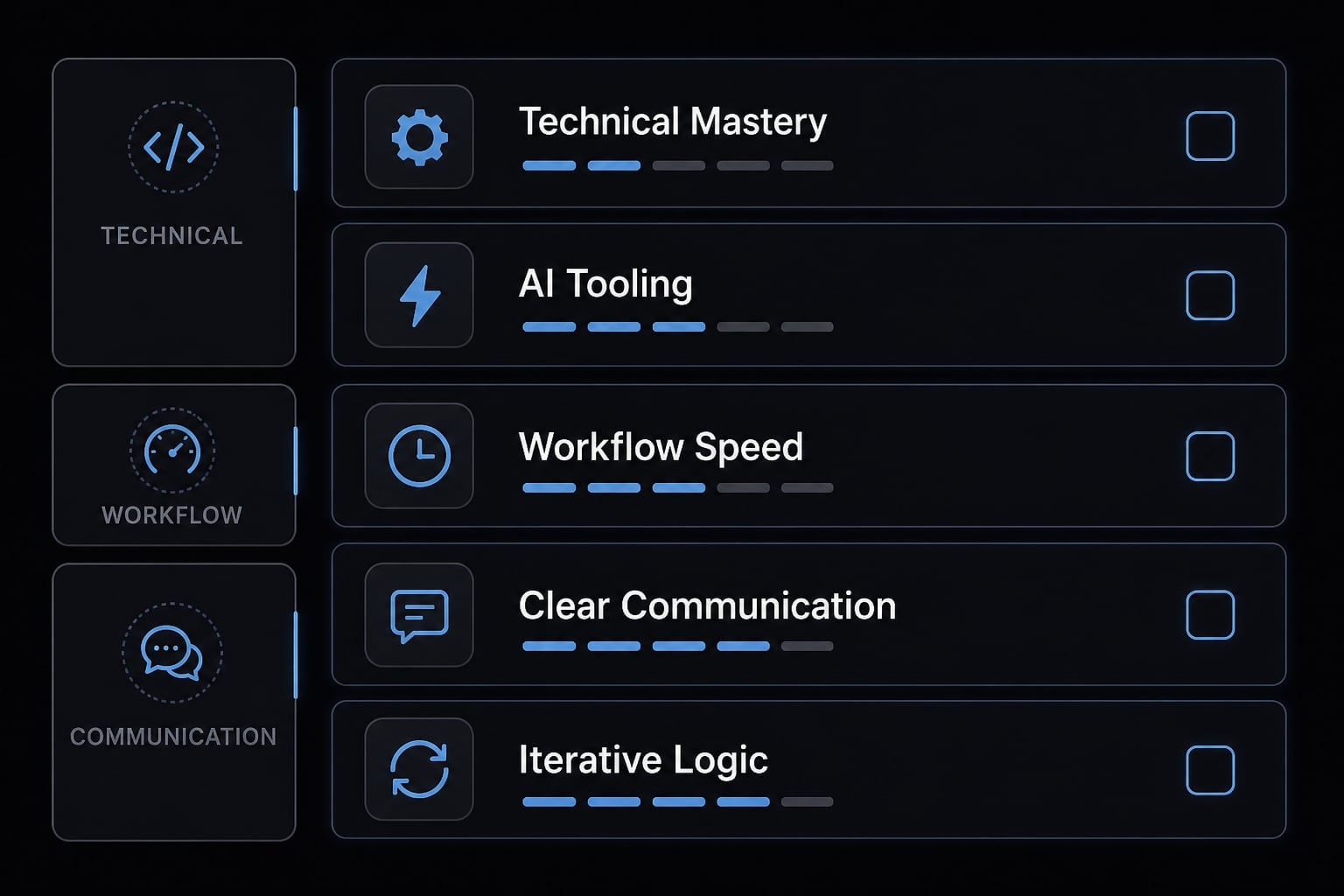
- Software fundamentals.
- AI tool fluency.
- Code review and debugging.
- Product judgment.
- Communication and ownership.
Core technical baseline
Even in AI-assisted roles, software fundamentals remain the baseline. Employers typically want candidates who know at least one programming language, understand APIs and integrations, and can debug problems without depending entirely on code generation.
You do not need to be an elite systems engineer for every role. But you do need to read generated output critically, catch weak logic, and know when something is insecure, broken, or poorly structured. For developer-facing roles, software fundamentals are what make AI output useful rather than risky.
AI workflow baseline
Using AI tools for professional software developers is now part of the workflow in many teams, but tool usage alone is not a moat. Employers care more about whether you can break a task into smaller steps, run good prompt iteration cycles, select the right tool for the job, and perform serious code review before shipping.
Good builders also know when to stop patching weak AI output and restart with a cleaner approach. That is often where experience shows. The difference between hobby experimentation and employable output is not tool access. It is review discipline, task decomposition, and the ability to recover when AI goes off track.
Non-technical but high-value skills
Strong candidates also bring product sense, written communication, async collaboration, and ownership. This matters because many AI-assisted teams work quickly, document heavily, and expect people to explain their decisions clearly.
Judgment is often the real differentiator. A person who understands tradeoffs, can communicate constraints, and makes sound shipping decisions is more valuable than someone who simply produces fast output. In hiring, judgment usually matters more than prompting speed.
How much do vibe coding jobs pay?
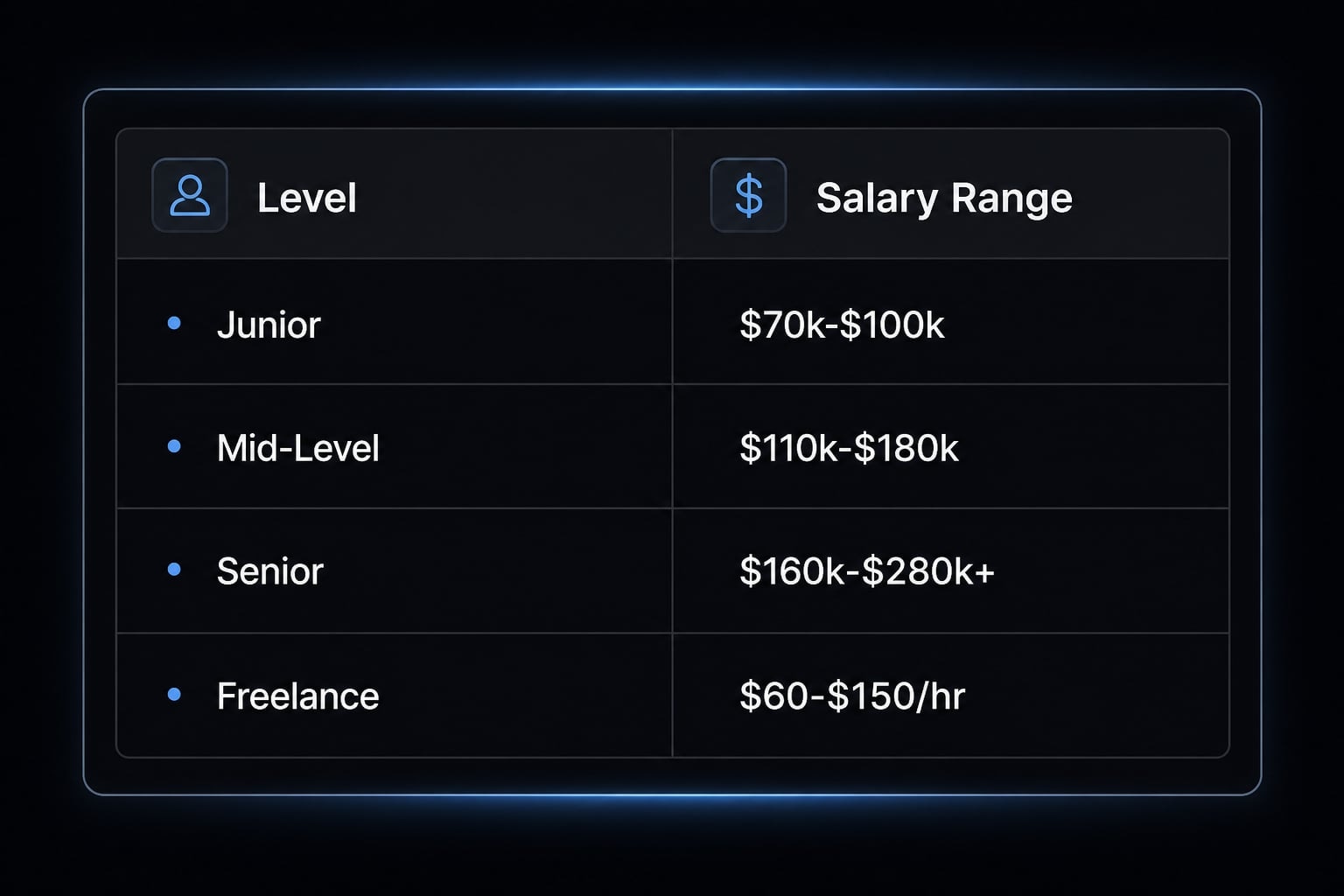
Exact-title salary data for vibe coding jobs is limited because employers rarely use the term consistently in listings. Most salary ranges are directional estimates inferred from adjacent roles such as developer, product engineer, automation engineer, and agentic workflow roles.
Estimated salary bands by level
Role level | Directional range |
|---|---|
Junior AI-assisted builder | $70,000–$100,000 |
Mid-level developer / product engineer | $110,000–$180,000 |
Senior AI-forward engineer / agentic role | $160,000–$280,000+ |
Freelance / contract | $60–$150+ per hour |
These bands should be treated as directional, not absolute. If you are researching the average salary for AI-assisted software roles, the better approach is to compare adjacent titles rather than rely on a literal vibe coding job salary label.
Why salary varies so much
Compensation depends heavily on:
- Technical depth and independence.
- Whether the role is closer to AI-forward developers or lightweight automation work.
- Startup versus enterprise environment.
- Portfolio quality and proof of shipping.
- Domain specialization in areas tied to agentic engineering careers.
- Contract scope for a freelance AI builder.
How to get started in vibe coding jobs
If you want to break into vibe coding jobs, proof-of-work matters more than trend awareness. One real project usually teaches more than weeks of passive learning.
- Learn one stack or execution environment.
- Get comfortable with 2 - 3 AI tools.
- Build one real project.
- Document what you prompted, changed, and debugged.
- Apply through adjacent job titles.
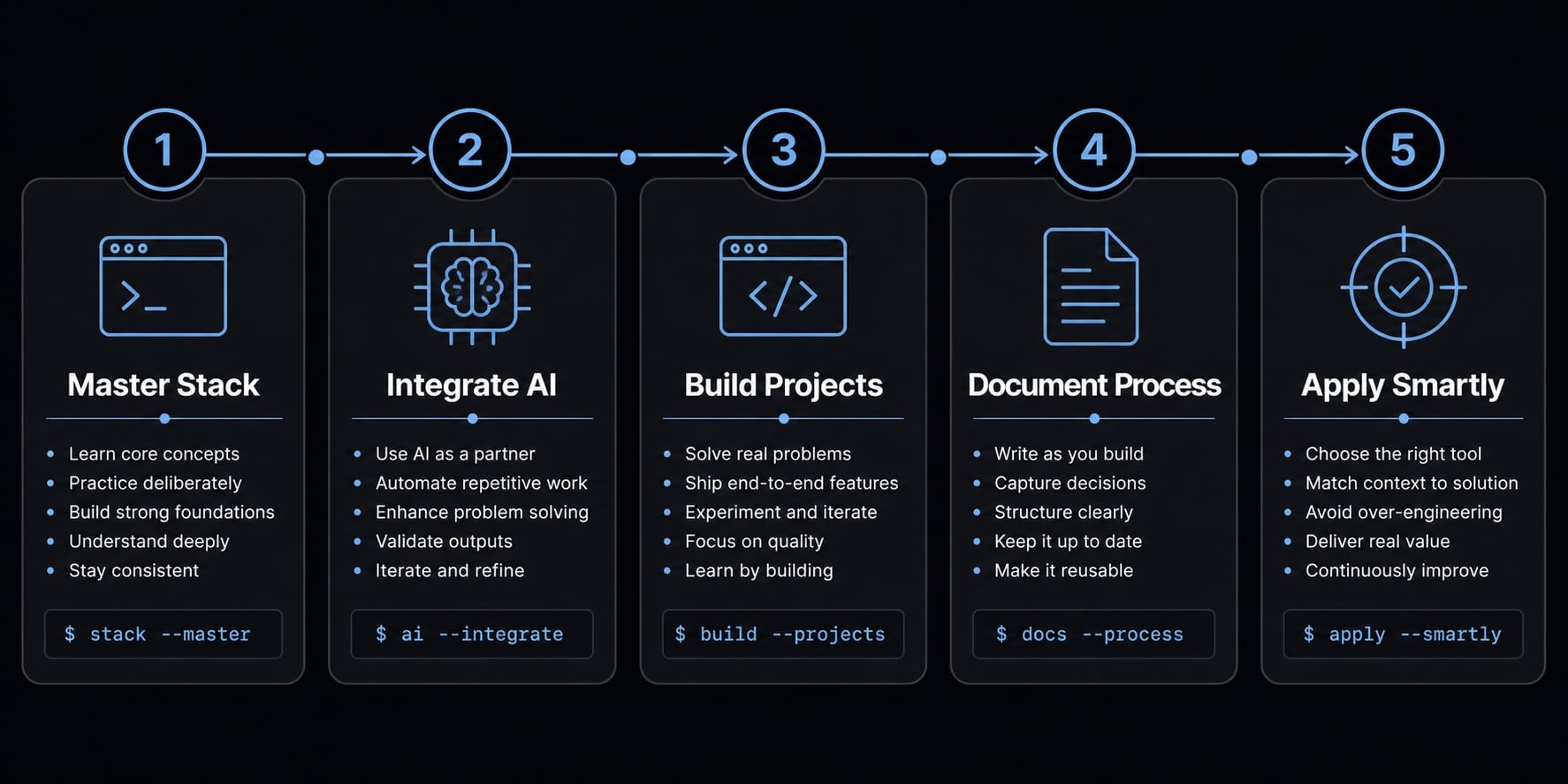
A practical path works better than a broad one. You do not need to master every new tool. You need enough skill to build, evaluate, fix, and explain your work.
What kind of portfolio project signals readiness
A strong portfolio project solves a real problem and shows practical capability. Good examples include:
- A small SaaS prototype.
- An internal workflow automation tool.
- An AI-assisted dashboard.
- A landing page with backend integration.
- A customer support or operations workflow with useful output.
What matters most is not complexity for its own sake. It is whether the project proves you can turn an idea into one of several shipped projects.
What to show beyond screenshots
If you are wondering how to build a portfolio for vibe coding jobs, do not stop at visuals. Employers want evidence of thinking and execution.
Show:
- The problem you were solving.
- The workflow you used.
- Which AI tools were involved.
- What the AI generated first.
- What you changed after review.
- Your debugging steps.
- Key review decisions.
- The final result and what worked or failed.
This is where a portfolio becomes credible. It shows not just output, but judgment.
Job titles to search besides “vibe coding jobs”
Because titles vary, search broadly across adjacent job titles:
- AI-assisted full-stack developer.
- Product engineer.
- Prototyping engineer.
- Automation engineer.
- Growth engineer.
- AI workflow builder.
This matters more than many candidates realize. Searching only for “vibe coding jobs” can hide a large share of relevant openings. The market rewards people who can show what they built, what they fixed, and why they made those decisions.
The biggest misconceptions about vibe coding careers
Some skepticism is justified, but most confusion comes from treating the term too literally. The better question is not whether the phrase is perfect. It is whether the work is real. It is.
Myth: AI removes the need for technical knowledge.
- Reality: Strong software fundamentals still matter because generated output must be validated, debugged, and maintained.
Myth: Prompting alone is a durable moat.
- Reality: Prompting helps, but long-term value comes from review, decision-making, and turning code generation into reliable output.
Myth: Only engineers benefit from this shift.
- Reality: PMs, designers, marketers, and operators can use AI for prototyping, workflow automation, and internal tools when paired with domain expertise.
Myth: AI agents eliminate the need for system thinking.
- Reality: The more teams use AI agents, the more they need judgment around system architecture, reliability, and failure handling.
Myth: Prompt-driven engineering means coding skill no longer matters.
- Reality: It usually increases the value of people who can review, structure, and improve output responsibly.
A practical example of AI-assisted building workflows
In day-to-day work, the process is usually less dramatic than the label suggests. A builder starts by planning tasks, then uses Cursor or Claude Code to generate a first prototype, reviews the output, fixes bugs or weak logic, and only then ships with human oversight.
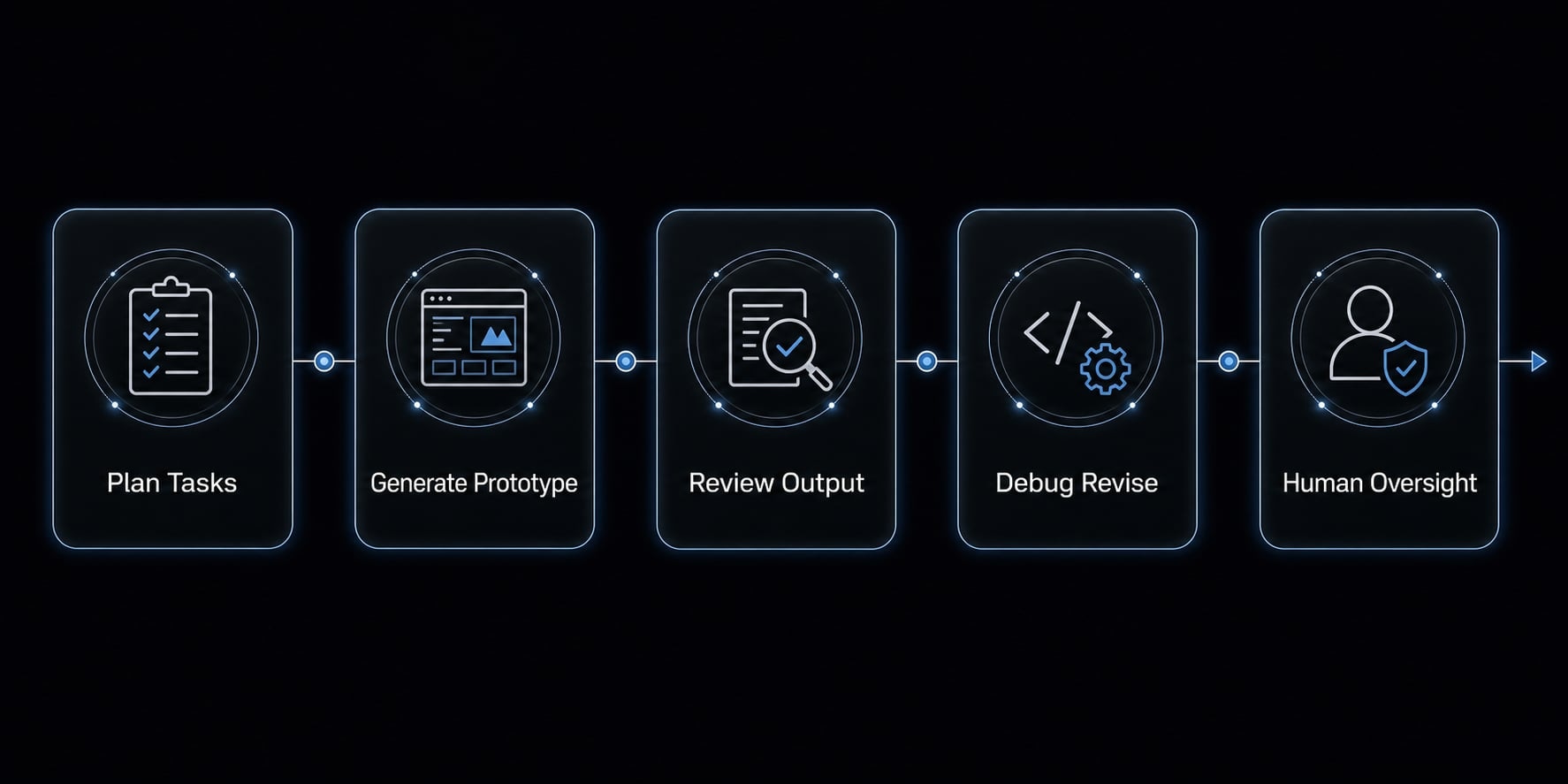
In more advanced cases, AI agents may help coordinate repeated steps such as summarizing requirements, drafting tests, or moving data between tools. The key idea is repeatability. Teams are not just looking for one-off prompts. They want dependable workflow automation and practical AI-native product building habits.
This is also why systems like AgentKit reflect a broader market direction: Teams increasingly want repeatable AI-assisted workflows they can control, review, and reuse rather than constantly rebuilding ad hoc processes.
Frequently asked questions
What are vibe coding jobs?
Vibe coding jobs are roles where professionals leverage AI-powered development tools to build, debug, and ship software efficiently. Rather than a standardized industry title, it is a practical umbrella term for positions that prioritize AI-assisted execution, architecture, and quality review over manual line-by-line coding.
Do I need a computer science degree to land a vibe coding role?
No. While software fundamentals are essential for reviewing and maintaining code, many employers prioritize practical capability, a strong portfolio of shipped projects, and tool fluency over formal degrees. Success in these roles depends on your ability to solve problems and manage AI-assisted workflows.
What tools do developers use in vibe coding jobs?
Common tools include AI-integrated IDEs like Cursor and Windsurf, LLM-powered coding assistants such as Claude Code and GitHub Copilot, and agentic platforms like Replit Agent or Bolt.new. These tools help engineers and builders accelerate feature development, testing, and system deployment.
Are vibe coding jobs fully remote?
Many vibe coding roles are remote, particularly within AI-first startups and lean product teams. However, as AI-assisted workflows become integrated into enterprise environments, hybrid and on-site positions are increasingly common at established companies looking to improve development productivity.
What is the difference between vibe coding and traditional development?
Traditional development emphasizes manual implementation and deep syntax expertise. Vibe coding shifts the engineer’s focus toward system architecture, prompt iteration, and high-level quality review, with AI handling repetitive implementation tasks. Humans retain full responsibility for code security, logic, and final system reliability.
How much do vibe coding roles pay?
Salary varies significantly based on technical depth and industry. Junior AI-assisted roles typically range from $70k to $120k, while senior AI-forward engineering positions can exceed $250k. These estimates are directional, as compensation depends heavily on the specific responsibilities and the employer’s technical requirements.
How can I start a career in vibe coding?
Start by mastering one programming stack, then use AI tools to build and document a real-world project. Focus your job search on adjacent titles like "Product Engineer," "AI-Assisted Full-Stack Developer," or "Workflow Automation Specialist," as these roles better reflect the actual work done by modern AI-native builders.
Read more:
- How to vibe code: A practical beginner guide to AI development
- Vibe coder meaning: How AI is changing software development
- Vibe code marketplace: Defining AI-driven development & risks
Conclusion
Vibe coding jobs are real, but the opportunity is broader than the label itself. Most employers hire through adjacent titles, and the best-fit path depends on whether you come from development, operations, product, design, or founder-led building.
The constant across all paths is clear: Software fundamentals, judgment, review quality, and shipped projects still matter more than buzzwords. AI can accelerate output, but humans still own the decisions and the result. If you want to go deeper, explore related guides on AI-assisted development workflows, portfolio-building for modern builder roles, and repeatable systems that help teams ship faster with more control.