Is vibe coding bad? Pros, cons, and responsible AI practices
If you’re asking is vibe coding bad, the short answer is no - but it can become a problem very quickly. AI coding tools have made it dramatically easier to build apps, scripts, and features with plain-language prompts. The mistake is assuming that fast output is the same as production-ready software. Vibe coding is not inherently bad. It becomes bad when speed replaces understanding, review, testing, and code ownership. This guide explains what vibe coding actually means, where it works well, where it starts to break down, and what responsible AI-assisted coding looks like in practice.
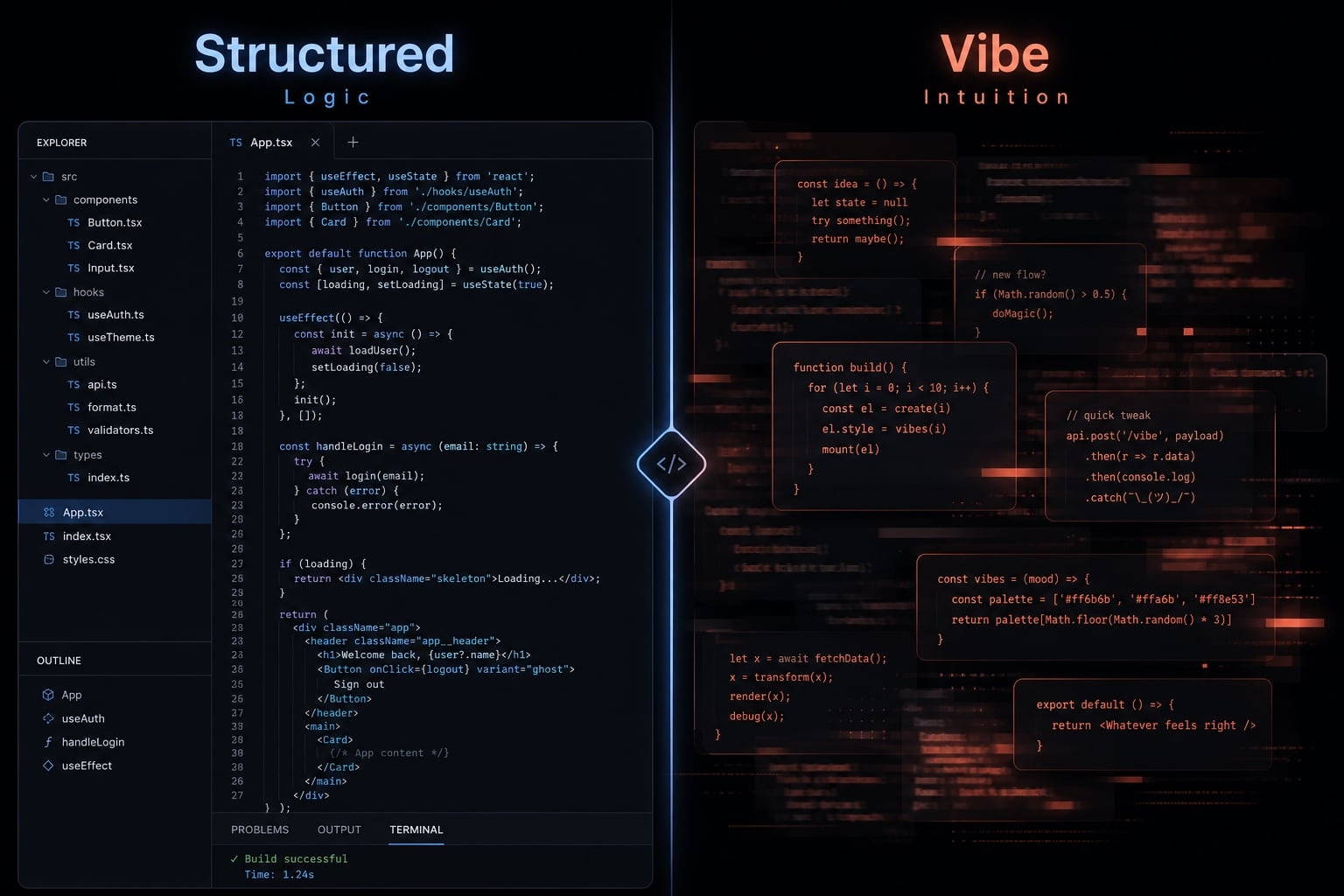
What “vibe coding” actually means
Vibe coding usually means describing what you want in natural language and letting an AI tool generate most of the implementation for you. In simple terms, you steer with prompts, and the model handles much of the code. It sits on a spectrum between normal AI-assisted coding and full dependence on code you do not truly understand.
In practice, this often looks like someone using Cursor, GitHub Copilot, Claude, ChatGPT, or Bolt.new to create a feature, page, or small app by prompting instead of writing every line manually. That is why some people also describe it as natural language software development or conversational programming.
Why the term became popular
The phrase took off because modern AI coding assistants made software creation feel conversational. Instead of thinking only in syntax, people could describe an outcome in plain English and see working code appear in minutes. Andrej Karpathy helped popularize the label, but the behavior itself is broader than one person or one tool. It reflects a real shift in how founders, solo builders, and developers now work.
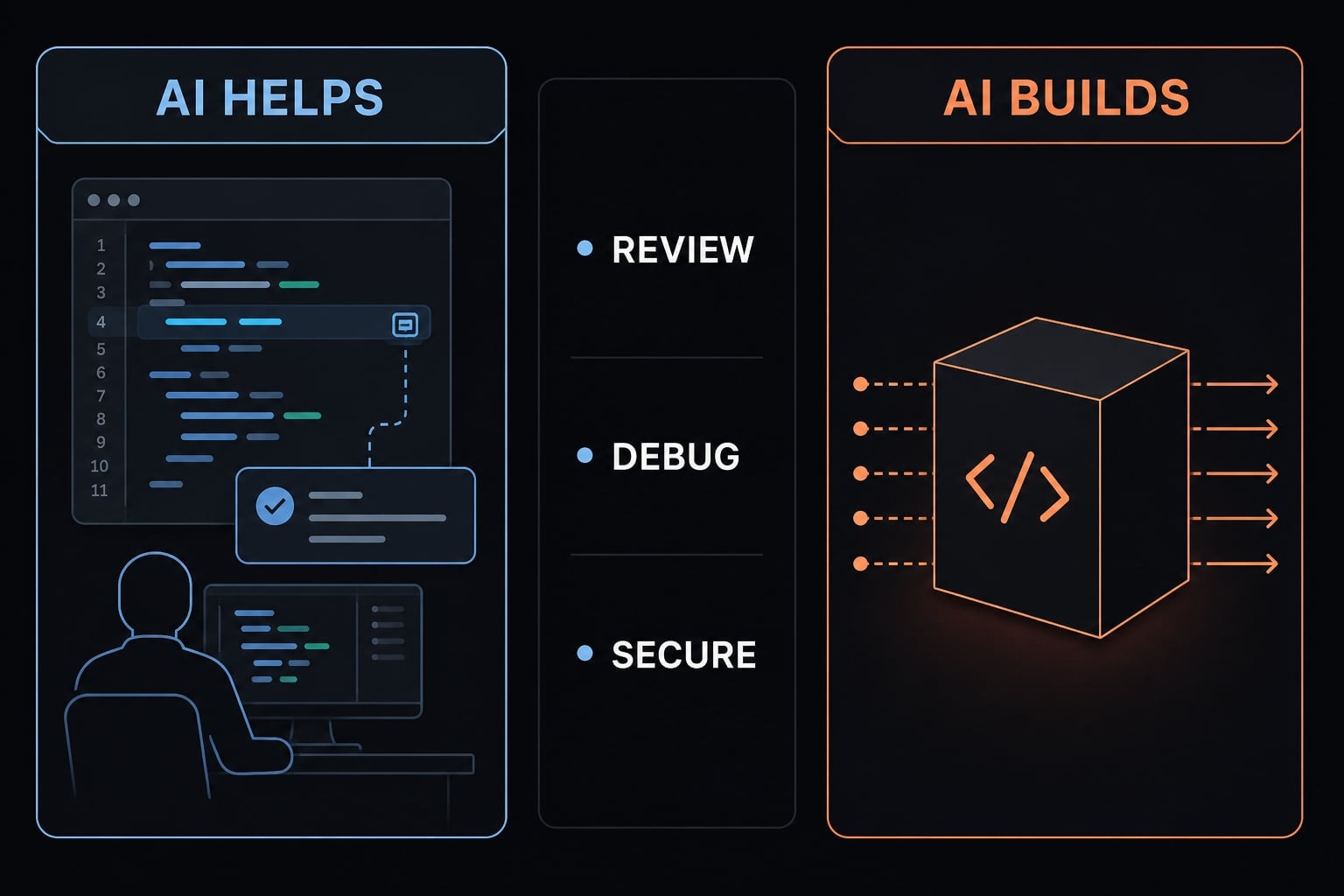
The difference between “AI helps me code” and “AI builds something I don’t understand”
This distinction matters more than the label.
- AI helps me code: I use AI to draft, explain, refactor, or accelerate work, but I still understand the result and can review it safely.
- AI builds something I don’t understand: I may be able to run it, but I cannot confidently debug it, extend it, or secure it.
- AI assistance is normal: Many strong teams use AI every day for implementation support.
- Blind dependency is the risk: The problem starts when the output ships without real human understanding or accountability.
Is vibe coding bad? The short answer
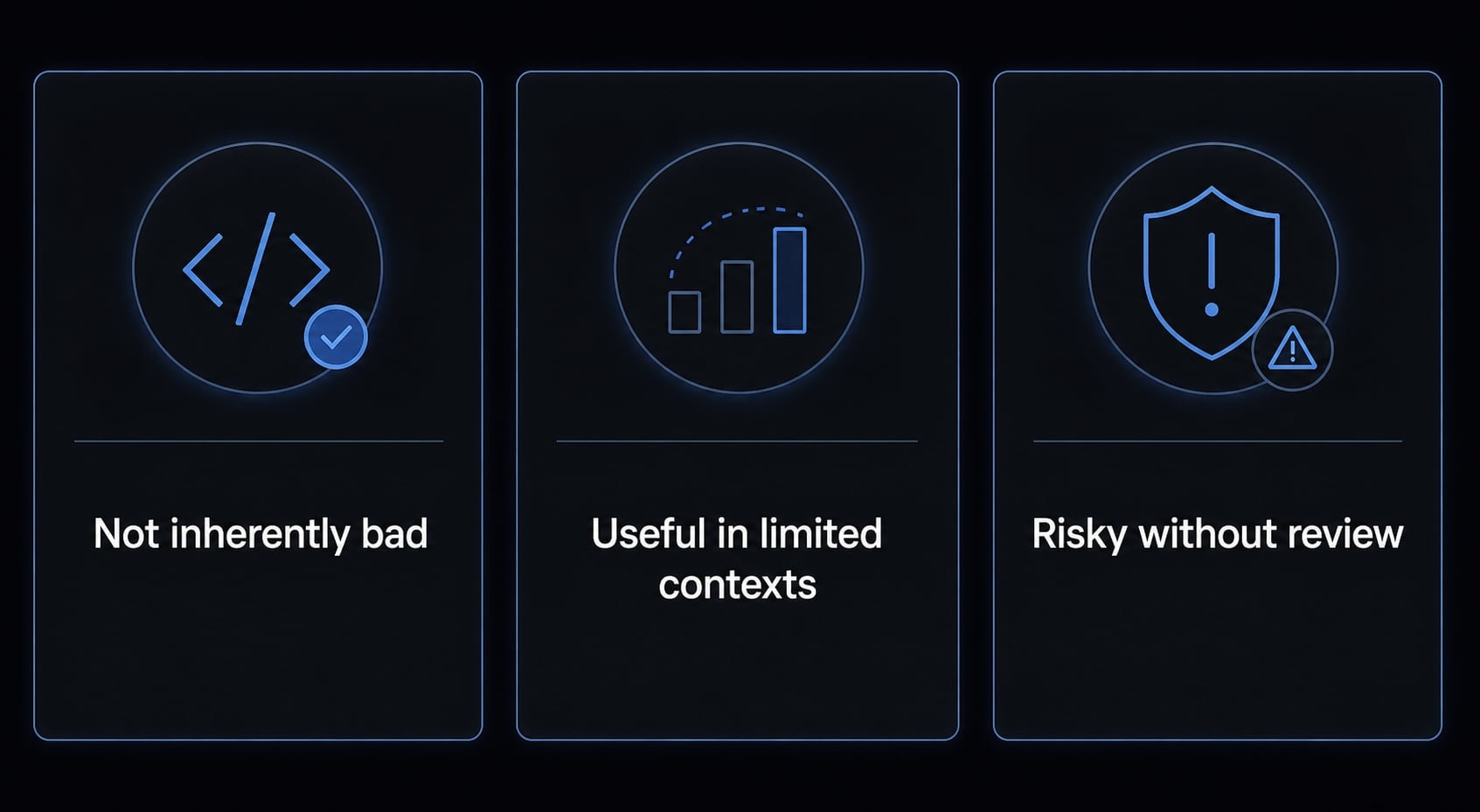
No, vibe coding is not automatically bad. It is useful in the right context, especially for exploration and rapid building. It becomes risky when AI-generated code is shipped without understanding, testing, review, or ownership. That is where vibe coding risks, technical debt, and a later productivity tax begin to show up.
The reason this topic creates so much heat is that both extreme positions miss the real issue. “Just ship it” ignores long-term software quality. “AI ruins software” ignores the real value these tools provide for speed, experimentation, and early implementation.
A prototype that works once is not the same thing as software a team can safely maintain. In real delivery environments, the failure point usually appears later - when someone needs to change the code, review a bug, add permissions, connect a new system, or hand the work to another developer.
Why the internet keeps polarizing the topic
Online discussion often collapses into two weak arguments:
- AI is amazing, so any code it produces is good enough.
- AI ruins engineering, so all vibe coding is irresponsible.
Both are too simplistic. The real answer depends on process, review, maintenance burden, and risk exposure. A throwaway internal script and a customer-facing payment flow should not be judged by the same standard.
A practical bottom line
- Good for exploration: It helps you move from idea to working draft quickly.
- Risky for systems you do not understand: Running code is not the same as owning it.
- Dangerous as a substitute for engineering judgment: AI can generate output, but it cannot replace accountability.
Where vibe coding works well
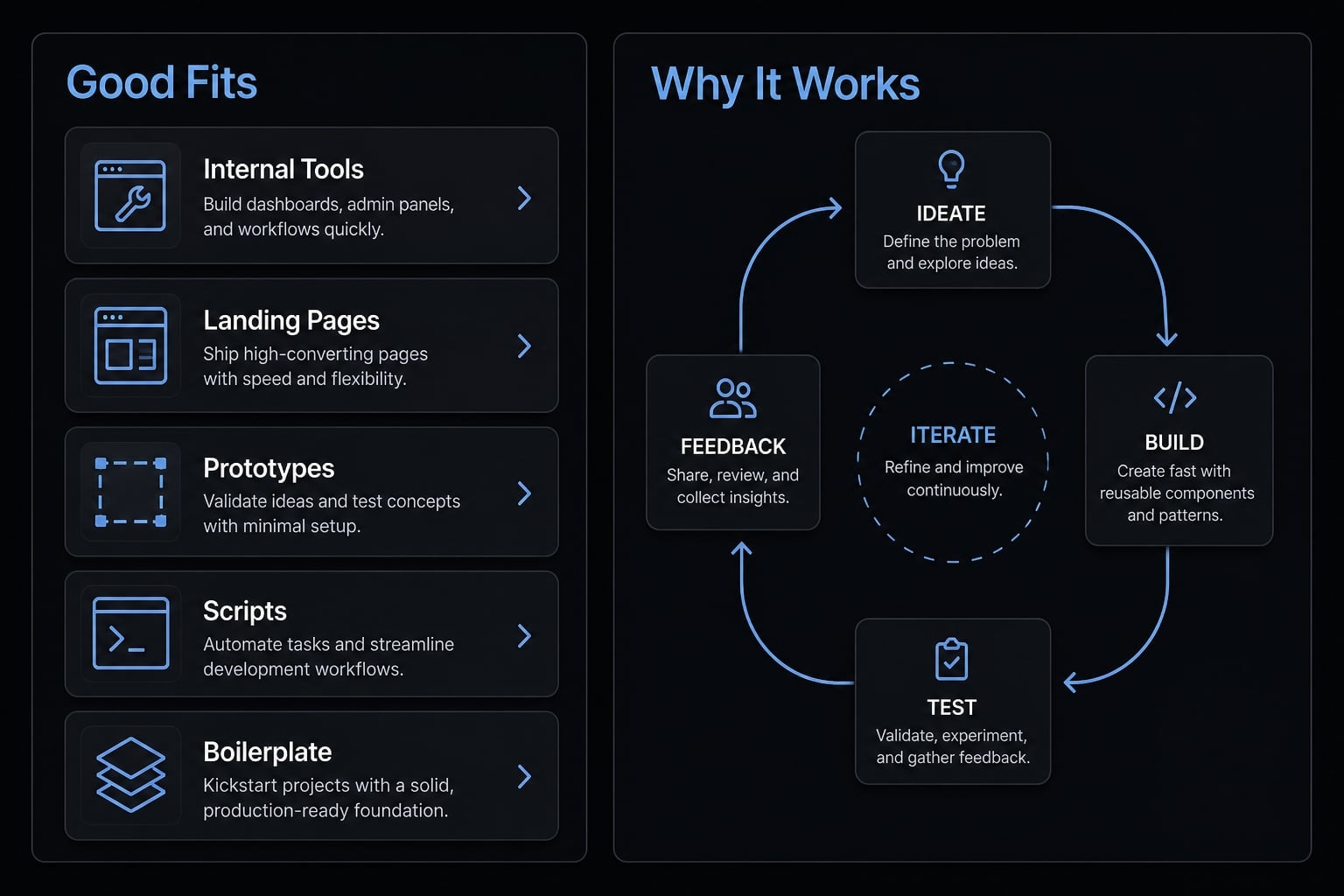
Vibe coding has real value when the scope is small, the stakes are low, and the output is easy to inspect. That is why many teams find it useful for rapid prototyping and early exploration. Used this way, AI coding tools can improve developer productivity without creating unnecessary delivery risk.
The key is to keep the claim narrow. A fast prototype is valuable because it helps you test an idea, not because it proves the system is ready for production. Good prompt-based engineering can accelerate prototype development, but it does not remove the need for review once the work starts to matter.
Good use cases
- Quick internal tools - Good fit because the audience is small, feedback is fast, and the business risk is limited.
- Landing pages - Good fit because the output is visible, easy to inspect, and often simpler than backend-heavy systems.
- Throwaway prototypes - Good fit because the goal is learning, not long-term maintenance.
- One-off scripts - Good fit when the output is obvious and the task is narrow, such as formatting data or automating a repetitive step.
- Boilerplate generation - Good fit because AI can remove repetitive setup work that a human can still review quickly.
Why vibe coding can genuinely help non-experts start building
For non-developers and technical-curious operators, vibe coding lowers the barrier to entry. A founder can validate an idea faster. A marketer can build a simple tool or workflow without waiting weeks for a backlog slot. A solo builder can test user demand before investing heavily.
That is legitimate value. But starting is not the same as shipping safely. As complexity grows, code ownership matters more than prompt quality. The moment a project needs to last, change, or support real users, the standards should change too.
Where vibe coding starts to break down
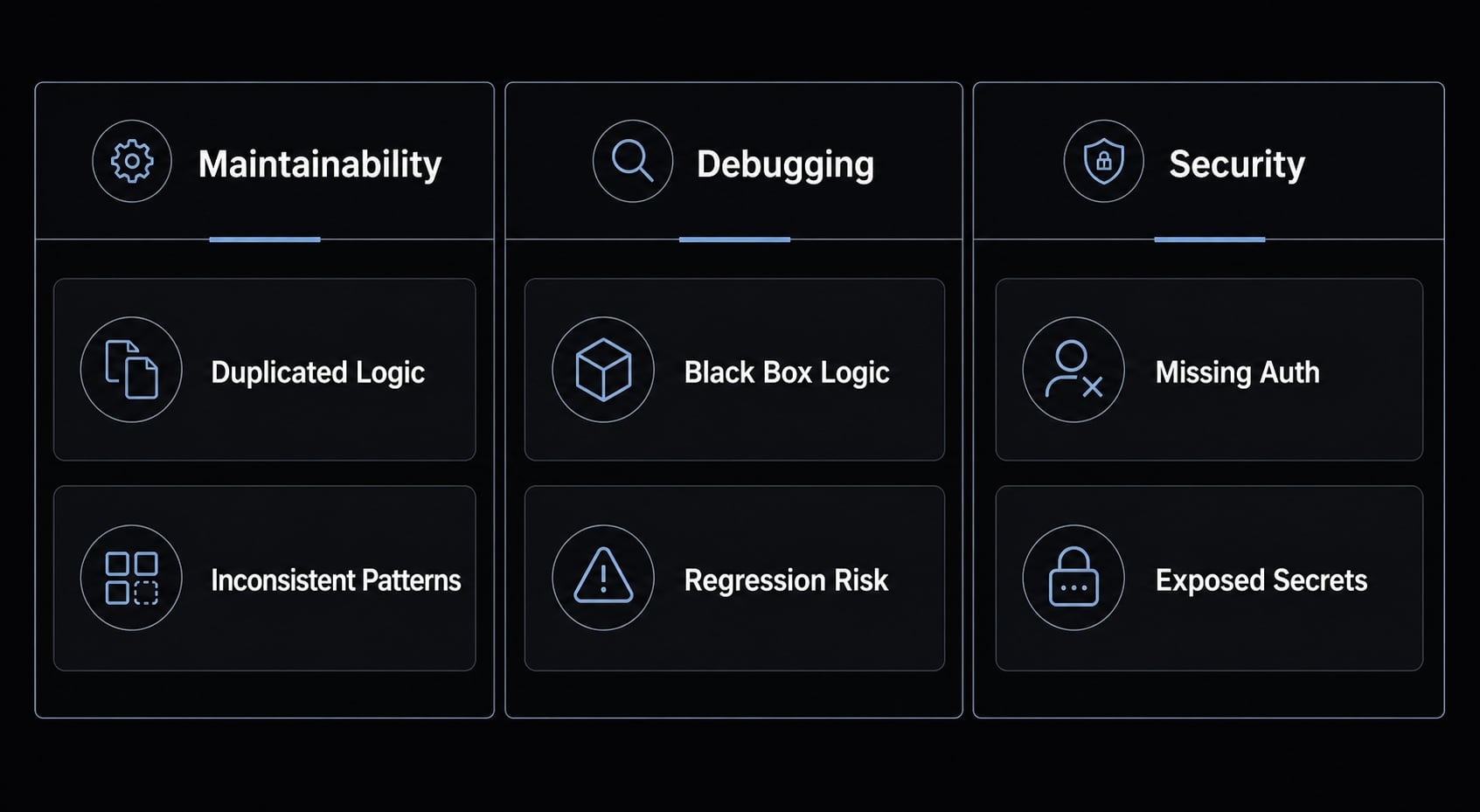
The biggest weakness of vibe coding is not that the code fails immediately. It is that the code often works just enough to create confidence before deeper problems appear. Those problems usually show up in maintainability, debugging, and security.
This is where many teams pay the hidden cost. The first version may feel fast. Later changes become slow, unpredictable, and expensive. That is the classic path to technical debt: Fast output now, harder codebase maintenance later.
Maintainability problems
- Inconsistent patterns - Different parts of the code may solve similar problems in different ways, making the system harder to understand.
- Duplicated logic - The same logic often appears in multiple places, so one change requires several fixes.
- Messy dependencies - Packages and libraries get added quickly without enough discipline, increasing fragility and upgrade pain.
- Hard-to-read codebase - The code may run, but poor structure makes onboarding, review, and extension much slower.
Debugging and change risk
This is where vibe coding often becomes frustrating. A team asks the AI to add one feature, then another, then fix a regression, and eventually the codebase starts behaving like a pile of loosely connected patches.
Common failure patterns include:
- One fix creates new issues - A local change breaks something else because the broader structure was never clear.
- Prompts lose context over time - The model’s earlier decisions do not stay stable across a long sequence of edits.
- No clear source of architectural truth - There is code, but no reliable explanation of why it was designed that way.
- Black box logic - Parts of the system work, but nobody can confidently predict what will happen when they change them.
This is what people often mean when they talk about a hidden productivity tax. AI saved time upfront, but the later debugging cycle takes it back.
Security and reliability concerns
- Missing auth checks - The app appears complete, but users may be able to access actions or data they should not.
- Unsafe data handling - Input, storage, or transmission may work functionally while still exposing sensitive information.
- Exposed secrets - Keys, tokens, or credentials can end up hardcoded or poorly managed.
- Poor validation - The interface may look polished while the backend accepts unsafe or malformed inputs.
These issues are dangerous because the code can look finished from the outside. A nice UI and working buttons do not prove the software is secure or reliable.
Why the prototype-to-production gap is so large
“It runs” is a weak standard. Production software has to survive edge cases, real users, handoffs, integrations, changing requirements, and future maintenance. That is where missing architectural intent, weak validation, and unmanaged dependencies start to hurt.
The gap between prototype and production is large because production systems need more than working output. They need reviewability, stability, and safe changeability. Without those qualities, the initial speed turns into long-term drag.
A simple framework: When vibe coding is safe, risky, or a bad idea
The safest way to judge vibe coding is not by whether the demo works. Judge it by risk. In AI-assisted software development, the right question is whether the code can be reviewed, maintained, and trusted in its actual business context.
A simple risk framework looks at four factors: Business criticality, security exposure, maintenance horizon, and complexity. That is why “vibe coding safe for production” should be treated as a limited exception, not a default assumption. This is also where specification-driven development starts to outperform pure improvisation.
Level | Good fit | Why | Required guardrail |
|---|---|---|---|
Safe | Disposable prototypes | Low maintenance burden | Basic review |
Safe | Isolated UI experiments | Easy to inspect | Scope limit |
Risky | Internal tools | Real users, changing needs | Review + tests |
Risky | Limited customer-facing features | User impact exists | Review + monitoring |
Bad idea without strong oversight | Payments/auth flows | High security and reliability risk | Expert review + tests |
Bad idea without strong oversight | Regulated or core product systems | Long-term complexity and compliance risk | Structured engineering process |
Safe to vibe code
- Disposable prototypes
- Low-stakes automation
- Isolated UI experiments
- Scripts with obvious outputs
These work because the blast radius is small and the code can be checked quickly.
Use with review
- Internal tools
- Customer-facing features with limited scope
- Integrations that need tests and guardrails
These are not automatically unsafe, but they do require human review, clear ownership, and validation beyond “it seems to work.”
Bad idea without strong oversight
- Payment systems
- Authentication flows
- Regulated data handling
- Complex production backends
- Long-lived core products
These areas carry higher reliability, security, or compliance risk. They should not rely on casual prompting alone. They need review, tests, and a structured engineering process.
What responsible AI-assisted coding looks like instead
The alternative to vibe coding is not banning AI. The better model is structured, reviewable, spec-backed use of AI. In other words, AI can help generate output, but humans must retain code ownership. That is what makes the workflow more reliable and less random.
The strongest teams increasingly move toward spec-driven development, tighter review habits, and more structured AI workflows. The goal is not to eliminate speed. The goal is to improve software delivery without losing control.
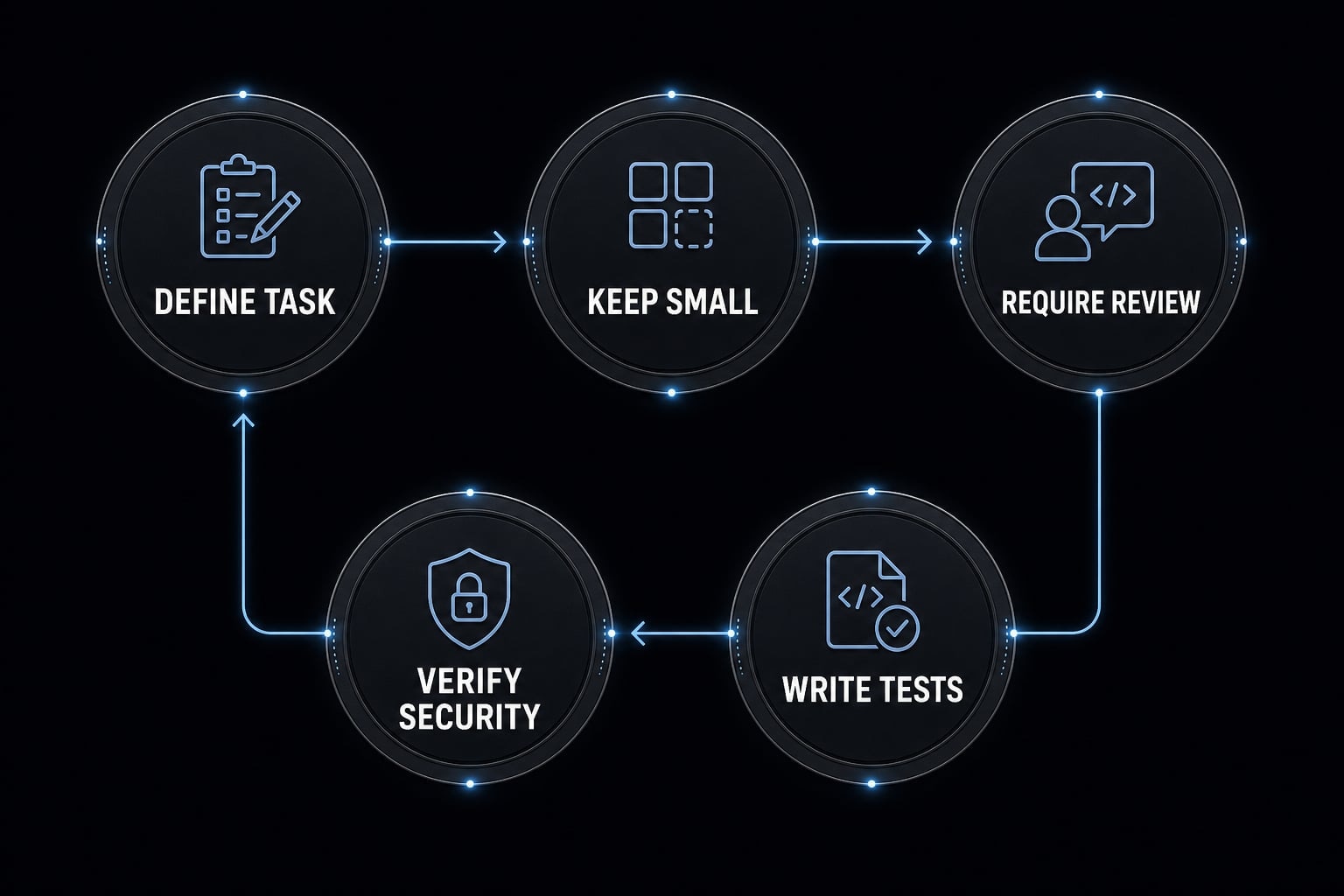
Practical guardrails
- Define the task clearly: A clear request reduces ambiguity and makes the output easier to review against intent.
- Keep changes small: Smaller changes are easier to test, understand, and roll back if something breaks.
- Require human review: AI can draft code, but accountability still belongs to a person who can inspect it.
- Write tests first or early: Early tests make deterministic coding easier by checking whether the output actually behaves as expected.
- Verify security-sensitive code manually: Always verify security-sensitive code manually, especially around authentication, permissions, secrets, and data handling.
Structured workflows reduce chaos
Reusable specs, review gates, and workflow discipline reduce the randomness that often comes with one-off prompt chains. This matters even more in teams, where consistency is more valuable than isolated speed. In practice, disciplined, structured AI workflows outperform improvisational prompting when the goal is repeatable execution rather than a quick demo.
Why this matters beyond code quality
Poorly managed vibe coding creates hidden business cost. This is not just about elegant code. It affects handoff quality, delivery reliability, future speed, and the amount of rework a team has to absorb later.
When technical debt accumulates, delivery velocity usually slows down. Teams spend more time fixing regressions, untangling unclear logic, and rewriting work that looked finished earlier. That raises maintenance cost and increases overall software risk.
Business consequences:
- Slower feature changes - New requests take longer because the existing system is harder to modify safely.
- Harder handoffs - Team members struggle to take over work they did not originally prompt or fully understand.
- Increased rework - Early speed gets canceled out when features have to be rebuilt properly later.
- Avoidable risk in customer-facing products - Security mistakes and fragile logic create trust and reliability issues users can feel.
For founders and team leads, this is the real takeaway: Messy AI-generated code does not only hurt engineering quality. It can reduce execution speed across the business.
Frequently asked questions
Is vibe coding bad?
Vibe coding is not inherently bad; it is a powerful way to explore ideas and build prototypes quickly. However, it becomes dangerous when speed outruns critical engineering tasks like review, testing, and security. It is only "bad" when used to build production systems that nobody on the team fully understands or owns.
What does "vibe coding" mean?
Vibe coding refers to building software by describing intentions in natural language to an AI assistant rather than writing code manually. It is a spectrum: It can be a highly efficient way to prototype, or a risky practice where a user relies on code they cannot debug or secure themselves.
Why is vibe coding considered risky for production software?
Vibe coding is risky for production because AI-generated code often lacks architectural consistency, contains hidden security vulnerabilities, and creates "black box" logic. When software is built without clear specifications or human review, it becomes extremely difficult to debug, update, or maintain as the project scales.
When should you avoid using vibe coding?
You should avoid vibe coding for any system that requires high security, reliability, or long-term maintenance. This includes payment processing, authentication flows, handling regulated user data, and the core backend architecture of a product. These areas require disciplined, spec-driven engineering rather than conversational prompting.
How can I use AI coding tools responsibly?
To use AI coding tools responsibly, follow a structured workflow: treat AI-generated code as a draft, keep changes small, perform rigorous manual code reviews, and always write tests to validate functionality. Ensure that a human engineer always retains ownership and understanding of the final codebase.
What is the "productivity tax" in AI development?
The "productivity tax" refers to the long-term cost of maintaining AI-generated code that was built without proper specifications. While you might save time initially, the time spent later fixing inconsistent patterns, debugging opaque errors, and addressing security gaps often outweighs the speed gained during the initial "vibe" phase.
Read more:
- Vibe code marketplace: Defining AI-driven development & risks
- Vibe coding threat model: Secure AI-assisted development guide
- Vibe coding MVP: Build fast without fooling yourself
Conclusion
So, is vibe coding bad? Not inherently. It becomes bad when speed outruns understanding, control, testing, review, and code ownership. The simplest rule is this: use vibes to explore, and use structure for anything that needs to last. AI is a useful implementation partner, but it is not the accountable owner of your software.
If you want a safer next step, use a clear checklist for responsible AI-assisted coding and a structured framework for moving from prototype to production.