Vibe coding threat model: Secure AI-assisted development guide
Vibe coding threat Model: A lightweight security review for AI-assisted shipping
AI-assisted coding makes it easy to produce working features fast, but review discipline often does not keep pace. That gap is exactly why a vibe coding threat model matters. Teams using Cursor, Copilot, Claude Code, Codex, and agent workflows can generate functional output in minutes, yet functional output is not the same as secure output. This guide explains what a vibe coding threat model is, why AI-assisted coding changes security failure modes, and how to apply a lightweight review framework before release.
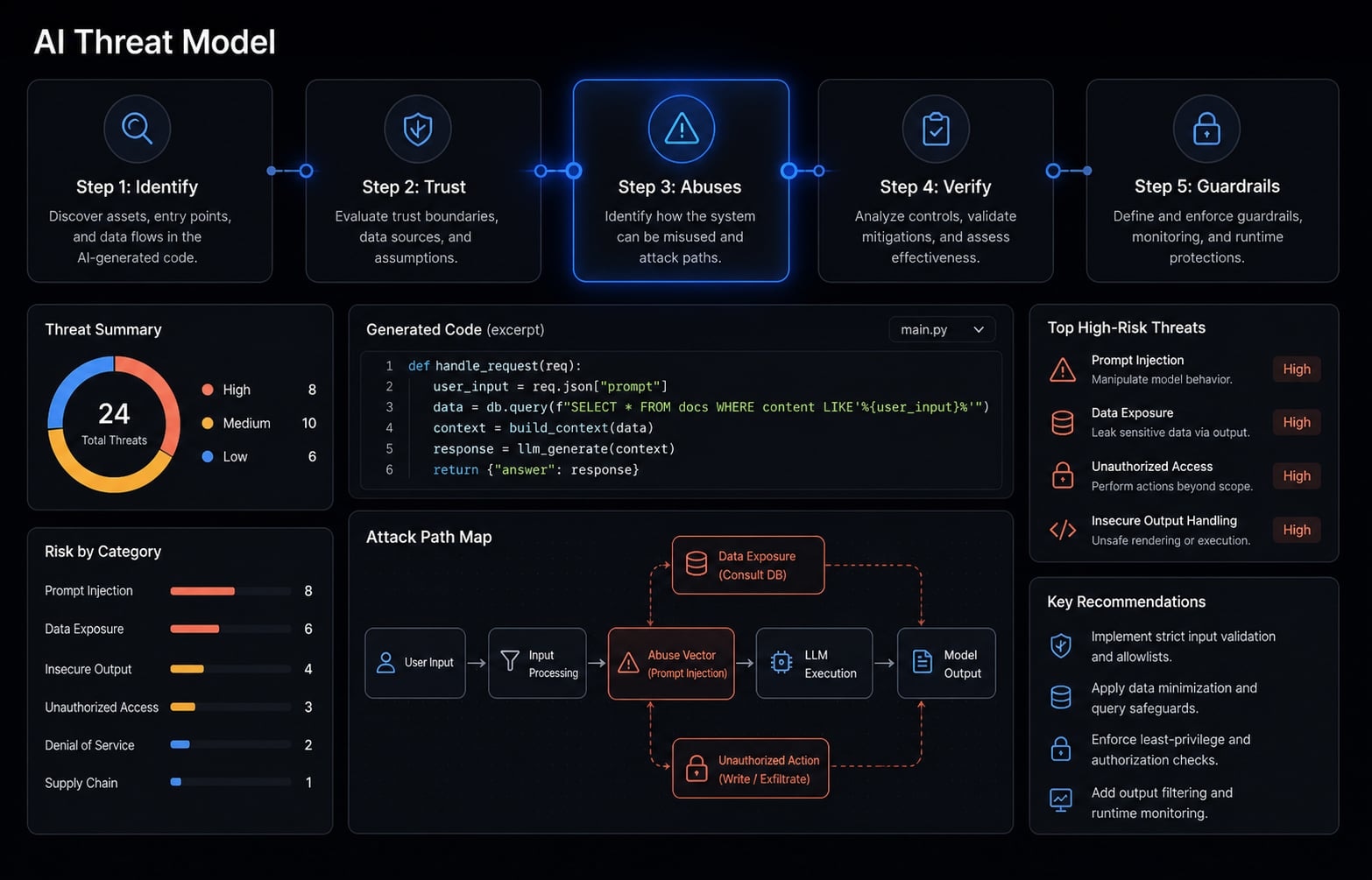
What “vibe coding threat model” actually means
This is a lightweight security review method for AI-assisted development. It helps teams identify what an AI-generated code feature does, what trust boundaries it crosses, how it could be abused, what must be verified by a human, and what security guardrails should exist before release.
The term matters because modern teams increasingly ship from prompts, generated endpoints, agent workflows, and tool integrations. The problem is not that AI-generated code always fails. The problem is that “it works, ship it” can become the default operating mode before anyone reviews permissions, access control, file handling, data exposure, or system assumptions.
This is still threat modeling in the practical sense: thinking through what can go wrong, where misuse can happen, and which controls reduce risk. It is intentionally lightweight. It is also not a substitute for a formal AppSec review when systems handle sensitive data, privileged actions, or infrastructure access.
Why this term matters now
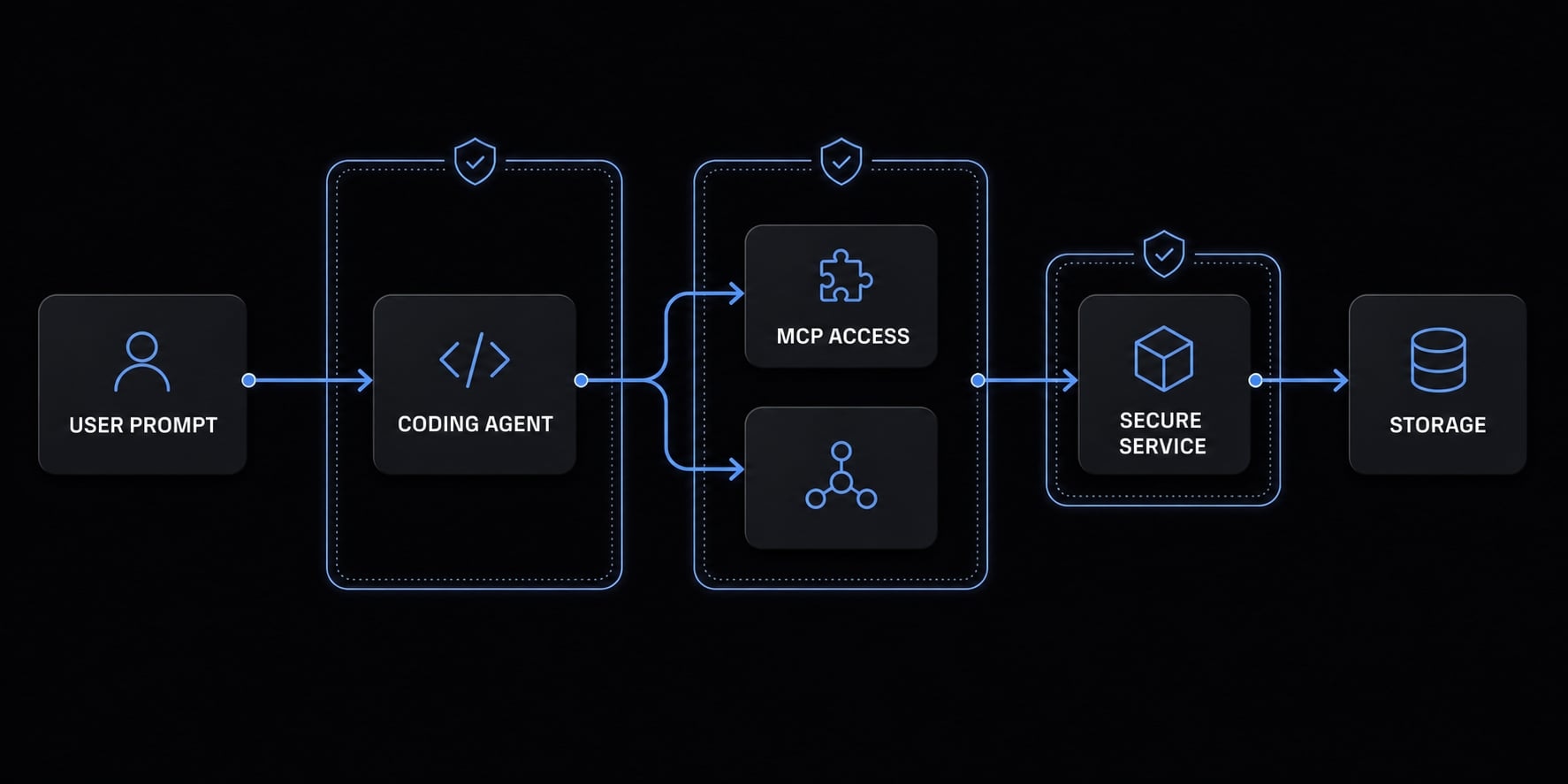
AI coding tools speed up output, but they also widen the review surface. Teams are no longer only reviewing source code. They are reviewing prompts, generated configs, plugin permissions, MCP connections, automation rules, and how coding agents interact with real systems.
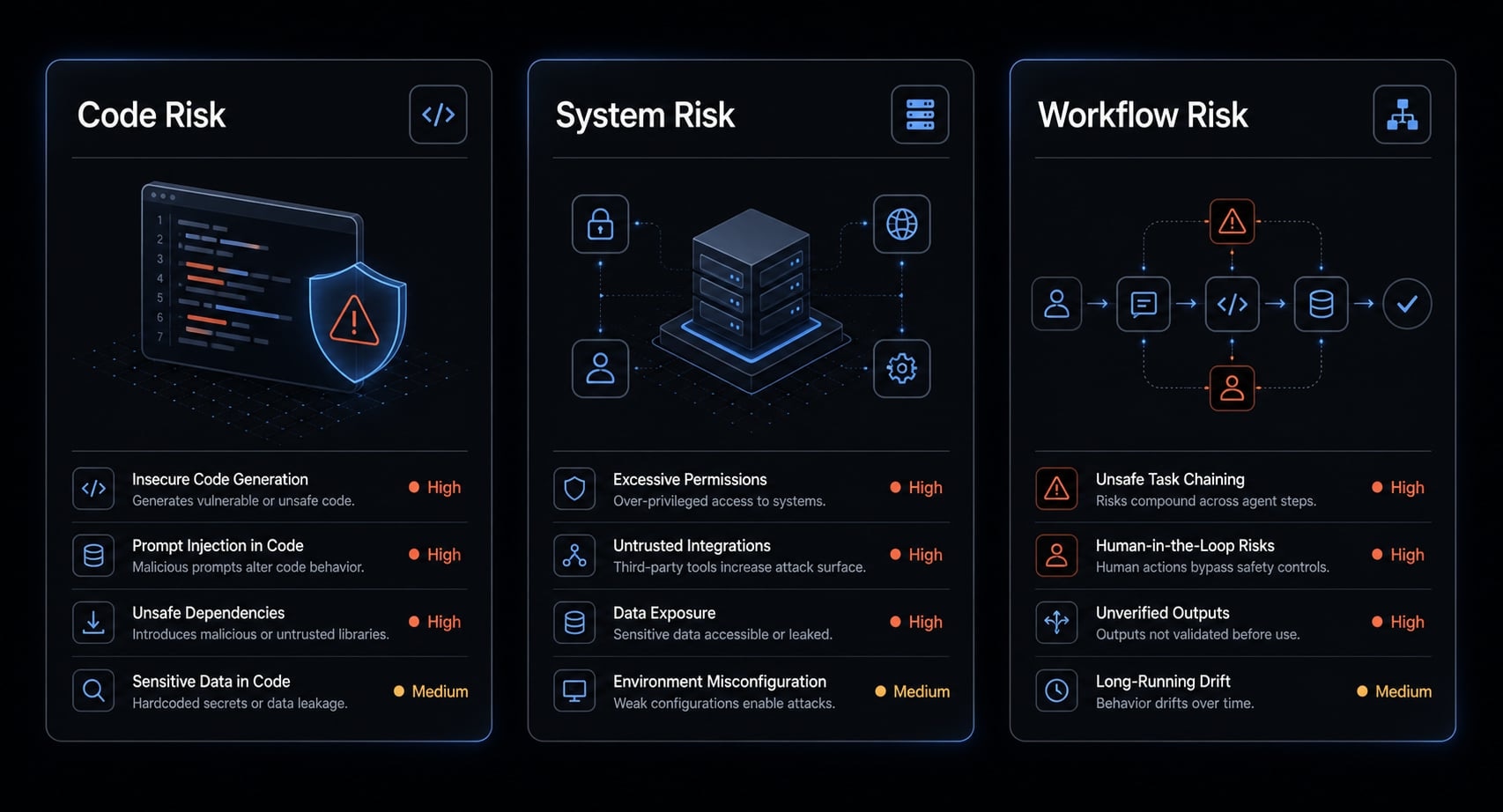
That means security risk now appears across three places at once:
- The code the model generated.
- The system boundaries the feature crosses.
- The workflow around the coding agent, tools, and permissions.
A plain-English definition of the model
A vibe coding threat model is a short pre-release review that asks five basic questions:
- What did the AI create?
- What can it access or affect?
- How could it be abused if assumptions fail?
- What must a human verify directly?
- What guardrails should exist before release?
Why vibe coding creates a different security problem
Traditional code can be insecure too, but vibe coding changes the failure mode because generation speed rises faster than review discipline. That is the real shift. Teams can produce more working software per hour, but they do not always increase architecture review, authorization checks, or release controls at the same rate.
Pattern completion over security intent
Large language models optimize for pattern completion, not secure design. They generate plausible answers that satisfy the requested feature. In practice, plausible is not the same as safe.
A generated endpoint may compile, tests may pass, and the UI may behave correctly. That still does not prove the feature enforces access control, validates untrusted input, protects secrets, or applies secure defaults. The model is trying to complete a task. It is not reliably reasoning like a security reviewer.
Teams see this pattern often in AI-assisted development:
- A route exists, but auth is missing or too broad.
- A download endpoint works, but ownership checks are absent.
- A file upload works, but filename handling is unsafe.
- A prompt or config references secrets that should never be logged.
Code-level risk vs architecture-level risk
Many insecure coding patterns are obvious at the snippet level. Others only appear when the feature interacts with real systems. That is why reviewing only the code is not enough.
Common risks include:
- Missing or weak access control on internal or customer-facing endpoints.
- Poor ownership checks that let users access records they do not own.
- Unsafe file handling that enables overwrite or path traversal.
- Secret exposure in prompts, logs, configs, or generated examples.
- Risky assumptions between services about identity, trust, or permissions.
A useful way to frame this is simple: Code-level review asks whether the snippet is safe; architecture-level review asks whether the feature is safe inside the system.
Workflow-level risk in agent environments
Modern agentic AI workflows add another layer. Coding agents may call tools, use plugins, connect to MCP, read local files, hit external APIs, or operate with broader permissions than the developer intended.
That creates risks beyond the code itself:
- Prompt injection that manipulates tool behavior or output.
- Over-permissioned plugins or coding agents.
- Workflow-level data leakage through prompts, logs, or external services.
- Shadow AI usage outside approved tooling.
- Unreviewed automation touching production-like systems.
The review target is no longer just the generated snippet. It is the whole release path around it.
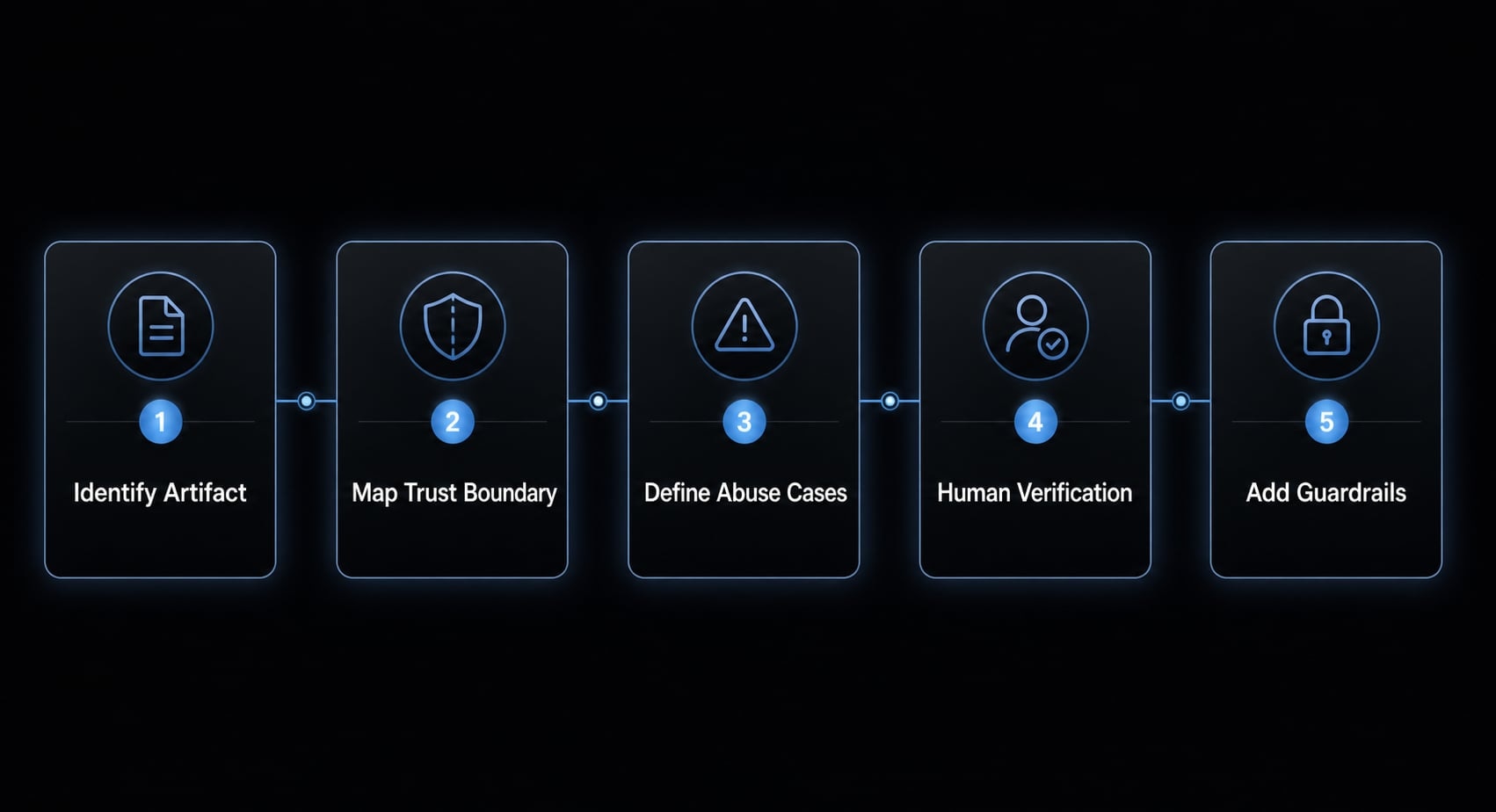
A simple 5-step vibe coding threat model
This model is designed for teams without a full-time AppSec function. Think of it as minimum viable rigor for fast shipping. A vibe coding threat model works best as a repeatable team ritual, not a one-time exercise done after a scare.
- Identify what the AI created.
- Map the trust boundary it crosses.
- List realistic abuse cases.
- Verify risky logic with a human reviewer.
- Add guardrails before shipping.
Step 1 - What did the AI create?
Start with artifact identification. Be precise. Is the output an endpoint, auth flow, query, file upload, prompt, config, workflow, or integration rule? Teams often say “the AI built the feature,” but that description is too vague to review properly.
This matters because code, configuration, and orchestration fail in different ways. A generated API route has different risks than a deployment config or an agent tool permission rule. Before any AI-assisted threat modeling starts, name the artifact clearly. If the team cannot define what was created, the review stays broad, shallow, and easy to skip.
Step 2 - What trust boundary does it cross?
A trust boundary is the line where untrusted input, identity, permissions, or external systems meet something valuable. In plain terms, ask where data enters, what the feature can touch, and what assumptions it relies on.
Review where the feature interacts with:
- User input.
- Files and storage.
- APIs and external services.
- Tokens, secrets, or credentials.
- Internal systems and databases.
- Plugins, tools, or MCP servers.
Most meaningful security problems appear at these system boundaries. A route that looks harmless in isolation becomes risky when it can write files, call a privileged service, or expose records from another tenant.
Step 3 - What could be abused if assumptions fail?
Now define realistic abuse cases. Keep them practical. You are not building a red-team exercise. You are identifying how a feature could fail under normal pressure, misuse, or bad assumptions.
Typical examples include:
- Unauthorized access to another user’s data.
- Path traversal through unsafe file paths.
- Secret exposure through prompts or logs.
- Excessive permissions on tools or services.
- Prompt injection affecting tool behavior.
- Untrusted content reaching sensitive systems.
This is where a vibe coding threat model becomes useful. Instead of asking “is this secure?” ask “what is the most likely harmful outcome if this assumption is wrong?” That question is easier to answer and easier to operationalize.
Step 4 - What must be verified by a human?
Passing tests is not enough. The goal of code verification is to inspect risky logic that automated generation and happy-path testing often miss.
Human review should explicitly check:
- Authorization logic.
- Ownership checks.
- Input validation.
- Dependency use.
- External calls and data movement.
- Logging choices.
- Privileged actions.
- Error handling around security-sensitive flows
This is the step many teams underinvest in because the feature already “works.” In practice, working code can still violate access rules, leak sensitive data, or rely on unsafe defaults. Human review exists to validate intent, not just syntax.
Step 5 - What guardrail should be added before shipping?
The final step is control design. Add security guardrails that reduce repeat risk without relying on memory. Repeatable controls outperform heroic discipline almost every time.
Useful examples include:
- Secure defaults in templates and scaffolds.
- CI scans, including SAST (Static Application Security Testing).
- Peer review requirements for privileged logic.
- Minimum necessary permissions for tools and services.
- Approval gates for sensitive integrations.
- Prompt rules that prohibit secrets or unsafe patterns.
- Rollback readiness for new releases.
A vibe coding threat model is most valuable when it changes the workflow, not just the conversation. If the only protection is “remember to be careful next time,” the process is too weak.
The 3 risk layers teams should check
Teams often review only the generated snippet and stop there. That misses a large share of real-world risk. A practical review should cover generated code risks, system integration risk, and agent workflow risk together.
Risk layer | What to review | Common examples |
|---|---|---|
Generated code risks | Logic in the snippet itself, including validation, auth, file handling, queries, and error handling | Missing validation, weak auth, unsafe file handling, insecure queries, exposed secrets |
System integration risk | How the feature interacts with services, storage, identities, and existing access boundaries | Broken access boundaries, weak ownership assumptions, unsafe external API use, incorrect trust between services |
Agent workflow risk | The broader AI workflow around prompts, tools, plugins, and permissions | Prompt security failures, data leakage, over-scoped MCP or plugin permissions, shadow AI, supply-chain exposure |
These layers should be reviewed together because they compound. A safe-looking snippet can still become risky when connected to a privileged service. A properly scoped service can still be exposed if the coding agent, plugin, or workflow leaks data or accepts unsafe tool instructions. The model stays manageable once teams stop treating “the code” as the only review target.
A practical pre-ship checklist for AI-assisted code
Use this secure coding checklist as a 5–10 minute pre-release review. It is deliberately short so teams will actually use it. Passing the checklist reduces obvious risk; it does not certify the system as secure.
- Authentication and authorization checks are explicit, not implied.
- User input is validated and encoded where needed.
- File uploads, filenames, and file paths are constrained.
- Secrets are removed from prompts, code, logs, and configs.
- Dependencies and packages are trusted and reviewed.
- Access is limited to the minimum necessary systems and permissions.
- Logging exists, but does not leak sensitive data.
- Risky logic received direct human review.
- CI/CD includes SAST or equivalent checks.
- A rollback path exists if the release behaves unexpectedly.
This secure coding checklist works best when attached to the release process itself. Add it to pull request templates, deployment gates, or team review rituals so AI-generated code review becomes standard practice rather than an extra task. It also reinforces good secrets management habits in prompts, configs, and tooling, where teams often forget to look first.
When lightweight threat modeling is enough - and when to escalate
A lightweight security review is useful for many fast-moving teams, especially when the alternative is no review at all. But not every feature should rely on a simplified process. Risk-based judgment matters more than process purity.
Cases where lightweight review is usually enough
A lightweight review is usually enough when:
- The feature is an internal workflow automation.
- The system is an isolated prototype.
- The tool runs with low privileges.
- No customer data is involved.
- The change does not affect auth, payments, or infrastructure.
- The integration scope is narrow and easy to inspect.
Cases that should trigger escalation
Escalate to a deeper security review or a formal threat model when the change touches:
- Customer data.
- Money movement or billing logic.
- Admin powers or privileged actions.
- Regulated environments.
- Infrastructure access.
- Authentication or authorization logic.
- Broad plugin, tool, or MCP permissions.
- Shared services used across multiple systems.
A useful escalation threshold is simple: If failure would create legal, financial, customer trust, or operational damage beyond a small rollback event, a deeper review is justified. A lightweight review is useful for many teams, but customer data, money movement, admin privileges, or infrastructure access usually justify a deeper review.
Example: Applying the model to a simple AI-generated file upload feature
Consider an AI-generated endpoint for file uploads. It accepts a file, stores it on disk, and returns a success response. The feature works, but this is also a classic place for a file upload vulnerability to appear.
Likely issues in the generated feature
Common problems include:
- Unrestricted file types.
- Unsafe filenames.
- Missing size limits.
- Weak ownership controls.
- Weak storage restrictions.
- Exposure to path traversal.
How the model catches them before production
The 5-step model keeps the review focused:
- Artifact: An upload endpoint with storage behavior.
- Trust boundary: External user input entering application storage.
- Abuse cases: Malicious files, overwrite attempts, traversal paths, unauthorized retrieval.
- Human verification: Validation logic, auth checks, storage policy, logging choices.
- Guardrails: File type allowlist, size caps, isolated storage, least-privilege access, CI scanning.
That is the practical value of a lightweight review. It catches obvious failure modes in a familiar feature before they become release problems. The goal is not perfect secure upload handling. The goal is reducing preventable risk early.
Frequently asked questions
What is a vibe coding threat model?
A vibe coding threat model is a lightweight security review method for AI-assisted development. It helps teams identify what an AI-generated feature does, what trust boundaries it crosses, how it could be abused, what humans must verify, and what guardrails should exist before release.
Why does AI-assisted coding create different security risks?
Traditional code can be insecure, but vibe coding changes the failure mode because generation speed outpaces review discipline. AI often prioritizes pattern completion over security intent, frequently creating functional code that lacks necessary authorization, input validation, or secure system architecture.
What are the three risk layers in a vibe coding threat model?
A comprehensive review covers three distinct layers:
- Generated Code Risks: Issues like missing validation or weak authentication within the snippet.
- System Integration Risks: Architectural gaps, such as broken access boundaries between services.
- Agent Workflow Risks: Threats like prompt injection, shadow AI, or over-permissioned tools and plugins.
What is the 5-step process for a vibe coding threat model?
The process involves five repeatable steps:
- Identify the AI-generated artifact.
- Map the trust boundary it crosses.
- Define realistic abuse cases.
- Verify risky logic with a human reviewer.
- Add security guardrails before shipping.
How do I know if I need more than a lightweight threat model?
A lightweight review is usually sufficient for internal utilities or low-privilege prototypes. However, you must escalate to a deeper, formal security review if the feature involves customer data, payment flows, administrative privileges, regulated environments, or broad access to your infrastructure.
Does passing a pre-ship checklist guarantee my code is secure?
No. A pre-ship checklist is a baseline tool to reduce obvious risks and ensure fundamental controls are in place. It does not certify the system as secure, especially in high-risk environments or complex agentic AI workflows where deeper AppSec review is required.
Read more:
- How to vibe code: A practical beginner guide to AI development
- How to vibe code a landing page that actually converts
- Vibe code mobile app: Build ideas faster with AI development
Conclusion
A vibe coding threat model gives fast-moving teams a practical way to slow down just enough before shipping. The point is not bureaucracy. The point is disciplined verification: Define what the AI created, check what it touches, think through likely misuse, review risky logic with a human, and add security guardrails that scale with the workflow.
This approach is especially useful when AI-assisted coding output grows faster than traditional review habits. It will not replace formal AppSec work where risk is high, but it can meaningfully improve day-to-day shipping decisions. For teams that want a reusable internal process, download or adapt a simple pre-ship review worksheet and turn it into a standard release habit.