
AI-Assisted deployment checklist for production-ready software
Code working locally can still fail under production constraints. This checklist helps engineering teams verify AI-assisted code, configurations, and data boundaries before release through 40 actionable checks, explicit blockers, and recovery guidance.
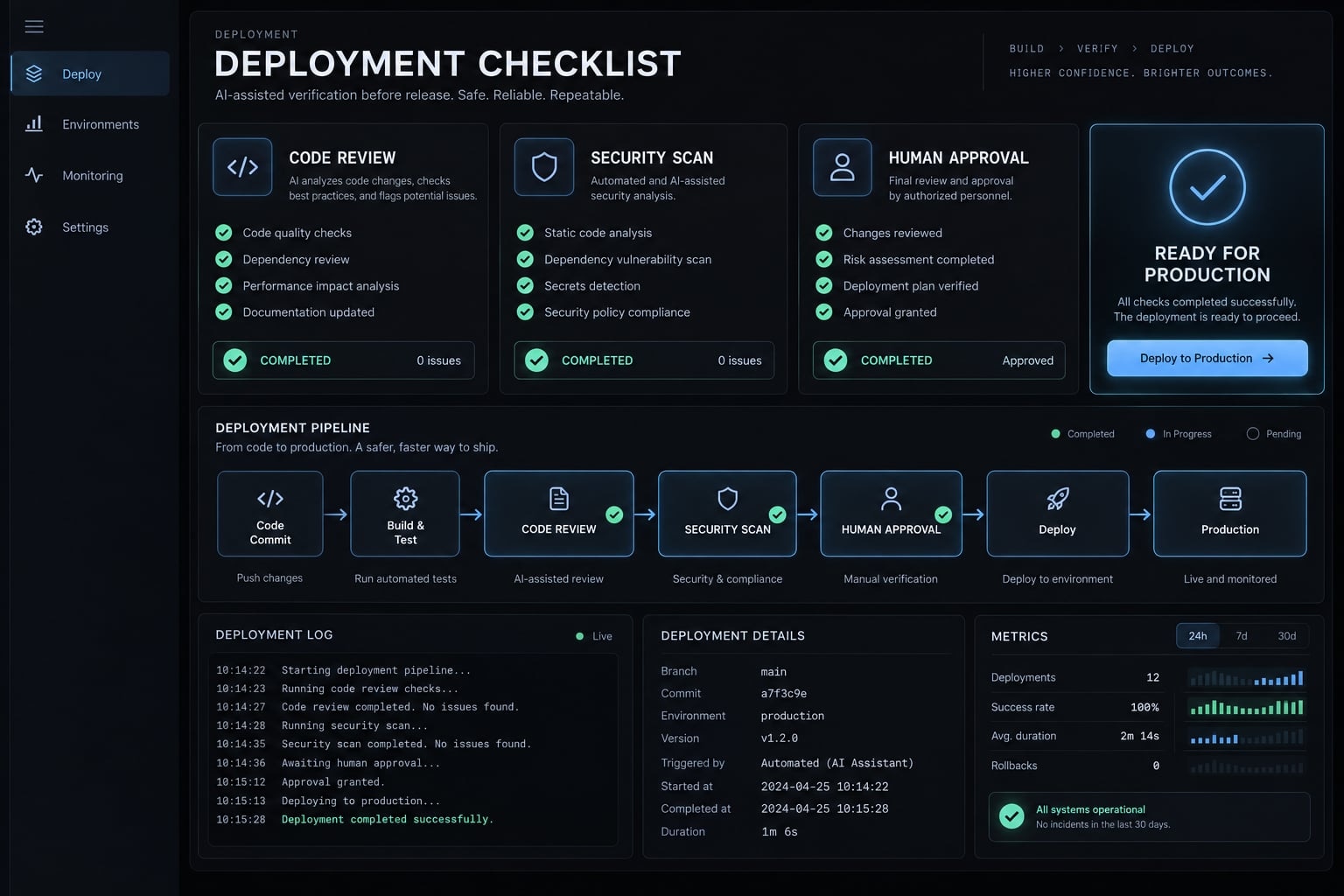
What an AI-Assisted deployment checklist must verify
An AI-assisted deployment checklist assesses readiness for software built, modified, tested, reviewed, or configured with AI assistance. It verifies release controls across code, configuration, dependencies, data changes, and recovery, while assigning named human accountability for evidence review, risk acceptance, production approval, and post-release observation of customer-facing behavior.
AI-Assisted software deployment vs. AI model deployment
Type | Meaning | Additional checks |
|---|---|---|
AI-assisted software deployment | Releasing software developed with AI tools | Generated changes, configuration, tests, recovery |
AI model deployment | Serving model weights through inference infrastructure | Model evaluation, serving capacity, version compatibility |
AI-integrated application | Releasing software that calls models or agents | Runtime permissions, retrieval, output validation, spending |
Calling a hosted model API does not necessarily mean your team deploys the underlying model. However, your application still owns the consequences of its outputs and actions.
The evidence rule for AI-Generated changes
Evidence rule: An AI-generated explanation alone is not evidence of correct behavior. Generated tests become useful evidence when expectations receive independent review and execution matches the release candidate. Approval must reference that reviewed change, with a named owner and rationale for accepted risks.
The NIST Secure Software Development Framework supports integrating review and verification into delivery. This production readiness assessment reduces avoidable risk; it does not certify safety or prevent every incident.
Quick AI-Assisted deployment checklist
These are local checklist priorities, not universal incident-severity definitions:
- P0 - Release blocker: Stop the affected release until resolved.
- P1 - Required for general availability: Complete before broad launch. Limited-rollout exceptions require an owner and expiry.
- P2 - Risk-dependent improvement: Schedule according to exposure, criticality, and compliance needs.
Record evidence for each check. “Not applicable” requires a reason; unresolved findings require an explicit disposition.
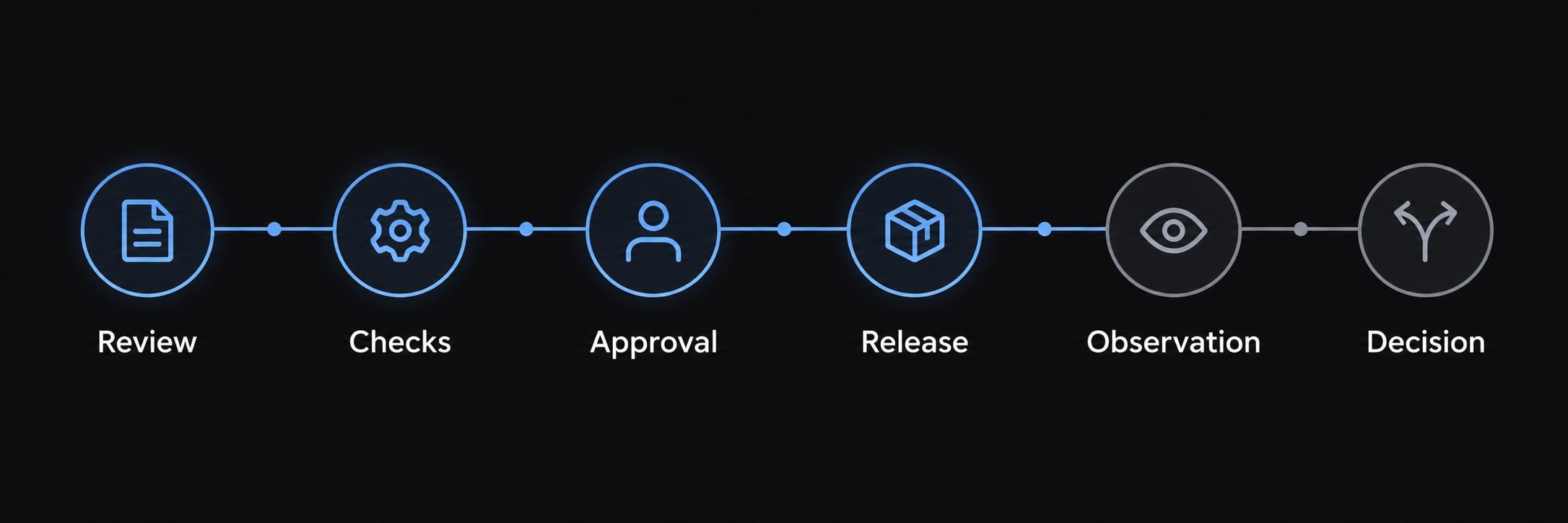
Release scope and ownership
- 01 · P0: Name the release owner accountable for approval, coordination, and recovery decisions.
- 02 · P1: Approve scope, affected customer journeys, and files modified with AI assistance.
- 03 · P0: Assign qualified reviewers and complete review of every high-risk change.
- 04 · P1: Define success measures and explicit stop, containment, and recovery thresholds.
- 05 · P1: Confirm the release window, observation owner, backup contact, and communication channel.
Code and architecture review
- 06 · P1: Complete human review of the entire diff against the intended change.
- 07 · P1: Remove unintended mocks, debug behavior, dead code, and unreviewed scope expansion.
- 08 · P1: Verify referenced APIs, methods, and configuration properties exist in deployed versions.
- 09 · P1: Test invalid inputs, timeouts, unavailable dependencies, and appropriate failure responses.
- 10 · P1: Make critical architecture, access-control placement, and recovery-relevant logic understandable.
Environment and configuration
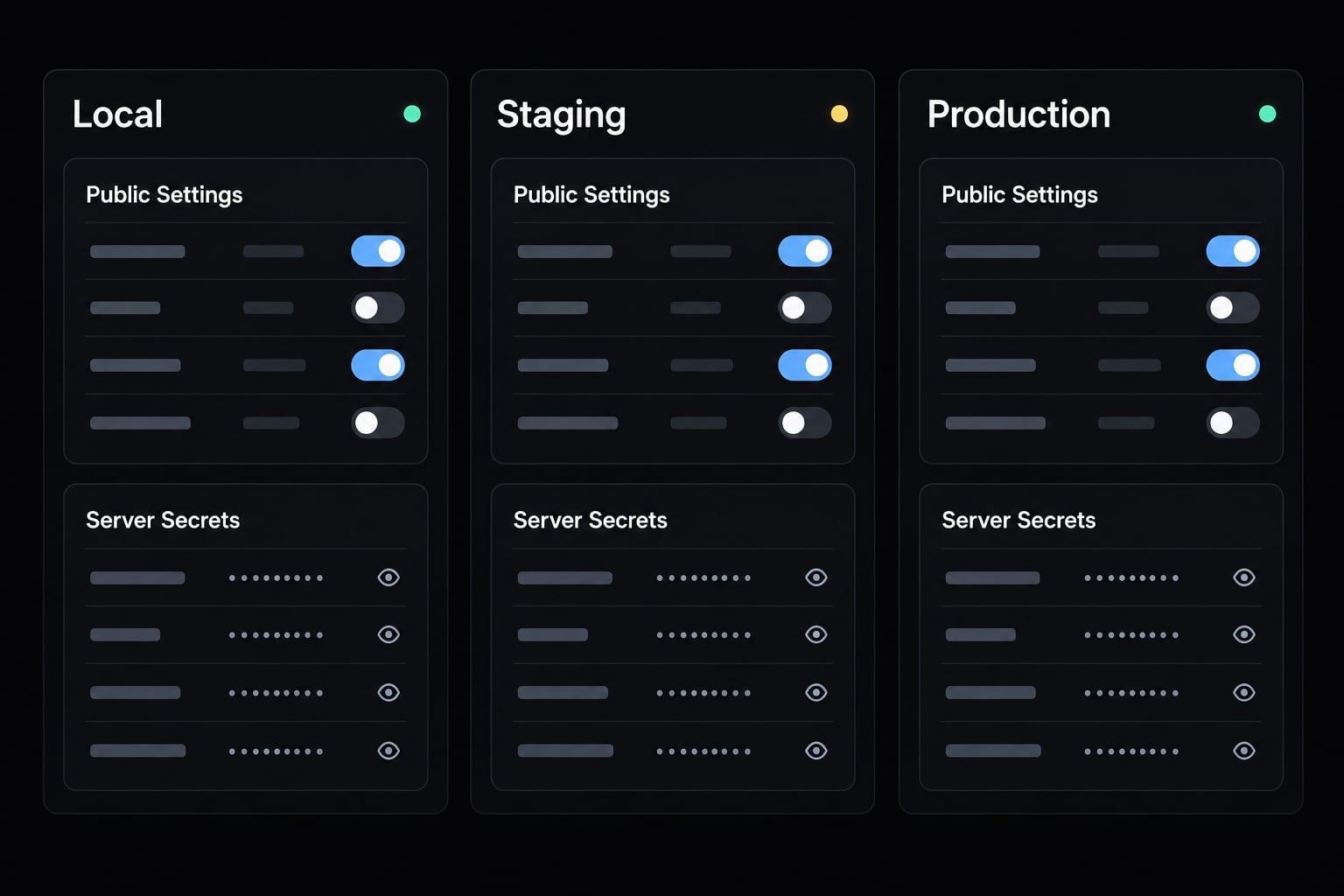
- 11 · P0: Verify required production environment variables, storage, and server-only versus public exposure.
- 12 · P0: Eliminate incorrect development URLs, authentication callbacks, and production database references.
- 13 · P1: Validate production build commands, startup commands, and default feature states.
- 14 · P1: Restrict service identities to necessary resources and least-privilege permissions.
- 15 · P1: Verify production credentials, quotas, billing limits, webhooks, and permitted redirects.
Dependencies and software supply chain
- 16 · P1: Confirm new packages are necessary and their publisher identities are legitimate.
- 17 · P1: Check lockfiles and perform clean installation and production-build verification.
- 18 · P1: Triage vulnerability findings and satisfy applicable dependency license policies.
- 19 · P1: Review direct and transitive dependency changes, including unexpected version shifts.
- 20 · P1: Verify trusted build origins; include a software bill of materials when justified.
A software bill of materials (SBOM) inventories software components. SLSA guidance addresses build provenance: where artifacts originated and how they were produced.
Dependency note: AI tools can suggest nonexistent, misspelled, outdated, or unnecessary packages. A lockfile supports consistency but does not prove reproducible builds.
Security and privacy
- 21 · P0: Resolve repository and history secret findings; revoke or rotate exposed credentials.
- 22 · P0: Test server-side authentication and role, resource, and tenant authorization boundaries.
- 23 · P1: Configure HTTPS, relevant security headers, and proportionate abuse controls.
- 24 · P1: Ensure logs exclude credentials and inappropriate sensitive customer data.
- 25 · P1: Verify production data handling and executable credential-rotation procedures.
Testing and quality gates
- 26 · P1: Pass unit and integration tests in a clean, representative environment.
- 27 · P0: Pass business-critical end-to-end journeys against the intended release candidate.
- 28 · P1: Independently review AI-generated test expectations, negative cases, and boundary coverage.
- 29 · P1: Verify relevant performance, browser, device, and accessibility requirements using production builds.
- 30 · P1: Record known limitations and named approval for explicitly accepted risks.
Database and data readiness
- 31 · P0: Obtain human review for every production database migration affecting this release.
- 32 · P0: Verify application/schema compatibility and the approved migration execution order.
- 33 · P0: Confirm database targets, permissions, and applicable data lifecycle rules.
- 34 · P1: Verify usable backups and restoration readiness against recovery requirements.
- 35 · P0: Address irreversible changes and migration limitations in the recovery procedure.
Migration note: Incompatible changes can break older requests, jobs, and recovery paths. A backup is not a verified restore procedure.
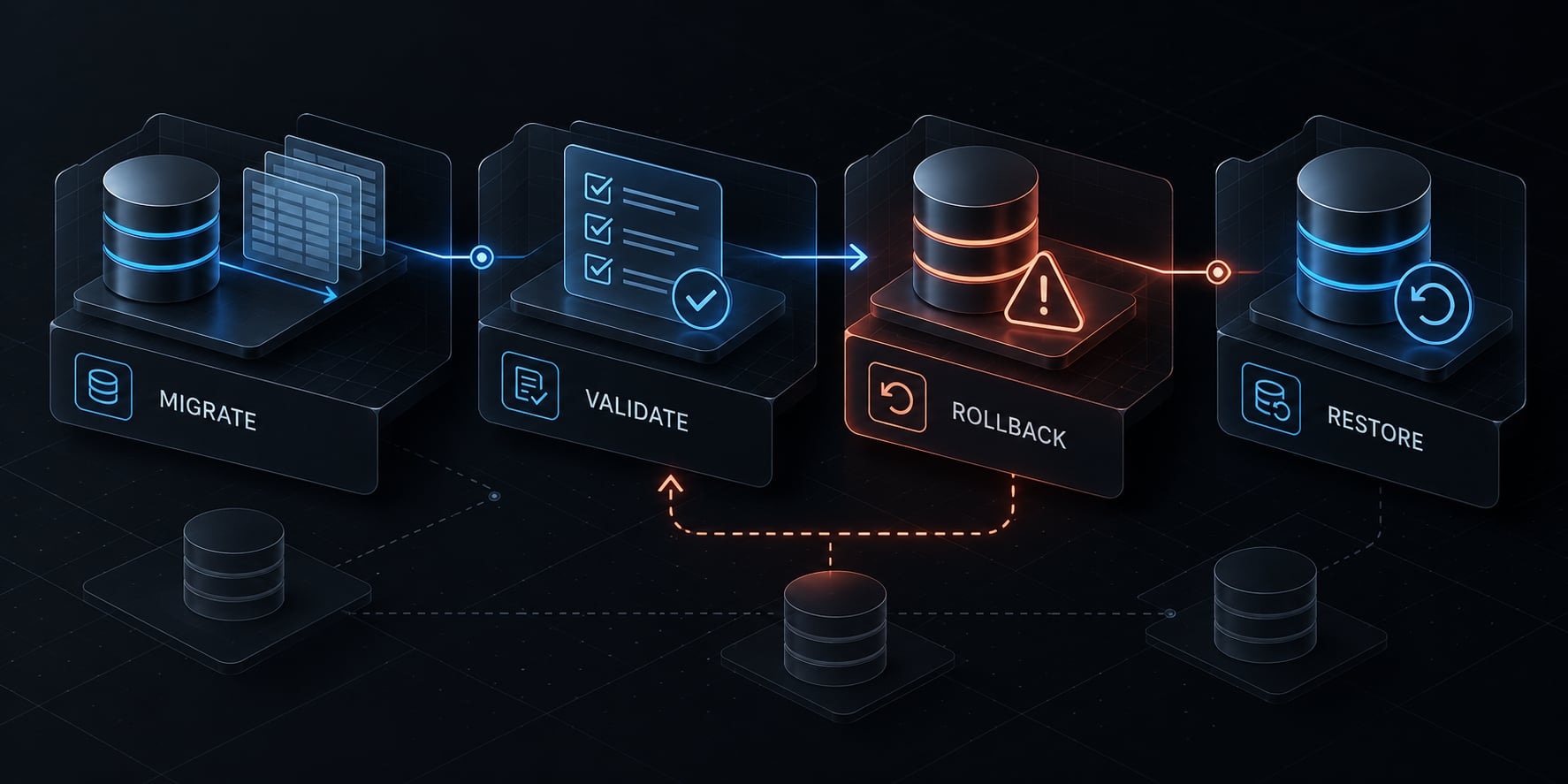
Deployment, recovery and monitoring
- 36 · P1: Record deployment order, intended artifact, and production configuration references.
- 37 · P0: Identify a known-good version and a viable, verified recovery procedure.
- 38 · P1: Verify health checks, logs, error tracking, and alerts with named responders.
- 39 · P1: Prepare production-safe smoke tests covering critical customer behavior.
- 40 · P1: Confirm observation coverage, escalation contacts, and operational support handoff.
Checks unique to AI-Generated or AI-Modified code
Most risks below are familiar software risks, not exclusive to AI. AI-assisted changes can obscure assumptions, expand scope, or reproduce inconsistent patterns. AI-generated code review should verify behavior rather than trust plausible explanations.
Risk | What It Looks Like | Required Verification | Priority |
|---|---|---|---|
Fabricated API or method | Plausible but unsupported call | Check installed-version documentation; execute path | P0 if critical |
Suspicious dependency | Unnecessary or lookalike package | Verify publisher and necessity | P1; P0 if malicious |
Inconsistent security patterns | Validation omitted on one route | Compare server-side protections | P0 if exploitable |
Authentication without authorization | Logged-in user accesses another tenant | Test resource and tenant boundaries | P0 |
Tests repeat assumptions | Implementation defines its own expected result | Derive expectations from requirements | P1 |
Development configuration | Local callback or wrong database | Validate deployed configuration | P0 if critical |
Unexplained scope expansion | Unrequested permission or infrastructure changes | Review, justify, or remove changes | P0 if high-risk |
Unclear code provenance | Unknown origin or license obligations | Investigate origin and applicable licensing | P1; escalate restrictions |
OWASP’s Authorization Cheat Sheet distinguishes identity verification from permission enforcement and recommends validating permissions on every request. Code provenance scanners can flag concerns; they cannot establish the origin of every generated fragment.
Review the complete diff, not only the prompt result
Compare the final diff with the requested change. Inspect additions, deletions, lockfiles, tests, migrations, configuration, and infrastructure - not only files highlighted by the agent.
For example, correcting an authentication callback should not silently broaden database permissions. Treat unexplained changes as unresolved review work.
Independently validate generated tests
- Derive expected outcomes from requirements, not implementation details.
- Add negative and boundary cases, including denied access.
- Manually review high-risk behavior and inspect execution evidence.
In an illustrative multi-tenant application, test that a workspace member cannot read another customer’s records. A successful login test does not establish tenant isolation.
What to automate and what humans must approve
Automate repeatable execution and evidence collection. Preserve judgment for permissions, customer data, financial actions, and accepted risk.
CI/CD (continuous integration and continuous delivery or deployment) runs defined checks against changes. That differs from asking an AI agent whether its own implementation is correct.
Task | Automation Role | Human Review | Recommended Gate |
|---|---|---|---|
Formatting, linting, types | Run checks | Set rules | Required pass |
Unit/integration tests | Execute suites | Validate expectations | Required pass |
Secret/dependency scans | Flag findings | Triage exposure | Block unresolved critical risk |
Generated-code review | Highlight changes | Review complete diff | Named reviewer |
Authentication | Test login/failure | Review identity flow | Explicit approval |
Authorization | Test denied access | Review boundaries | Explicit approval |
Database migration | Rehearse changes | Approve sequence/recovery | Explicit approval |
Production smoke tests | Run safe probes | Assess user impact | Pass before expansion |
Recovery decisions | Preauthorized rollback | Own policy and ambiguity | Verified conditions only |
GitHub Actions documentation describes environment protection rules and required reviewers, subject to repository and plan availability. Configure gates deliberately; platform features do not establish your approval policy.
Secret scanning detects supported patterns within its configured scope. GitHub secret scanning documentation describes those capabilities and limitations. Scanning cannot prove the absence of exposed secrets or exploitable vulnerabilities.
Minimum human approval gates
Recommended gates cover:
- Authentication and authorization.
- Production schema or data.
- Payments.
- Infrastructure permissions and secrets.
- Destructive actions.
- Recovery readiness and accepted risk.
Solo builders may implement and approve after deliberate, evidence-based review. Seek a second qualified reviewer for material security or data risk where feasible. Independence means challenging assumptions, not accepting an agent’s self-assessment.
Evidence to store with the release
Store the reviewed change record, commit/artifact identifier, test and scan results, migration and recovery plans, smoke-test results, and named approval.
Use evidence references, not credentials or sensitive logs copied into tickets. Approval applies to that release candidate; substantive changes require renewed review.
Deployment, rollback and post-release verification
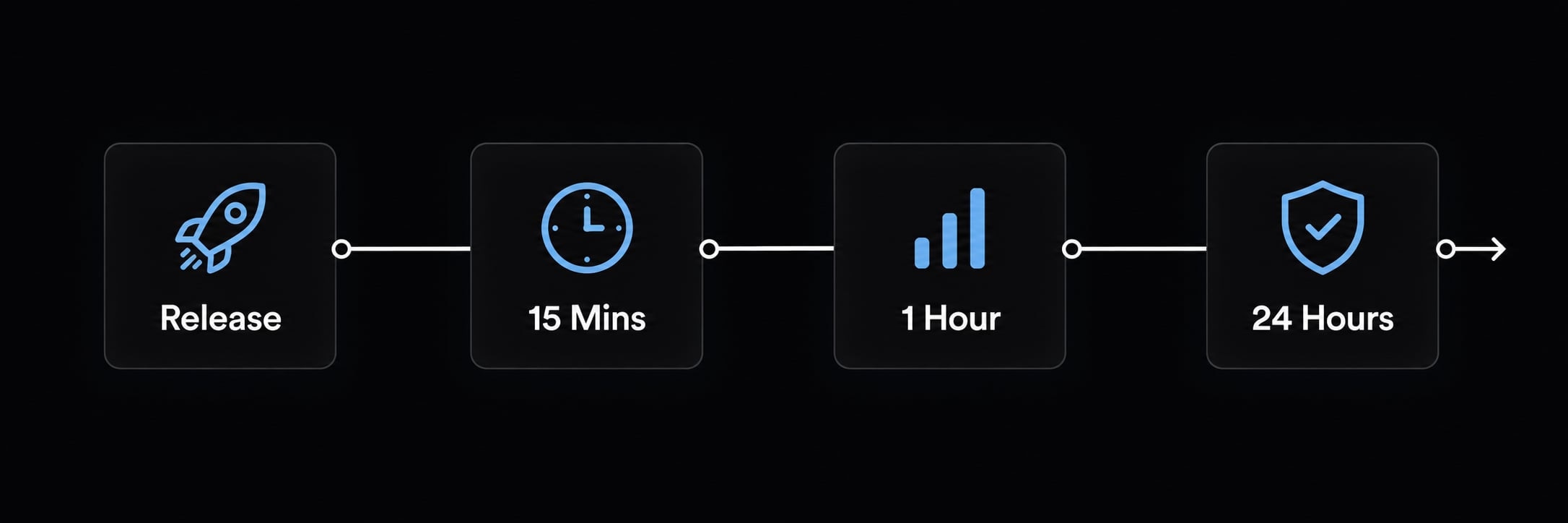
These observation windows are practical defaults, not guarantees. Adjust them for traffic, scheduled jobs, customer usage, and delayed integrations.
Google’s SRE Workbook discusses canary releases and monitoring as ways to evaluate changes under real conditions. A rollback plan must also account for persistent data and external side effects.
During deployment
- Confirm the approved commit, artifact, and configuration.
- Execute application and migration steps in their compatibility-aware order.
- Verify readiness before broad traffic exposure.
- Use staged rollout or feature flags where supported.
- Record release time and avoid unrelated changes.
First 15 minutes
Check application and dependency health, migration status, new errors, latency, and permission failures. Execute production-safe smoke testing: brief checks of essential customer journeys.
Keep the owner available with recovery access. Payment and destructive tests require isolated accounts, safeguards, and cleanup - not uncontrolled live transactions.
First hour
Compare error rate, latency, throughput, and resource usage with a relevant baseline. Inspect queues, scheduled jobs, email, webhooks, alert delivery, and external API usage and cost.
A green health endpoint does not prove a customer workflow works. Observability, the ability to understand internal behavior from telemetry, complements uptime checks and error tracking.
First 24 hours
Review customer outcomes, delayed failures, access anomalies, and manual corrections. Extend production monitoring when important workloads have not yet run. Record improvements before closing the release.
Do not deploy or roll back if these conditions occur
Red flags requiring intervention:
- Exposed credentials remain active.
- Access controls are uncertain or failing.
- A critical customer journey fails.
- A migration is incompatible or unrecoverable.
- An agreed reliability threshold is breached.
- Production visibility is missing.
- No viable recovery path exists.
- Required independent review is missing.
Before release: Stop deployment.
After release: Contain the incident and follow the verified recovery plan. Options include disabling features, stopping traffic, revoking credentials, restoring data, or applying a forward fix.
Do not assume application rollback repairs data. Automatic rollback is appropriate only under preauthorized, verified conditions that will not worsen the incident.
Conditional checks for applications with AI or agent features
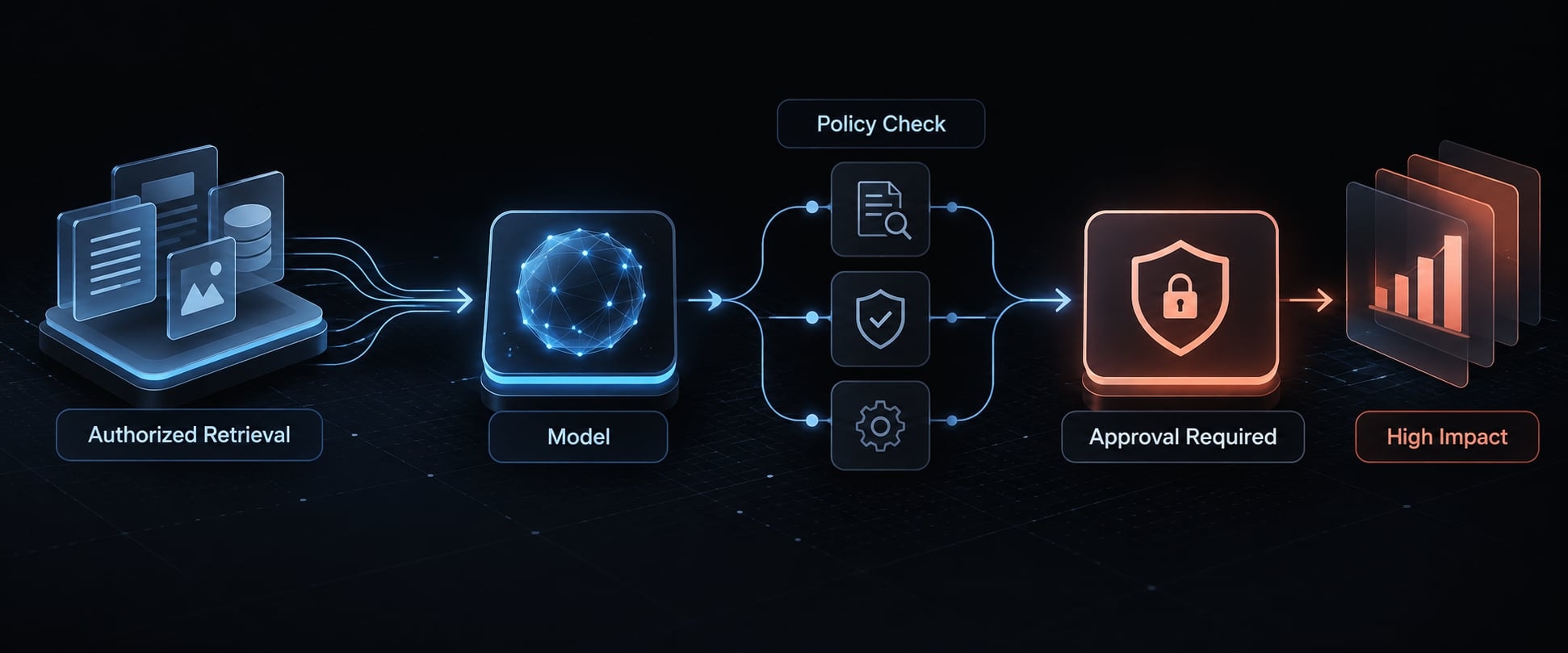
Apply these controls only when the application runs an LLM (large language model), RAG (retrieval-augmented generation), or agent functionality. Using an AI coding assistant alone does not make them applicable.
Model and runtime controls
- Pin versions where supported; run representative behavior evaluations.
- Define provider failure handling and degraded operation.
- Limit requests, tokens, execution time, tool calls, and spending.
- Provide a kill switch; validate outputs before business actions.
Version pinning does not eliminate nondeterminism. Any model fallback must satisfy applicable privacy and quality requirements.
Data and retrieval controls
Get the next post in your inbox
New guides and AgentKit updates, no spam. Unsubscribe at any time.
Prompt injection attempts to redirect behavior. Prompt leakage exposes prompt content; the terms are not interchangeable. Testing reduces uncertainty but cannot eliminate injection risk.
Agent permissions and human oversight
- Use least-privilege, preferably short-lived credentials.
- Allowlist tools, actions, and destinations.
- Require authenticated approval for high-impact actions.
- Redact logs of tool use, approvals, failures, and outcomes.
- Monitor spending spikes and repeated action loops.
The OWASP GenAI Security Project addresses excessive agency: granting models too much functionality, permission, or autonomy. Prompt instructions alone are not a security boundary.
Turn the checklist into a repeatable release workflow
Store the checklist in the repository. Adapt it for pull requests, releases, and emergencies; move repeatable checks into CI/CD. Require evidence for blockers and high-risk approvals. Update controls after incidents or architecture changes.
Emergency changes need a reduced, explicit process - not silent bypasses of ownership, critical testing, or recovery planning.
Recommended repository assets
These are suggested conventions. The .github/ paths are GitHub-specific.
Suggested path | Purpose |
|---|---|
| Master 40-check release template |
| Pre-merge controls |
| Scope, ownership, evidence, approval |
| Recovery steps and decision ownership |
| Production-safe critical checks |
| Variable names, types, validation |
| Contacts and escalation |
Environment schemas must never contain production secret values. Keep evidence close to the release record so another responder can recover without reconstructing the deployment workflow.
Automating the workflow with AgentKit
AgentKit serves as an open scaffolding and toolkit designed for building robust AI Engineering Systems. It orchestrates subagents, reusable skills, and automated workflows across code review, testing, debugging, and deployment. Teams can utilize these building blocks to coordinate release preparation - routing evidence into a release record while retaining named human approval for high-risk changes. This represents structured workflow design, not a claim of automatic policy enforcement.
Copyable markdown release template
# AI-Assisted Release Record## Release identity- Release identifier:- Commit / artifact identifier:- Target environment:- Release owner:- Backup contact:- Scope:- Affected customer journeys:- AI-modified files / change-record reference:- Planned release window:- Communication channel:- Observation owner:- Escalation reference:## Completion rulesStatuses:- pass- fail- not applicable- approved exceptionPriorities:- P0: Release blocker. Resolve before the affected release.- P1: Required before general availability. Limited-rollout exceptions require an owner, rationale, and expiry.- P2: Risk-dependent improvement, scheduled according to exposure.For every check:- Record status, evidence reference, and reviewer.- Explain every "not applicable" result.- Record exception rationale, owner, scope, and expiry.- Do not use an exception to bypass a P0 blocker.- Leave unresolved checks as fail.- Store references, never credentials or sensitive logs.- Approval is valid only for the identified release candidate.## Pre-release checks### Release scope and ownership| ID | Priority | Control | Status | Evidence reference | Reviewer ||---|---|---|---|---|---|| 01 | P0 | Named release owner | | | || 02 | P1 | Approved scope, journeys, and AI-modified files | | | || 03 | P0 | Named reviewers; high-risk review complete | | | || 04 | P1 | Success, stop, containment, and recovery thresholds | | | || 05 | P1 | Release window, observation owner, backup, channel | | | |### Code and architecture review| ID | Priority | Control | Status | Evidence reference | Reviewer ||---|---|---|---|---|---|| 06 | P1 | Human review of complete diff | | | || 07 | P1 | No unintended mocks, debug behavior, dead code, or scope | | | || 08 | P1 | APIs, methods, and configuration properties verified | | | || 09 | P1 | Invalid input, timeout, and dependency failure handling | | | || 10 | P1 | Critical architecture, access controls, and recovery understood | | | |### Environment and configuration| ID | Priority | Control | Status | Evidence reference | Reviewer ||---|---|---|---|---|---|| 11 | P0 | Required production variables and exposure scopes verified | | | || 12 | P0 | URLs, callbacks, and database references correct | | | || 13 | P1 | Production build, startup, and feature defaults verified | | | || 14 | P1 | Least-privilege service identities | | | || 15 | P1 | Credentials, quotas, billing limits, webhooks, redirects verified | | | |### Dependencies and software supply chain| ID | Priority | Control | Status | Evidence reference | Reviewer ||---|---|---|---|---|---|| 16 | P1 | New package necessity and publisher identity verified | | | || 17 | P1 | Lockfiles, clean install, and production build checked | | | || 18 | P1 | Vulnerabilities triaged; license policy satisfied | | | || 19 | P1 | Direct and transitive dependency changes reviewed | | | || 20 | P1 | Trusted artifact origin; SBOM included when justified | | | |### Security and privacy| ID | Priority | Control | Status | Evidence reference | Reviewer ||---|---|---|---|---|---|| 21 | P0 | Secret findings resolved; exposed credentials revoked/rotated | | | || 22 | P0 | Server-side authentication and authorization tested | | | || 23 | P1 | HTTPS, relevant headers, and abuse controls configured | | | || 24 | P1 | Logs exclude credentials and inappropriate sensitive data | | | || 25 | P1 | Data handling and credential rotation verified | | | |### Testing and quality gates| ID | Priority | Control | Status | Evidence reference | Reviewer ||---|---|---|---|---|---|| 26 | P1 | Clean-environment unit and integration tests pass | | | || 27 | P0 | Critical end-to-end journeys pass | | | || 28 | P1 | Generated expectations, negative cases, boundaries reviewed | | | || 29 | P1 | Production performance, browser, device, accessibility verified | | | || 30 | P1 | Limitations and accepted risks have named approval | | | |### Database and data readiness| ID | Priority | Control | Status | Evidence reference | Reviewer ||---|---|---|---|---|---|| 31 | P0 | Human review of production migrations complete | | | || 32 | P0 | Schema/application compatibility and order verified | | | || 33 | P0 | Database targets, permissions, lifecycle rules correct | | | || 34 | P1 | Backups and restoration readiness verified | | | || 35 | P0 | Recovery covers irreversible changes and migration limits | | | |### Deployment, recovery, and monitoring| ID | Priority | Control | Status | Evidence reference | Reviewer ||---|---|---|---|---|---|| 36 | P1 | Deployment order, artifact, configuration recorded | | | || 37 | P0 | Known-good version and viable recovery verified | | | || 38 | P1 | Health checks, logs, error tracking, owned alerts verified | | | || 39 | P1 | Production-safe smoke-test script ready | | | || 40 | P1 | Observation coverage, escalation, support handoff confirmed | | | |## Exceptions and applicability| Check ID | Status | Rationale | Owner | Scope / compensating control | Expiry ||---|---|---|---|---|---|## Migration sequence- Migration required / applicability rationale:- Reviewed migration reference:- Application/schema compatibility:- Execution order:- Expected locking or downtime:- Older requests and background-job compatibility:- Irreversible operations:- Validation steps:- Backup reference:- Restore rehearsal evidence:## Recovery plan- Decision owner:- Known-good artifact:- Trigger thresholds and measurement windows:- Containment actions:- Application rollback procedure:- Data restoration procedure:- Forward-fix conditions:- Credential revocation / rotation procedure:- External side effects and reconciliation:- Preauthorized automatic recovery conditions:- Conditions prohibiting automatic rollback:- Recovery verification steps:- Customer/support communication owner:## Pre-release approval- Release candidate identifier:- Evidence reviewed:- P0 blockers resolved:- P1 checks passed or valid limited-rollout exceptions recorded:- Accepted-risk record:- Approver:- Approval timestamp:- Decision: approve / hold- Approved rollout scope:## Deployment execution- Actual release time:- Artifact and configuration confirmed:- Application/migration steps completed:- Readiness result:- Traffic expansion / feature activation:- Deviations and approval:## Production smoke-test resultsUse safe accounts and controlled data. Avoid uncontrolled financialor destructive actions.| Journey | Expected outcome | Actual outcome | Evidence reference | Owner | Time ||---|---|---|---|---|---|## Post-release observationThese windows are defaults. Extend coverage for delayed workloads.| Window | Owner | Signals / customer journeys reviewed | Result | Action / evidence ||---|---|---|---|---|| First 15 minutes | | | | || First hour | | | | || First 24 hours | | | | || Extended observation | | | | |- Baseline reference:- Error and latency comparison:- Throughput and resource usage:- Queues, jobs, email, webhook outcomes:- Alert delivery verified:- External API usage and cost:- Customer access or data anomalies:- Manual corrections:- Incident reference, if applicable:- Support handoff:- Checklist improvements:## Final release closure- Final disposition:- Remaining approved follow-up:- Closure owner:- Closure timestamp:## Appendix: Conditional AI-runtime controlsThis appendix does not change the 40-check main checklist.Mark not applicable when AI is used only during development.| Control | Status | Evidence reference | Reviewer ||---|---|---|---|| Runtime AI applicability recorded | | | || Model version and representative evaluations verified | | | || Provider failure and degraded mode tested | | | || Fallback privacy and quality requirements verified | | | || Request, token, time, tool-call, and spending limits set | | | || Kill switch tested; outputs validated before actions | | | || Sensitive prompt/log content minimized | | | || Tenant/document retrieval permissions enforced externally | | | || Vendor retention and training terms reviewed | | | || Direct and indirect prompt injection tested | | | || Citations checked against supporting content | | | || Agent credentials follow least privilege | | | || Tool, action, and destination allowlists enforced | | | || High-impact actions require authenticated approval | | | || Tool activity, approvals, failures, outcomes logged safely | | | || Cost spikes and repeated action loops monitored | | | |
Frequently asked questions
What is an AI-assisted deployment checklist?
An AI-assisted deployment checklist is a structured verification protocol used to ensure that software built, modified, or configured with AI tools meets production standards. It systematically validates code, security, configuration, data integrity, and recovery plans before an application is released to real-world users.
How does AI-assisted software deployment differ from AI model deployment?
AI-assisted deployment focuses on the reliability of the application code and workflows generated or supported by AI tools. In contrast, AI model deployment is specific to serving, monitoring, and scaling the underlying machine learning models themselves. Both require rigorous validation, but their technical control gates differ significantly.
Why is human verification essential for AI-generated code?
AI-generated code requires human oversight because models can introduce subtle logic errors, incorrect security patterns, or hardcoded development environment settings. Independent human review ensures that generated code meets business requirements, is secure, and functions correctly within the specific constraints of the production architecture.
What are the "P0" release blockers in this checklist?
P0 release blockers are critical issues that must be resolved before deployment can proceed. Examples include missing release ownership, unreviewed high-risk changes, invalid production configuration, exposed secrets, broken authentication, critical user journey failures, or the absence of a viable recovery route.
When should you automate an AI deployment check?
You should automate repeatable technical tasks such as linting, unit tests, security scans, and environment validation via CI/CD pipelines. However, high-impact decisions - such as data migrations, authorization policy updates, and final risk acceptance - require human approval.
Read more:
- Project-aware AI coding: A complete guide and evaluation
- AI root cause debugging: How to find the cause not just patch
- AI implementation planning: A framework for scaled success
Conclusion
An AI-assisted deployment checklist is useful when each control produces evidence and each decision has an owner. Review generated changes independently, automate repeatable checks, and bind approval to the exact release candidate. Verify recovery against data changes, not just application versions. Deployment continues through post-release observation; a successful build is only one checkpoint.
Match the process to customer impact and application risk. Small teams need clear ownership and workable recovery more than elaborate ceremony. Broader permissions, irreversible actions, and sensitive data justify stronger review. These controls reduce avoidable risk without promising incident-free software.
Go deeper in the docs
Reference pages for every command, skill, hook and setting mentioned here.
Read the docs →Share this article
Keep reading
- Local vs remote MCP server: Security, differences & use casesLearn the differences between local vs remote MCP servers. Discover when to use each for security, data access, and scaling your AI agent architecture.13 min read
- How to manage multiple MCP servers: Best practices & strategyLearn how to manage multiple MCP servers effectively by centralizing configuration, inventory, and lifecycle workflows. Optimize your AI integrations today.13 min read
- MCP server security: Risks, best practices & deployment guideMaster MCP server security with our guide: understand AI agent risks, implement least privilege, and use our checklist to secure your protocol deployment.22 min read