Claude Code trial: How to evaluate access and performance
Claude Code trial: How to try it, what to test and whether it’s worth it
While Claude Code may offer account-specific promotions, there is no universal free trial. Evaluating it effectively requires looking beyond tool access to assess cost, safety, and performance on real tasks. This guide delivers a structured framework to help you verify access, configure a safe testing environment, and run a focused 60–90-minute benchmark to determine if Claude Code fits your development workflow.
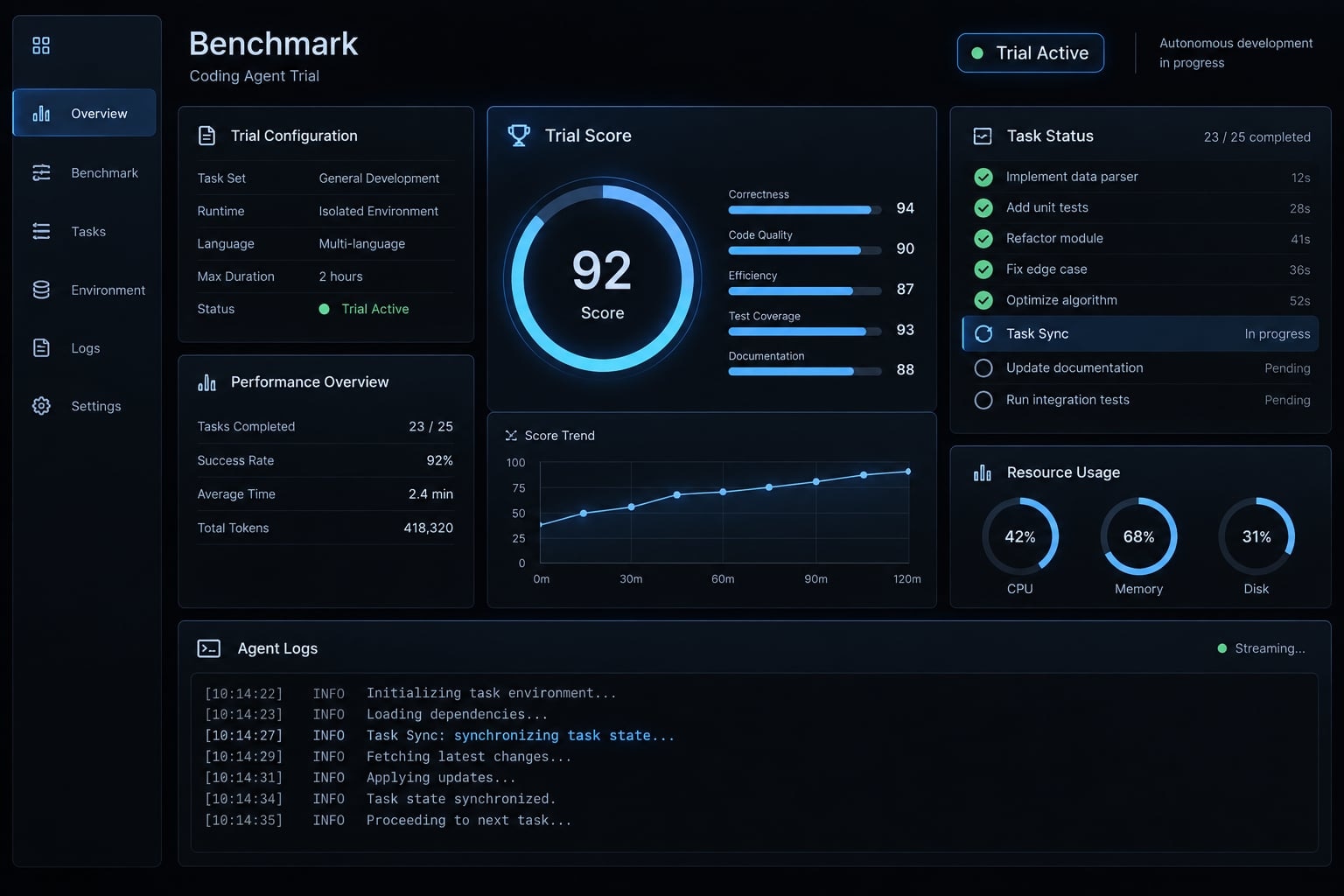
Is there a Claude Code trial?
The short answer
Anthropic does not currently offer a universal free trial for Claude Code. Check your Anthropic account for an eligible offer and read its terms before activating it. Paid-plan access is a paid evaluation, not a free trial; API credits offset charges only where explicitly applicable. Consult Anthropic’s Claude Code access documentation and your account’s billing information.
What “free Claude Code” can actually mean
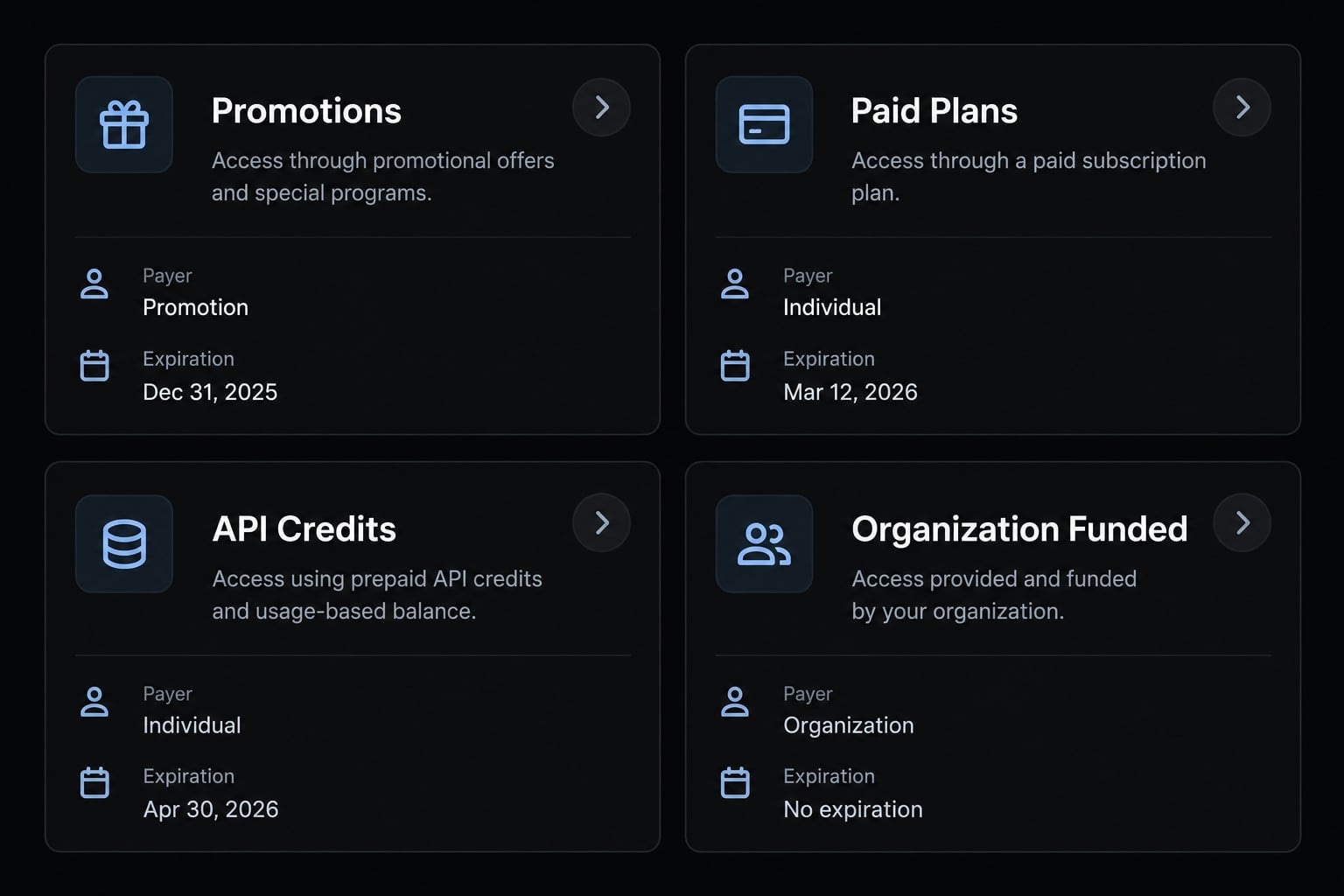
“Free” can describe four materially different arrangements:
- Temporary promotional access: An official offer, if available to your account, with stated eligibility and expiration.
- Paid-plan inclusion: Claude Code access included in an eligible subscription. There may be no separate initial charge, but the subscription still costs money.
- API credits: Credits that offset eligible usage through an API (application programming interface), subject to their terms.
- Organization-sponsored access: An employer or other organization funds access under its own agreement and policies.
Consider a founder who already uses free Claude web chat. That account alone does not establish eligibility to use Claude Code. The founder must separately confirm access and available usage.
Likewise, a third-party interface or alternative model provider does not automatically constitute an official Anthropic trial. Even where compatibility works, it may evaluate a different model and different behavior. Treat advertised guest passes, starter credits, and grants as unconfirmed until an official offer establishes your eligibility.
Legitimate ways to try Claude Code
Compare eligibility, billing, and available usage-not the word “free.” Access entitlement does not guarantee enough capacity to complete your evaluation.
Official guest or promotional access
Use a guest invitation or promotion only when official terms establish its validity for your account. This guide does not verify a currently available guest-pass offer, duration, or renewal arrangement.
Access included with a Claude subscription
Check whether your specific plan currently includes Claude Code and which limits apply. A Claude Code subscription evaluation remains paid access, even when the tool carries no separate initial fee.
Anthropic Console or API credits
Using Claude Code with API billing requires checking the charged account and applicable rates. Do not assume registration or phone verification automatically provides Anthropic Console credits.
Special programs and enterprise evaluations
An organization-specific evaluation is usable only after authorization and terms are confirmed. Do not treat reports of grants, research previews, or enterprise pilots as generally available offers.
Route | Official status | Requirement | Usage limitation | Billing exposure | Best fit |
|---|---|---|---|---|---|
Promotion or invitation | Conditional; verify official offer | Eligible account | Offer-specific quota and expiry | Check conversion terms | Short individual evaluation |
Subscription inclusion | Confirm current plan documentation | Eligible paid subscription | Plan and account limits | Subscription; any enabled extras | Recurring personal work |
Console/API billing | Official billing route; credits not assumed | Authorized billing account | Balance, rate limits, account controls | Metered usage under account terms | Usage-based evaluation |
Organization evaluation | Agreement-specific | Administrator approval | Allocated capacity and duration | Organization’s agreement | Governed team testing |
Before choosing, inspect your own offer or billing screen for expiration, renewal, and payment requirements. These account-specific details may not appear in public documentation.
Anthropic’s Claude Code documentation, plan information, and Console billing documentation are the relevant primary sources. An old tutorial or another user’s screenshot cannot establish your present entitlement.
Choose the route you can explain financially before beginning the benchmark.
How to start a Claude Code trial safely
Confirm authorization and billing before installation. Claude Code setup should establish a controlled working environment, not just a successful login.
1. Confirm your access route and limits
Record the account, billing owner, eligibility, expiration, renewal behavior, and available usage reporting. Identify which subscription or credential will fund the session; do not infer this from the interface.
2. Check the basic requirements
Check the supported operating environment and organizational policy. For terminal use, Claude Code is a terminal-based AI assistant accessed through a CLI (command-line interface). Choose a repository-a project’s version-controlled files-that you are authorized to expose to the service.
3. Install from the official source
Follow Anthropic’s current Claude Code setup documentation. Avoid copying installation commands from an old article or assuming a particular runtime or package manager remains required. Keep permission checks enabled, and inspect requested access before approving it.
4. Use a safe test repository
Prefer a sanitized sample project or an approved isolated environment. Remove secrets and customer data from accessible files, history, logs, and environment variables-not merely from Git tracking. Establish a clean Git baseline. A branch helps you review or revert changes; it does not isolate secrets, network access, or shell commands.
5. Run a bounded first task
Begin with this non-modifying request:
Explain the repository’s main components and test organization. Propose one additional test without changing files or running commands.
Apply appropriate tool permissions too. Prompt instructions are not a security boundary.
Repository security requires controlling what the process can actually access. Keep production credentials and deployment permissions outside the evaluation environment.
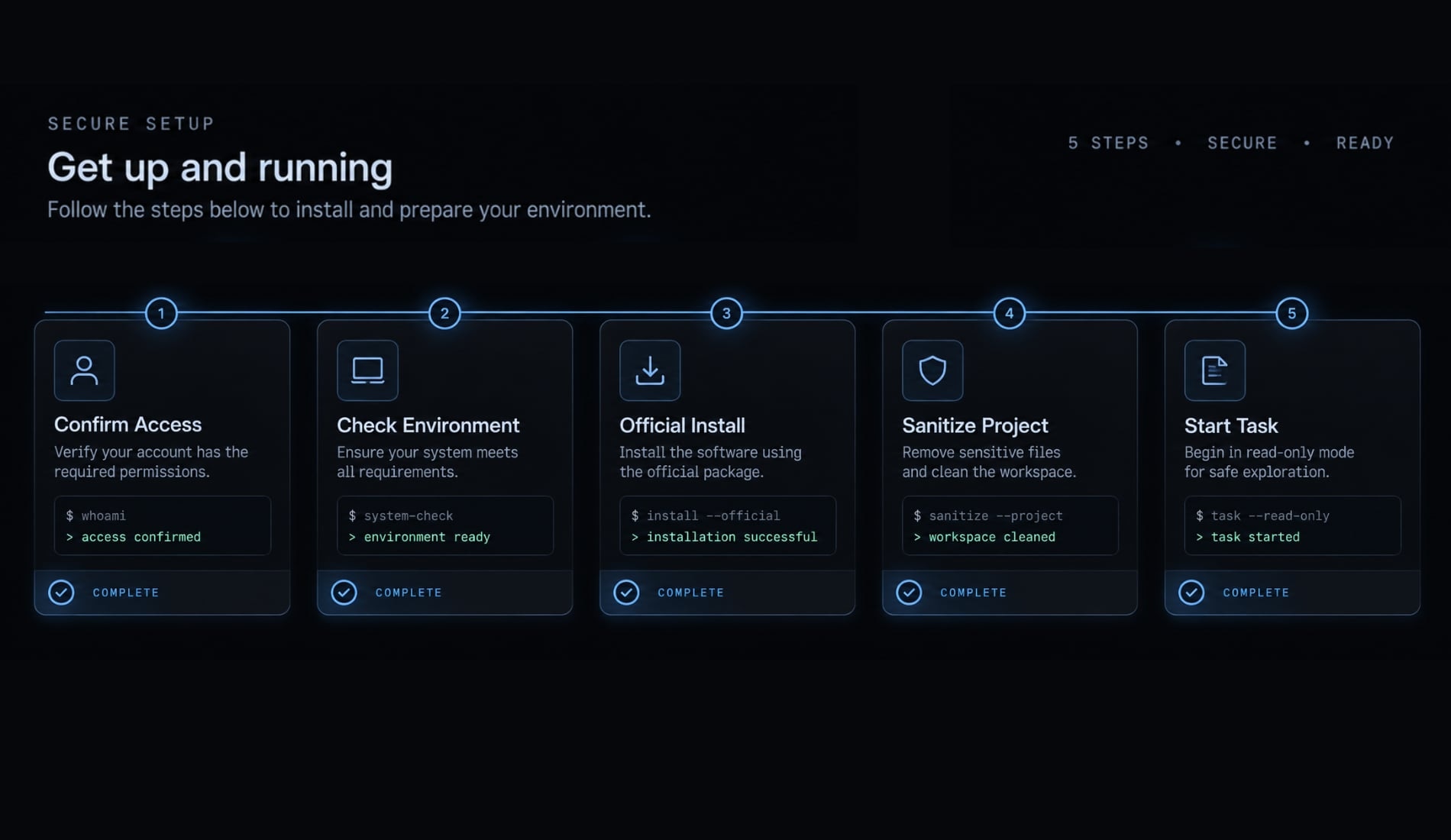
Complete these checks before starting the timed session.
A 60–90-minute Claude Code trial benchmark
Measure accepted results and human effort, not generated code volume. This proposed Claude Code benchmark uses a sanitized internal reporting utility with working tests. It reports no completed experiment or performance results.
Record setup separately. The four task windows total 65–90 minutes, including review and verification. Mark work unfinished when its window expires. Use a fixed repository revision. Give each independent task a fresh branch or reset state so earlier changes do not influence later results.
Record the selected model, Claude Code version, prompts, permissions, interruptions, usage, and reviewer involvement. Save sanitized diffs-records of file changes-and test output.
Repository understanding: 10-15 minutes
Ask for the utility’s main modules, test locations, and relevant commands, with file references.
Check each reference. Success means an accurate explanation without invented dependencies, unsupported assumptions, or unauthorized modifications. This tests multi-file repository reasoning where several files are relevant.
Pattern-based test generation: 15-20 minutes
Request one or two tests following the project’s existing convention. For example, test how the reporting utility handles an empty input dataset.
Review whether assertions verify meaningful behavior. Require appropriate test outcomes and a focused diff, not simply additional test files.
Bounded bug fix: 20-25 minutes
Use a known, reproducible defect, such as duplicate rows in a report. Ask for failure reproduction, a cause explanation, and a scoped correction.
Success requires regression evidence: The relevant test fails before the fix and passes afterward. Check adjacent behavior rather than accepting a single green result.
Small feature with acceptance criteria: 20-30 minutes
Request an optional date-range filter with explicit input, output, invalid-date, and empty-result requirements. Success means the predefined requirements are met through understandable changes. Reject unrelated dependency upgrades or architectural changes unless the task genuinely requires them.
Reusable benchmark scorecard
Copy this scorecard into your evaluation notes. It makes coding performance easier to assess without pretending a local test is a general model leaderboard.
Metric | What to record |
|---|---|
Setup time | Minutes spent installing, authenticating, and preparing the environment |
First-pass success | Requirements met before corrective prompting ÷ predefined requirements |
Correction cycles | Follow-up attempts needed to address errors or omissions |
Test outcomes | Relevant and regression results, including skipped or inconclusive checks |
Accepted changes | Reviewed change units retained ÷ reviewed change units proposed |
Net time saved | Manual baseline minus total assisted completion time |
Usage consumed | Reported usage or attributable charges; otherwise “not available” |
Define change units before testing: for example, individual tests or scoped functional changes. Line retention is only a rough proxy, not code quality.
Label manual baselines as measured or estimated. Distinguish generated output from reviewer-approved output throughout the record.
Passing tests strengthens evidence for this Claude Code evaluation. It does not establish security, maintainability, or production readiness.
Where Claude Code performs well-and where it struggles
Clear scope and verifiable outcomes make better evaluation tasks. The guidance below concerns test suitability, not guaranteed capability or success rates.
Strong trial candidates
Existing patterns reduce ambiguity and make mistakes easier to identify. Bounded automated code refactoring can also be useful when behavior is covered by relevant tests.
Task characteristic | Evaluation suitability | Reason or oversight requirement |
|---|---|---|
Established pattern and working tests | Strong candidate | Conventions and expected behavior are inspectable |
Reproducible bounded bug | Strong candidate | Before-and-after evidence is available |
Small internal utility | Suitable with boundaries | Inputs and outputs can be specified |
Broad ambiguous feature | Weak first test | Unclear requirements obscure success |
Legacy architectural redesign | High oversight | Hidden dependencies complicate verification |
Unsupervised production deployment | Unsuitable first test | Failure consequences exceed trial boundaries |
Tasks that require more human oversight
Architectural refactoring, authorization changes, billing logic, and database migrations require domain knowledge beyond a passing test suite.
An AI coding agent may produce plausible changes while overlooking an undocumented constraint. A reviewer must understand both the code and the consequences of failure.
These are practical limitations to investigate, not proof that the tool always fails at complex work.
What most affects Claude Code’s performance
Task clarity, repository documentation, model/version, available tools, permissions, and scope all affect the result. Reviewer competence also determines whether an apparently successful change deserves acceptance.
Missing fixtures or broken tests can make evaluation inconclusive. Document those conditions rather than attributing every failure to the assistant-or every success to model intelligence.
Costs, usage limits and security risks to check
Claude Code cost includes supervision, not just access charges. A zero-price offer can still consume engineering time and expose sensitive information.
Financial checks before testing
Confirm:
- Payment requirements and renewal or conversion terms.
- Credit expiration and behavior after exhaustion.
- Included usage, reset conditions, and how limits are measured.
- API billing versus subscription billing.
- Whether enforceable spending caps exist, and what they cover.
- Billing ownership, currency, and applicable taxes.
An alert reports spending; it does not necessarily stop it. Do not assume credit exhaustion triggers charges-or automatically prevents them. Verify your account’s behavior.
Repository and command safety
Review company policy and the applicable Anthropic privacy or commercial data-handling terms before sharing code. Consult Claude Code’s security and permissions documentation for control behavior.
Restrict tools, inspect shell commands, and treat repository instructions and external content as potentially untrusted. Review final diffs and run relevant tests before accepting changes.
Avoid production credentials and unsupervised deployment. If a credential is exposed, revoke or rotate it; deleting the file does not undo disclosure.
Calculate the real cost of the trial
Net time saved = manual baseline time − total assisted completion time
Include prompting, necessary waiting, review, correction, and recovery. Include setup in the first-session assessment; separate or amortize it for repeated use. Report active human time separately where useful.
Estimated net value = human hours saved × stated hourly value − attributable tool cost
Use human labor hours for monetary valuation, not unattended waiting time. Label estimated baselines clearly and avoid double-counting subscription costs.
Quota consumption is capacity usage, not automatically a separate dollar expense. A technically successful task may still have negative economic value if review and recovery consume the apparent savings.
Is Claude Code worth paying for? Use this decision scorecard
Pay for demonstrated fit on recurring work, not one impressive response. Ask “Is Claude Code worth the subscription?” only after measuring quality, total effort, safety, and cost. Use this weighted table to evaluate your AI coding workflow:
Dimension | Weight | Evidence to use |
|---|---|---|
Output quality | 30% | Acceptance criteria and reviewer assessment |
Net time saved | 25% | Defined baseline versus assisted completion |
Control and safety | 20% | Permission boundaries and reviewable changes |
Workflow fit | 15% | Compatibility with terminal, Git, and testing practices |
Cost predictability | 10% | Observed usage and verified billing conditions |
Rate each dimension from 0–5:
- 0: Unacceptable or failed.
- 3: Usable with meaningful supervision.
- 5: Consistently meets the evaluation requirement.
Use weights as point allocations totaling 100:
Total score = Σ[(dimension rating ÷ 5) × dimension weight]
For example, an output-quality rating of 4 contributes 24 points: (4 ÷ 5) × 30.
Interpret the result:
- 80-100: Candidate for continued use on tested task types.
- 60-79: Restrict scope and collect more evidence.
- Below 60: Improve task selection or assess alternatives.
These thresholds are AgentKit’s editorial decision aid, not validated industry cutoffs. Missing evidence warrants more testing, not an optimistic score. Excessive correction, inability to review generated code, unpredictable billing, and policy restrictions are warning signs.
Critical security failures, prohibited data use, and unacceptable billing exposure override the score.
Developer productivity must include reviewer effort. Repeat representative tasks before expanding adoption; a short trial cannot justify an organization-wide rollout.
From a successful trial to a repeatable agent workflow
Why successful prompts are not yet a workflow
A successful prompt shows that one task worked under particular conditions. Repeatability requires consistent context, acceptance criteria, permissions, and verification. Claude Code workflow automation should preserve those conditions rather than merely replay the original request.
The trial-to-workflow framework
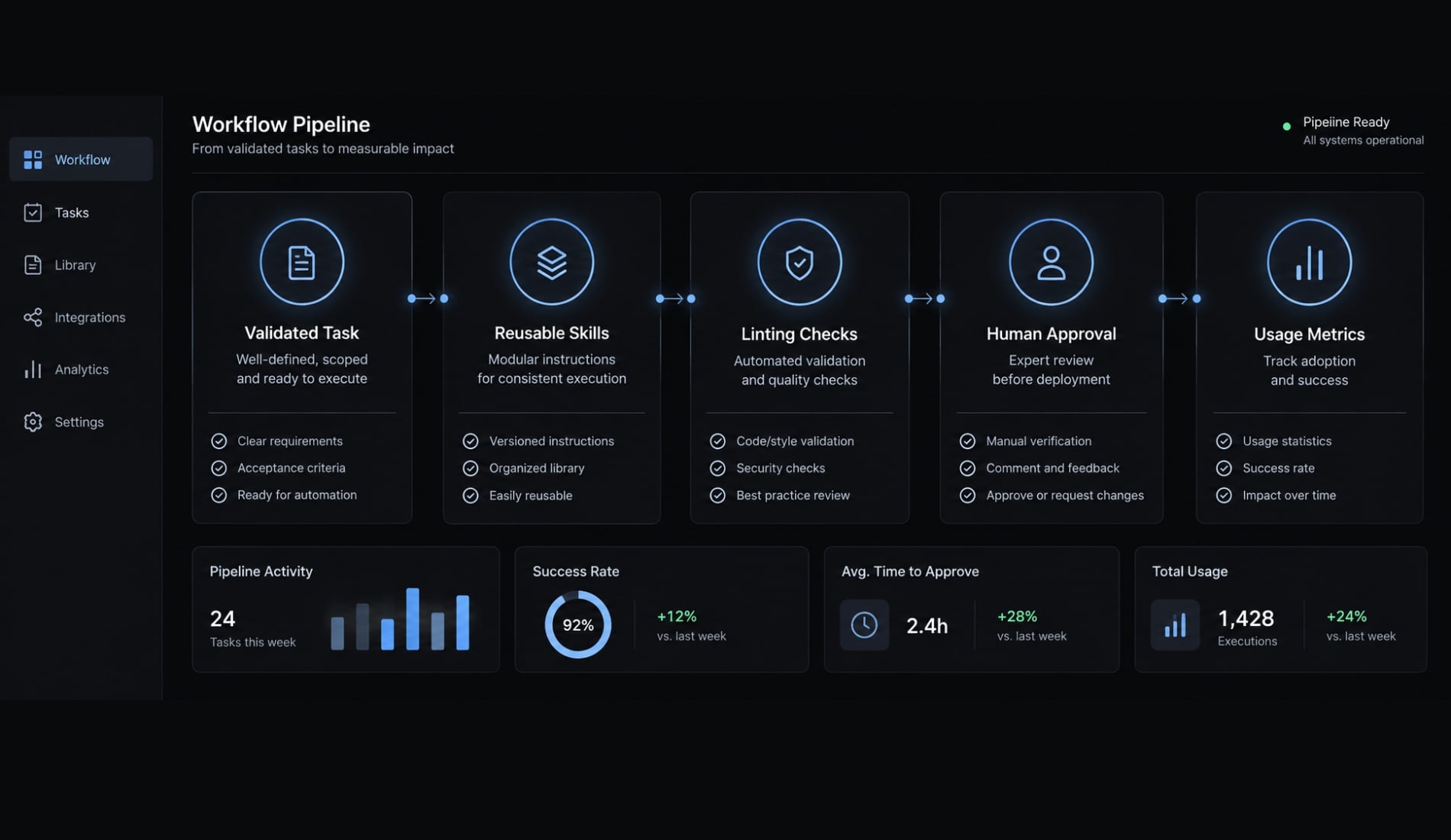
- Select tasks with measured value: Start with recurring, low-risk work.
- Record context and acceptance criteria: Include relevant files, constraints, and exclusions.
- Save repeatable instructions as reusable skills: Keep them scoped and versioned.
- Assign specialized roles where useful: Small tasks may not need subagents.
- Require tests, linting, and diff review: Linting checks code against configured rules.
- Monitor completion time, corrections, acceptance, and usage: Compare repeated runs.
- Preserve human approval for high-risk changes: Keep deployment and sensitive operations explicitly controlled.
Where AgentKit fits
This article is published by AgentKit, which offers optional workflow products. That commercial interest is separate from Anthropic access and billing.
Area | Relevant fit |
|---|---|
Product | AgentKit Engineer supports development workflow organization |
Building blocks | Reusable agent skills, specialized subagents, and workflows |
Intended users | Developers, founders, and small product teams |
Compatibility | Check current kit documentation for supported platforms and feature differences |
Controls | Review configuration, tool permissions, and approval requirements |
Product destination | AgentKit product overview |
The product can help organize repeatable work, but configuration still requires review. Do not assume identical behavior across Claude Code, Codex, and GitHub Copilot. Explore relevant Engineer workflows only after identifying tasks worth standardizing. AgentKit is not required to use Claude Code and does not remove Anthropic quotas or replace its billing arrangements.
Frequently asked questions
How can I evaluate Claude Code without a paid subscription?
Start by checking your own account rather than looking for a public offer. Three routes can apply: an account-specific promotional offer where one exists, a plan that already includes Claude Code, or a billing account you are authorized to use.
Reports of Console starter credits, open-source maintainer grants, or enterprise research pilots do not establish eligibility for your account. Treat them as unconfirmed until an official offer or your administrator says otherwise. Avoid unofficial third-party backends: even where they work, they evaluate a different model and different behavior, so the result tells you little about Claude Code itself.
Does Claude Code require a subscription to function?
Not a subscription specifically, but a funded access route. That is usually an eligible paid plan, or API billing through an authorized account. Installing Claude Code is free; using it is not. Confirm which account and credential will be charged before you begin, because that decision is not visible from the interface alone.
What is the difference between a subscription and an API-based evaluation?
A subscription provides a predictable monthly cost with fixed rate limits, making it suitable for standard development. API-based evaluation uses a pay-as-you-go model where you are billed for actual token consumption. Which one fits depends on your usage pattern and how predictable you need the cost to be. Verify your own account's limits, reset behavior, and any spending controls before choosing.
Is Claude Code safe to run on my local repository?
Claude Code provides a terminal-based interface that executes commands and edits files. While features like Git branches make it easier to review and revert changes, they are not a security sandbox. Always inspect diffs, restrict tool permissions, and avoid exposing production credentials during your evaluation.
How do I benchmark Claude Code effectively?
To benchmark Claude Code, measure the "net time saved" by subtracting the total assisted completion time-including prompting, review, and correction-from your manual baseline time. Focus on verifying objective acceptance criteria and regression test outcomes rather than simply the volume of generated code.
Can I standardize successful Claude Code tasks into workflows?
Yes, you can standardize repeatable tasks by documenting the context, clear acceptance criteria, and necessary verification steps. You can then structure these as reusable skills or internal agent workflows. Tools like AgentKit Engineer can help manage these configurations, approval boundaries, and multi-step agent routines once a task has proven its value.
Read more:
- Claude Code TypeScript: A guide to SDK and CLI integration
- Claude Code vs Lovable: Which AI tool fits your workflow?
- Claude Code notifications hook: Easy macOS desktop alerts guide
Conclusion
To evaluate Claude Code effectively, start by confirming your actual access terms rather than relying on old promotions or assumed credits. Confirm who pays, what usage is available, and what happens when access expires. Then prepare a sanitized environment and test representative work against explicit acceptance criteria.
Judge the outcome using accepted changes, total effort, attributable cost, and safety. A fast response or passing test suite is only part of that evidence. Someone qualified must still assess the changes and their consequences.
Continue only where the results support the decision, and standardize only tasks that prove useful across repeated attempts. Keep high-risk operations behind human approval. Copy the benchmark scorecard above, choose a bounded task, and collect a reviewable evaluation record before committing to broader use.